
Beautiful Plants For Your Interior
Beautiful Plants For Your Interior
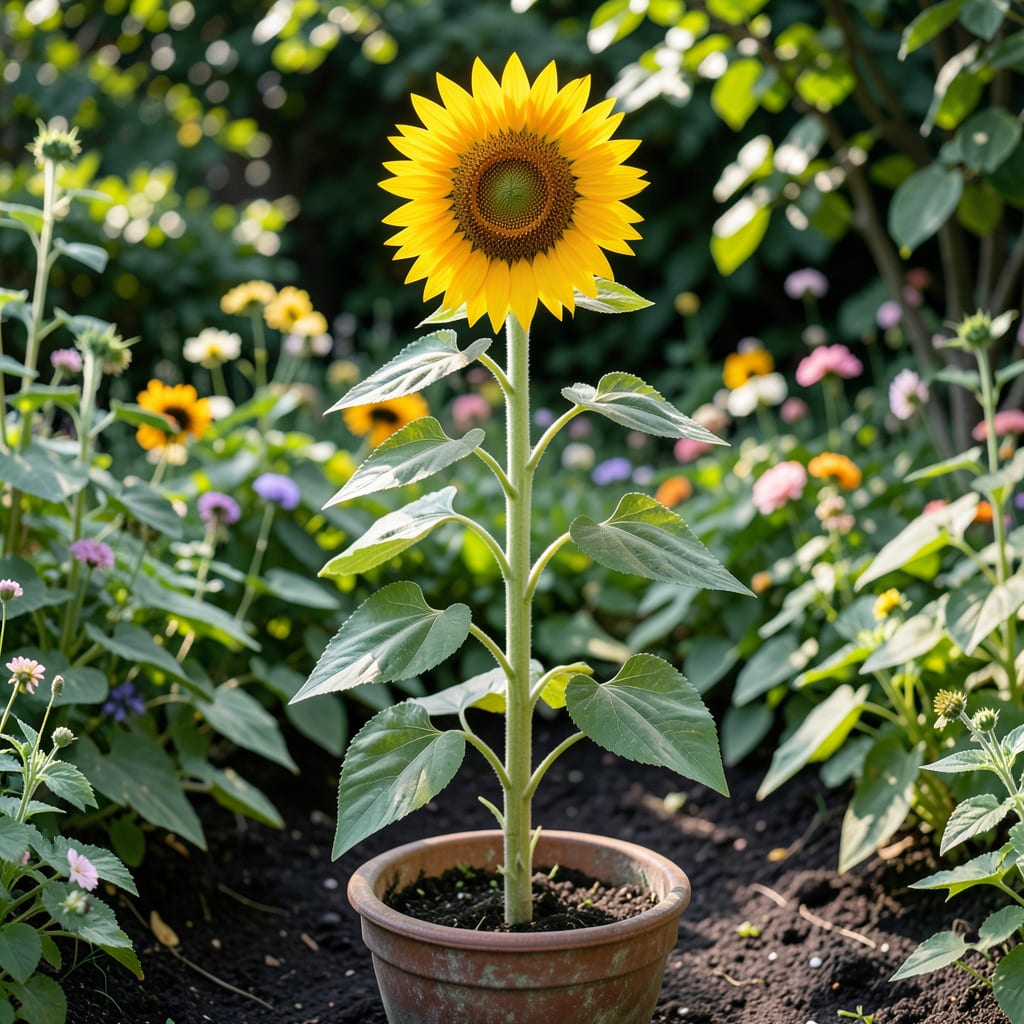
As I step into my garden during spring, I’m always amazed by the towering Sunflowers 🌻 that grow there. Their impressive height is a result of careful planning and the right growing conditions.
Understanding how tall Sunflowers can grow helps gardeners in USDA Zone 6 plan their garden space effectively. Let’s explore the factors that influence their height and how to maximize their growth.

Sunflowers are known for their impressive height, which can range from 2 feet to over 16 feet tall. Understanding the factors that influence their growth is crucial for gardeners who want to maximize their sunflower’s height.
The height of sunflowers is primarily determined by their genetic makeup, with different varieties having distinct growth patterns. However, environmental factors also play a significant role in determining how tall sunflowers will grow 🌻.
The variety of sunflower is a significant factor in determining its height. Some sunflower varieties are bred specifically for their height, while others are more compact. Gardeners should choose a variety that suits their needs and growing conditions.
Soil preparation is another crucial factor that affects sunflower height. Sunflowers prefer well-draining soil with a pH between 6.0 and 7.0. Adding organic matter like compost can improve soil quality and support healthy growth.
In addition to soil quality, sunlight exposure is vital for sunflower growth. Sunflowers require full sun to produce a robust stem and reach their maximum height. Gardeners should ensure that their sunflowers receive at least 6 hours of direct sunlight per day.
Watering is also essential for sunflower growth. While sunflowers are relatively drought-tolerant, consistent moisture during the germination phase is critical. Gardeners should water their sunflowers regularly, but avoid overwatering, which can lead to root rot and other problems.
Fertilization can also impact sunflower height. A balanced fertilizer applied during the growing season can provide essential nutrients for healthy growth. However, gardeners should avoid overfertilizing, as this can promote weak growth and reduce flower production.
The spacing between plants is another important factor to consider. Sunflowers need adequate space to grow without competing for resources. Gardeners should plant their sunflowers at least 6 inches apart to ensure healthy growth and maximum height.
By understanding these factors and providing optimal growing conditions, gardeners can help their sunflowers reach their full potential height 🌻.
Sunflowers are not only impressive in height but also in their resilience and adaptability. With proper care, they can thrive in a variety of conditions.
Monitoring and adjusting growing conditions based on the specific needs of sunflowers can significantly impact their height and overall health.
In conclusion, the height of sunflowers is influenced by a combination of genetic and environmental factors. By understanding and managing these factors, gardeners can grow sunflowers that are not only tall but also healthy and vibrant 🌻.
To help sunflowers reach their maximum height, gardeners should focus on providing optimal growing conditions and proper care. Sunflowers are known to grow between 2 feet and 16 feet tall, depending on the variety and growing conditions.
The right variety selection is crucial for achieving maximum height. Gardeners should choose sunflower varieties that are bred for their height, such as the Mammoth or Velvet Queen varieties 🌻.
Prepare the soil with organic matter like compost to improve its quality and support healthy growth.
Sow seeds 1 inch deep and 6 inches apart after the last frost date.
Provide sturdy support to tall varieties to prevent lodging and promote upright growth.
In addition to proper care, gardeners should also be aware of the common mistakes that can limit sunflower growth. By avoiding these mistakes, gardeners can help their sunflowers reach their full potential height 🌻.
Regular maintenance is essential for maximizing sunflower height. This includes keeping the soil consistently moist during the germination phase and providing balanced fertilizer during the growing season.
By following these expert gardening tips and providing optimal growing conditions, gardeners can help their sunflowers grow to their maximum potential height 🌻.
Sunflowers are not only a beautiful addition to any garden, but they also provide a natural source of food for birds and other wildlife.
In conclusion, maximizing sunflower height requires a combination of proper care, optimal growing conditions, and careful variety selection. By following these tips, gardeners can enjoy tall, healthy sunflowers in their garden 🌻.
Growing sunflowers can be a rewarding experience, but there are several common mistakes that can limit their height. By understanding these mistakes, gardeners can take steps to avoid them and help their sunflowers reach their full potential.
One of the most significant mistakes gardeners make is poor soil preparation. Sunflowers require well-draining soil with adequate nutrients to grow tall and healthy.
Planting sunflowers too close together can lead to competition for resources, resulting in stunted growth and reduced height 🌻.
Another mistake is inadequate sunlight. Sunflowers require full sun to produce a robust stem and reach their maximum height. Gardeners should ensure that their sunflowers receive at least 6 hours of direct sunlight per day.
Improper watering is also a common mistake. While sunflowers are relatively drought-tolerant, consistent moisture during the germination phase is critical. Gardeners should water their sunflowers regularly, but avoid overwatering, which can lead to root rot and other problems.
Insufficient support can also limit sunflower height. Tall varieties require sturdy support to prevent lodging and promote upright growth. Gardeners should provide support using stakes or trellises to help their sunflowers grow tall and straight 🌻.
By avoiding these common mistakes and providing optimal growing conditions, gardeners can help their sunflowers reach their full potential height and enjoy a bountiful harvest 🌻.
Additionally, gardeners should be aware of the importance of soil quality and fertilization in promoting healthy sunflower growth.
In conclusion, by understanding the common mistakes that can limit sunflower growth and taking steps to avoid them, gardeners can grow tall, healthy sunflowers that thrive in their garden 🌻.
Sunflowers can grow between 2 feet and 16 feet tall, depending on the variety and growing conditions. Some varieties, like the Mammoth or Velvet Queen, are bred specifically for their height and can reach impressive heights .
To maximize sunflower height, choose a variety bred for height, prepare the soil with organic matter, provide full sun exposure, water regularly during germination, and offer sturdy support for tall varieties. Proper care and optimal growing conditions are key to achieving maximum height .
Common mistakes that limit sunflower growth include poor soil preparation, inadequate sunlight, improper watering, and insufficient support. Avoiding these mistakes and providing optimal growing conditions can help sunflowers reach their full potential height .
Sunflowers need consistent moisture during the germination phase. Water them regularly, but avoid overwatering, which can lead to root rot and other problems. The ideal watering frequency is weekly, with adjustments based on weather conditions .
