
Beautiful Plants For Your Interior
Beautiful Plants For Your Interior
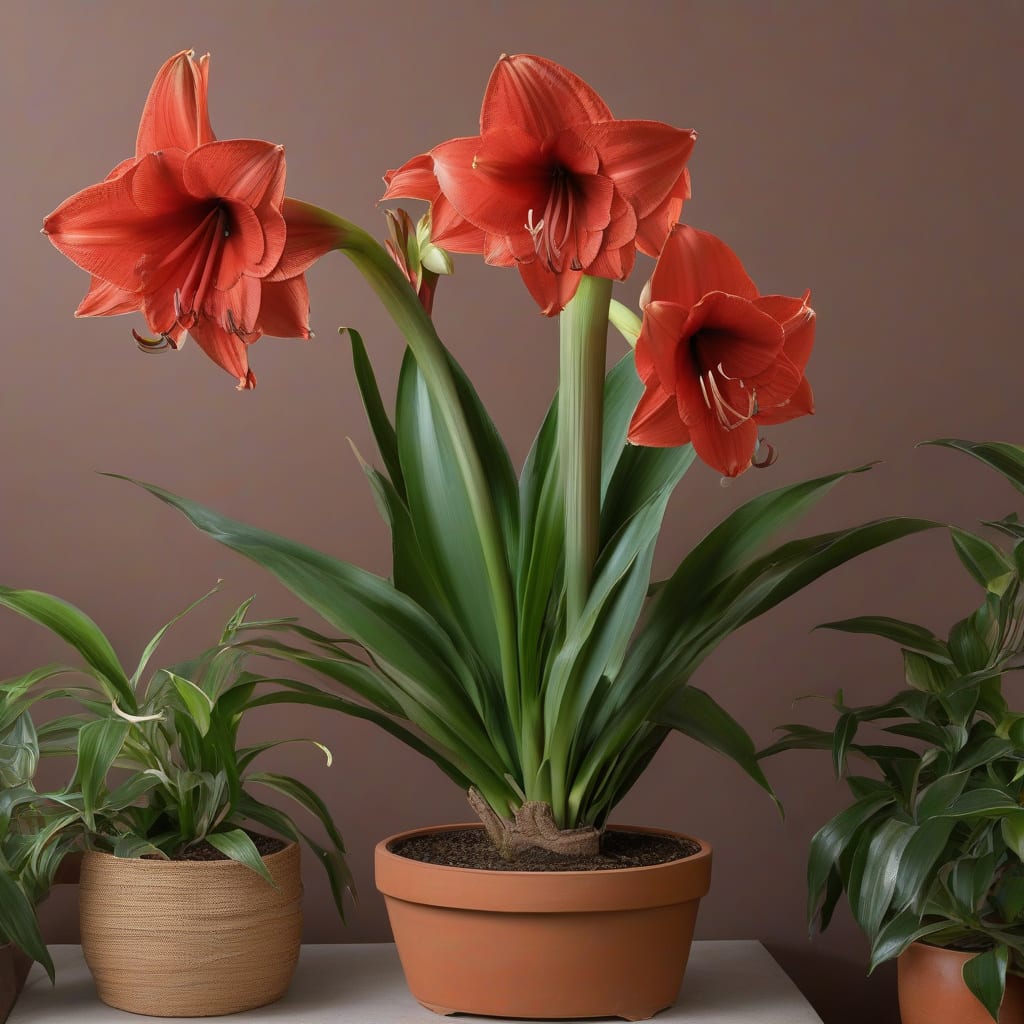
Amaryllis plants 💐 are known for their dramatic flowers that can transform any indoor space. Their height can vary based on factors like bulb size and growing conditions.
Understanding how tall your Amaryllis can grow helps you plan your indoor display effectively. Let’s explore the typical height range and what influences it to help you achieve the best results.


The height of an Amaryllis plant is influenced by several key factors. Understanding these factors helps gardeners optimize growing conditions for their plants.
Bulb size plays a significant role in determining the height of an Amaryllis. Larger bulbs typically produce taller stalks with more substantial flowers. The growing conditions, including light, temperature, and watering, also impact the plant’s height.
Proper care practices, such as fertilization and post-bloom care, also contribute to the overall health and height of the Amaryllis. By optimizing these factors, gardeners can encourage their Amaryllis plants to reach their maximum potential height.
The Amaryllis plant’s height is a result of a combination of its genetic potential and the growing conditions it is subjected to. By understanding and controlling these factors, gardeners can influence the height of their Amaryllis plants.
Genetic potential sets the upper limit for the plant’s height, while growing conditions and care practices determine how closely the plant approaches this potential.
For example, a large Amaryllis bulb grown in bright light and consistent moisture is likely to produce a taller stalk than a smaller bulb grown in less favorable conditions.
Understanding the factors that affect Amaryllis plant height allows gardeners to make informed decisions about how to care for their plants. By optimizing these factors, gardeners can encourage their Amaryllis plants to reach their maximum potential height 🌼.
In addition to bulb size and growing conditions, fertilization plays a critical role in supporting the plant’s growth. A balanced fertilizer applied after blooming can help promote healthy foliage and future blooms.
By considering these factors and providing optimal care, gardeners can enjoy taller, healthier Amaryllis plants with more impressive flowers 🌺.
Overall, the height of an Amaryllis plant is influenced by a combination of genetic and environmental factors. By understanding and managing these factors, gardeners can promote healthy growth and maximize their plant’s height.
With proper care and attention, Amaryllis plants can thrive and produce impressive flowers that add beauty and drama to any indoor space 💐.
Amaryllis plants come in various types, each with its own growth characteristics. Understanding these differences helps gardeners choose the right variety for their needs.
The height of Amaryllis plants can vary significantly between different varieties. Some types are naturally more compact, while others can grow quite tall.
The dwarf varieties of Amaryllis are ideal for smaller spaces or containers. They typically grow between 1-2 feet tall, making them perfect for indoor displays where space is limited.
Standard varieties are more common and can grow significantly taller. They usually reach heights of 2-3 feet, with some exceptional specimens growing up to 4 feet under optimal conditions.
The maximum height an Amaryllis can achieve depends on both the variety and the growing conditions. Factors such as light exposure, watering, and fertilization all play a role in determining the plant’s ultimate height 🌼.
When selecting an Amaryllis variety, consider the space where the plant will be displayed. For larger areas, standard varieties can make a dramatic statement, while dwarf varieties are better suited for smaller spaces or more subtle displays.
By understanding the typical and maximum heights of different Amaryllis varieties, gardeners can make informed decisions about which type to grow and how to care for them to achieve the best results 🌺.
To achieve maximum height with your Amaryllis, it’s essential to provide optimal growing conditions. This includes ensuring the plant receives bright, indirect light and maintaining consistent moisture levels 🌼.
Place your Amaryllis near a south-facing window with a curtain to filter the direct sunlight, ensuring 4-6 hours of bright, indirect light daily.
Water your Amaryllis when the top inch of soil feels dry. Ensure the pot has good drainage to prevent waterlogging, which can lead to root rot.
Apply a balanced fertilizer after the blooming period to support healthy foliage growth and promote future blooms.
By following these tips, you can encourage your Amaryllis to reach its maximum potential height and enjoy a more impressive display 🌺.
Proper care and attention to detail are key to maximizing the growth height of your Amaryllis. With the right conditions and care practices, you can enjoy a taller, healthier plant with more vibrant flowers 💐.
