
Beautiful Plants For Your Interior
Beautiful Plants For Your Interior
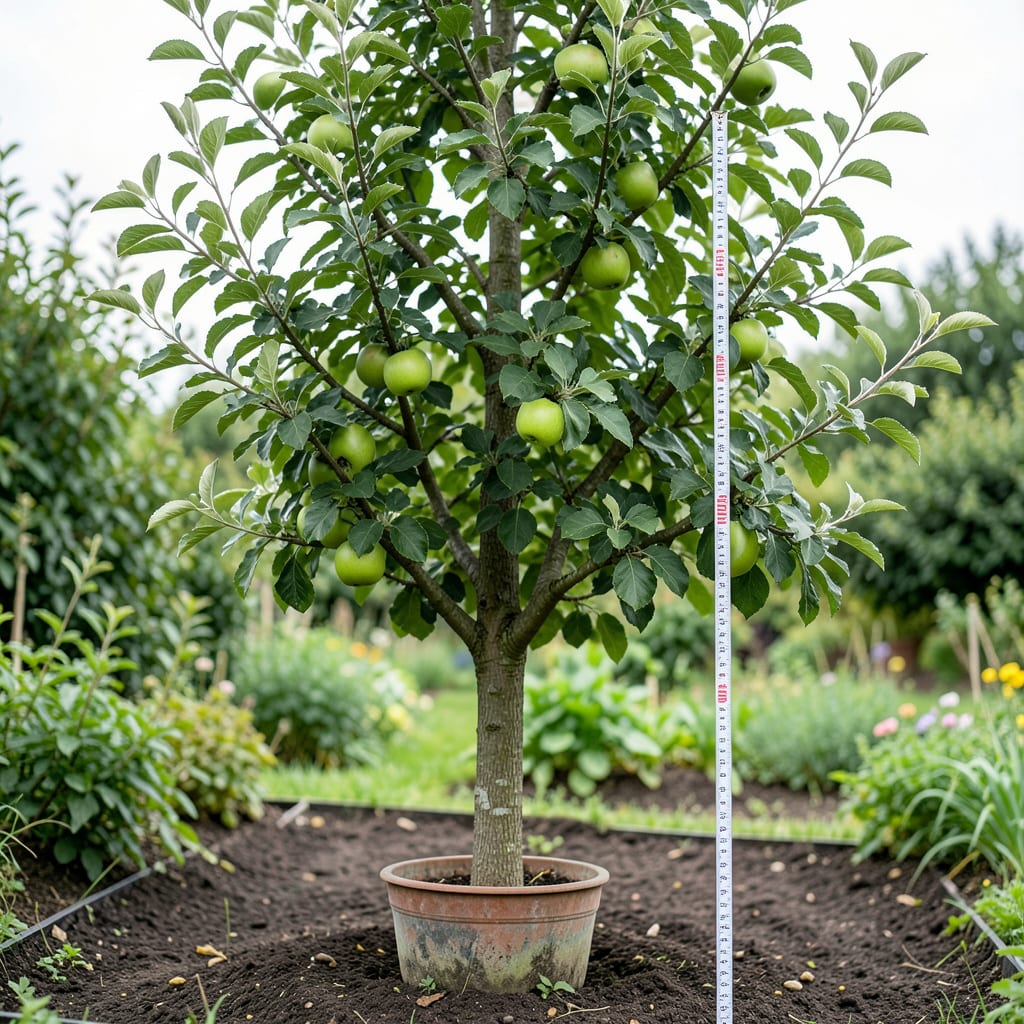
When planning your orchard or garden, understanding how tall your fruit trees will grow is crucial. The Apple Tree 🍎 is a great example, typically growing between 15-25 feet tall, depending on factors like rootstock and pruning practices.
Let’s explore what influences fruit tree height and how you can manage it for optimal growth and fruit production in your garden.


When planning your orchard or garden, understanding the factors that influence fruit tree height is essential. The mature height of fruit trees can vary significantly based on several key factors.
Rootstock, variety, climate, soil quality, and pruning practices all play crucial roles in determining how tall a fruit tree will grow. Let’s examine these factors more closely.
The rootstock is particularly important as it can determine whether a tree will be dwarf, semi-dwarf, or standard size. For example, dwarf rootstocks typically result in trees that grow 8-12 feet tall, while standard rootstocks can lead to trees exceeding 20 feet in height 🌳.
Climate and soil conditions also significantly impact fruit tree growth. Trees grown in optimal conditions with plenty of sunlight and well-draining soil tend to grow more vigorously than those in less favorable environments.
Pruning practices are another critical factor. Regular pruning not only helps control the height of fruit trees but also promotes healthier growth and better fruit production. Techniques such as heading back and thinning can be used to manage tree size effectively ✂️.
Understanding these factors is key to planning and maintaining a productive orchard. By selecting the right rootstock and variety, and implementing appropriate pruning and care practices, you can manage the height of your fruit trees to suit your needs 🌟.
For instance, if you have limited space, choosing a dwarf or semi-dwarf variety can be a practical solution. These trees not only remain smaller but also tend to produce fruit sooner than standard-sized trees.
Moreover, climate considerations are vital. Fruit trees in areas with longer growing seasons may grow taller than those in regions with shorter growing seasons due to the extended period of growth.
Soil quality affects not just the height but also the overall health of the tree. Fertile soils with good drainage support robust growth, while poor soil conditions can limit a tree’s potential height and productivity 🌱.
In conclusion, the height of fruit trees is influenced by a combination of genetic and environmental factors. By understanding and managing these factors, you can cultivate healthy and productive fruit trees that fit your garden or orchard space perfectly 🌿.
Effective management of fruit tree height not only enhances the aesthetic appeal of your garden but also improves fruit accessibility and overall yield. This makes it easier to enjoy the fruits of your labor, literally 🍎.
Understanding the maximum heights of different fruit tree varieties is essential for effective garden planning. The mature height of fruit trees can vary significantly based on their specific variety.
Different fruit trees have distinct growth patterns and maximum heights. Let’s examine some popular varieties and their typical mature heights to better plan your orchard or garden space.
The Apple Tree is one of the most common fruit trees, with mature heights ranging from 15 to 25 feet, depending on the rootstock. Dwarf varieties typically grow 8-12 feet tall, while standard varieties can reach heights of 20-30 feet 🌳.
Pear Trees generally have a similar height range to apple trees, with typical mature heights between 15-20 feet. They also benefit from dwarf or semi-dwarf rootstocks for smaller spaces.
Cherry Trees can vary significantly in height. Sweet cherry trees tend to be larger, often growing up to 20-30 feet tall, while sour cherry trees are generally smaller, typically reaching heights of 15-20 feet 🌟.
When selecting fruit trees, considering the mature height is crucial for spacing and maintenance. Proper spacing ensures that trees receive adequate sunlight and air circulation, promoting healthy growth and fruit production 🌿.
For smaller gardens, dwarf or semi-dwarf rootstocks are recommended as they result in smaller trees that are easier to manage and harvest. These trees also tend to produce fruit sooner than their standard counterparts.
Understanding the growth habits and maximum heights of different fruit tree varieties allows you to plan your orchard more effectively, ensuring that each tree has the space it needs to thrive and produce abundant fruit 🍎.
By choosing the right variety and rootstock for your space, you can enjoy a productive and beautiful orchard for years to come 🌟.
Effective pruning is crucial for managing fruit tree height and promoting healthy growth. By using the right techniques, you can control the size of your trees, improve fruit production, and maintain accessibility in your orchard.
Pruning involves removing specific branches to achieve desired outcomes. Let’s explore some practical pruning tips to help you manage fruit tree height effectively.
Start by identifying dead, diseased, or damaged branches that need removal. This helps prevent disease spread and promotes healthy growth.
Thin out the center of the tree to allow more sunlight to penetrate. This improves fruit production and reduces disease risk.
Prune the top branches to control height. Cutting back the central leader encourages a more bushy growth habit.
Regular pruning not only helps in managing the height but also enhances the overall health and productivity of your fruit trees. It’s essential to use the right tools and techniques to avoid damaging the trees.
For dwarf and semi-dwarf trees, pruning is particularly important as it helps maintain their compact size while encouraging fruiting. These trees typically require more frequent pruning to keep them healthy and productive.
Pruning techniques such as heading back and thinning are effective for managing tree size. Heading back involves cutting back the tips of branches, while thinning involves removing entire branches to reduce density.
By implementing these pruning techniques, you can ensure your fruit trees remain at a manageable height and continue to produce high-quality fruit. Regular maintenance is key to a thriving orchard 🌳.
Proper pruning also improves air circulation and sunlight penetration, which are critical for fruit development and overall tree health 🌟.
In conclusion, managing fruit tree height through pruning is a vital aspect of orchard care. By following these practical tips, you can maintain healthy, productive trees that fit well within your garden space 🌿.
Fruit trees can grow anywhere from 8 to 30 feet tall, depending on the variety and rootstock. Dwarf varieties tend to be on the shorter end, while standard trees can reach greater heights .
The rootstock determines whether a tree will be dwarf, semi-dwarf, or standard size. Dwarf rootstocks result in trees that grow 8-12 feet tall, while standard rootstocks can lead to trees exceeding 20 feet in height .
Yes, regular pruning can effectively control the height of fruit trees. Techniques such as heading back and thinning can be used to manage tree size and promote healthier growth .
Different fruit trees have varying height ranges. For example, Apple Trees typically grow between 15-25 feet, while Cherry Trees can range from 15-30 feet tall. The specific variety and growing conditions also play a significant role .
