
Beautiful Plants For Your Interior
Beautiful Plants For Your Interior
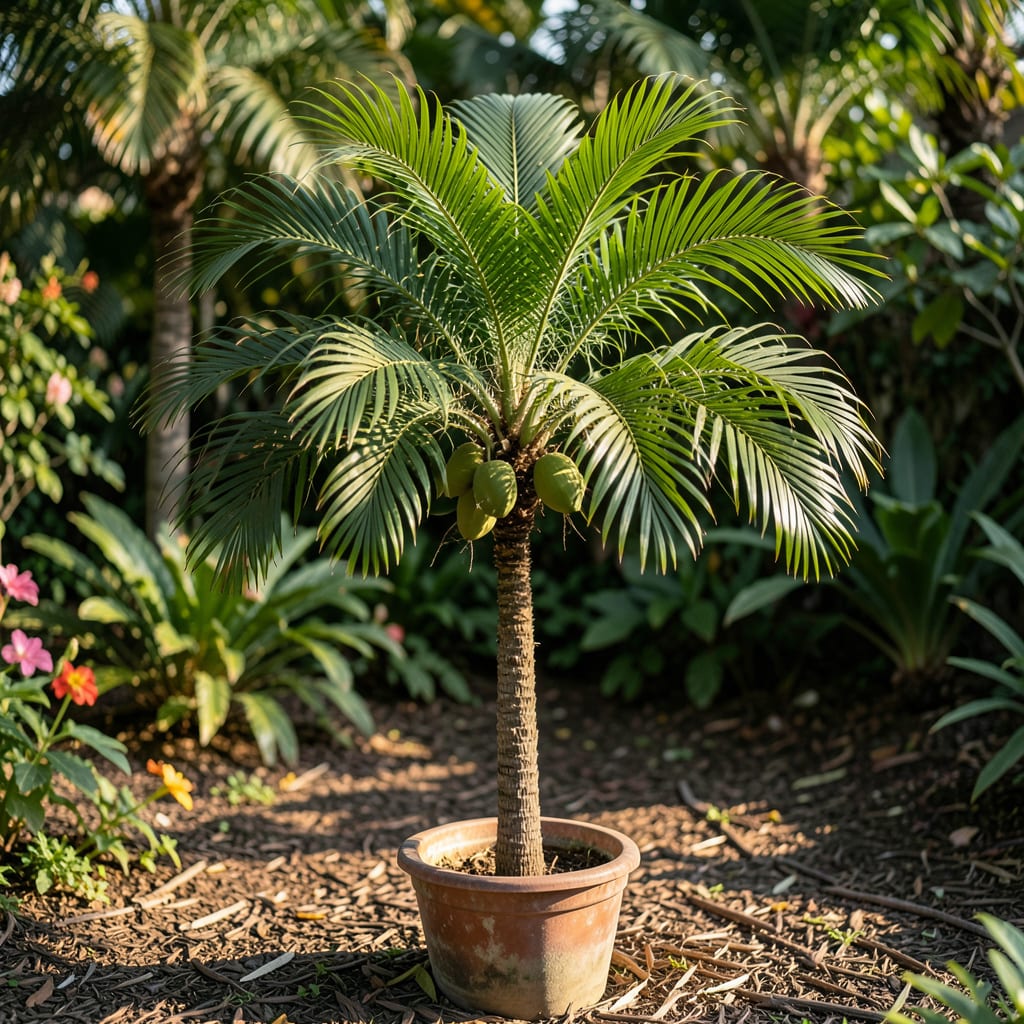
I’ve always been fascinated by the compact size of Dwarf Coconut Trees 🌴. Growing up to 6-10 feet tall, they’re perfect for smaller spaces. But what makes them stay relatively small, and how can you keep them thriving in your garden?
Understanding the growth habits of these trees is key to their successful cultivation, especially in USDA Zone 6a. Let’s explore what you need to know to grow a healthy Dwarf Coconut Tree.


Dwarf coconut trees are known for their compact size, making them ideal for smaller gardens and container cultivation. They typically grow between 6-10 feet tall, with some varieties reaching up to 12 feet in ideal conditions 🌴.
The growth rate of dwarf coconut trees is relatively fast, especially during their early years. They can grow 1-2 feet per year until they reach maturity. Understanding their growth characteristics is essential for proper care and maintenance.
Dwarf coconut trees are not only compact but also high-yielding. They begin producing fruit within 3-5 years after planting, making them a popular choice for home gardeners. The trees require full sun and consistent moisture to thrive.
One of the key factors influencing the height of dwarf coconut trees is their genetic makeup. Different varieties have been bred for specific growth habits, ranging from 6 feet for the smallest cultivars to 12 feet for the taller dwarf types.
Soil quality plays a significant role in the growth of dwarf coconut trees. They prefer well-draining soil rich in organic matter and nutrients. Regular fertilization with a balanced NPK ratio supports healthy growth and fruit production.
Climate is another crucial factor affecting the height of dwarf coconut trees. They thrive in tropical and subtropical regions with high humidity and temperatures between 64°F and 90°F. In cooler climates, they may need protection from frost.
Proper maintenance practices, such as regular pruning and pest management, can also impact the tree’s height and overall health. Pruning helps maintain a desired shape and encourages fruiting.
In addition to their compact size, dwarf coconut trees are valued for their early and abundant fruit production. They can produce multiple coconuts per year, providing a steady supply of fresh nuts.
The compact growth habit of dwarf coconut trees makes them suitable for various landscaping applications, from container gardens to small orchards. Their versatility and productivity have made them increasingly popular among gardeners worldwide 🌿.
By understanding the growth characteristics of dwarf coconut trees, gardeners can make informed decisions about planting and caring for these productive palms. Whether grown in containers or in the ground, dwarf coconut trees can be a rewarding addition to any garden.
The height of dwarf coconut trees can be influenced by several environmental and cultivation factors. Understanding these factors is crucial for gardeners who want to optimize the growth and productivity of their trees 🌴.
Soil quality is one of the primary factors affecting the height of dwarf coconut trees. They thrive in well-draining soil that is rich in organic matter and nutrients. Regular soil testing can help identify nutrient deficiencies that may impact tree growth.
Soil quality, climate, and maintenance practices significantly impact the height and overall health of dwarf coconut trees.
Climate is another critical factor that affects the height of dwarf coconut trees. They prefer tropical and subtropical regions with high humidity and temperatures between 64°F and 90°F. In cooler climates, protection from frost is essential to prevent damage.
Maintenance practices, such as regular pruning and pest management, also play a significant role in determining the tree’s height and overall health. Pruning helps maintain a desired shape and encourages fruiting.
In addition to these factors, the genetic makeup of the tree influences its mature height. Different dwarf coconut tree varieties have been bred for specific growth habits, ranging from 6 feet for the smallest cultivars to 12 feet for the taller dwarf types.
By understanding and managing these factors, gardeners can optimize the growth and productivity of their dwarf coconut trees. Proper care and attention to the tree’s needs can result in a healthy and productive tree 🌿.
Regular monitoring of the tree’s condition and adjusting care practices accordingly can help achieve the desired height and fruit production. With the right conditions and care, dwarf coconut trees can thrive and provide a bountiful harvest.
Overall, the height of dwarf coconut trees is influenced by a combination of genetic, environmental, and cultivation factors. By understanding these factors, gardeners can make informed decisions about planting and caring for their trees.
When selecting a dwarf coconut tree for your garden, it’s essential to understand the different varieties and their growth characteristics. The height of these trees can vary significantly depending on the specific cultivar 🌴.
Some popular dwarf coconut tree varieties include the Malayan Dwarf, Fiji Dwarf, and Maypan. Each of these varieties has its unique growth habits and mature heights.
The Malayan Dwarf is known for its compact size, typically growing between 6-8 feet tall. It’s a popular choice for smaller gardens and container cultivation due to its moderate growth rate and high yield.
The Fiji Dwarf variety tends to be slightly taller, reaching heights of 8-10 feet. It has a fast growth rate and is known for its early and abundant fruit production.
The Maypan variety offers a balance between size and productivity, growing to be around 7-9 feet tall. It has a moderate growth rate and is valued for its disease resistance and high yield.
When choosing a dwarf coconut tree variety, consider factors such as available space, desired height, and growth rate. Understanding these characteristics will help you select the right tree for your garden 🌿.
By comparing different dwarf coconut tree varieties, gardeners can make informed decisions about which type best suits their needs and growing conditions. Each variety has its unique advantages and growth patterns.
Proper care and maintenance are crucial for the health and productivity of dwarf coconut trees, regardless of the variety. Regular watering, fertilization, and pruning will help ensure optimal growth and fruit production.
In conclusion, dwarf coconut tree varieties offer a range of growth characteristics that can suit different gardening needs. By understanding these differences, gardeners can choose the best variety for their space and enjoy a bountiful harvest 🌴.
Dwarf coconut trees usually grow between 6-10 feet tall, with some varieties reaching up to 12 feet in ideal conditions. Their compact size makes them perfect for smaller gardens and container cultivation. This height range is ideal for home gardeners who want to grow coconut trees in limited spaces.
Dwarf coconut trees have a relatively fast growth rate, especially during their early years. They can grow 1-2 feet per year until they reach maturity. This rapid growth makes them a popular choice for gardeners who want to enjoy coconuts sooner. The growth rate can be influenced by factors like soil quality, climate, and maintenance practices.
Dwarf coconut trees are known for their early production. They typically start bearing fruit within 3-5 years after planting. This early fruiting is one of the reasons they’re so popular among home gardeners. Proper care, including regular watering and fertilization, can help ensure a bountiful harvest.
While dwarf coconut trees are bred to be compact, you can influence their height through proper maintenance. Regular pruning can help maintain a desired shape and size. Additionally, factors like soil quality, climate, and fertilization can impact the tree’s overall growth. By managing these factors, you can optimize the tree’s height and productivity.
