
Beautiful Plants For Your Interior
Beautiful Plants For Your Interior
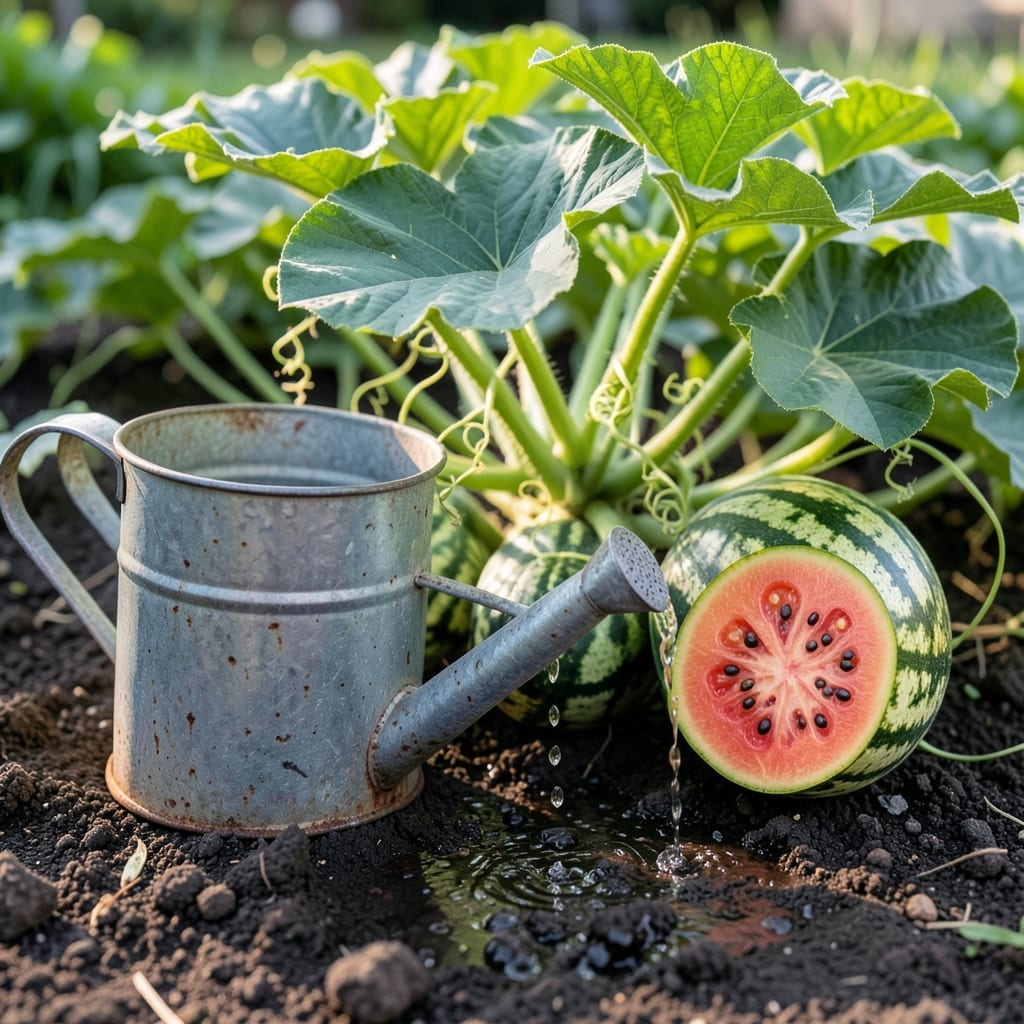
I remember the first time I grew 🍉 Watermelon and watched my plants wilt from too much water. That’s when I learned these thirsty vines need a careful balance to thrive.
Getting the watering right means the difference between sweet, juicy melons and a disappointing harvest. It’s not just about frequency—it’s about timing and technique too.
Discover how to keep your Watermelon happy through every growth stage, from spring planting to summer harvest. Let me show you the simple secrets.
I’ve learned that watermelon plants have different water needs as they grow. Getting this right ensures strong vines and sweet fruit all season long. 🌱
The key is adjusting your watering frequency and amount to match each growth stage. Too much or too little water can stress the plant and affect your harvest.
| Growth Stage | Water Frequency | Water Amount | Notes |
|---|---|---|---|
| Germination | Daily | Keep soil moist | Prevent drying out |
| Vine Growth | Every 2-3 days | 1 inch per week | Encourage strong stems |
| Flowering | Every 3-4 days | 1-1.5 inches | Support bloom development |
| Fruit Maturation | Every 5-7 days | 1.5-2 inches | Reduce before harvest |
During germination, I keep the soil consistently moist but not soggy. This helps the seeds sprout without rotting in the ground.
Once the vines start growing, I switch to deep watering every 2-3 days. This encourages strong root development and prepares the plant for flowering.
At the flowering stage, I maintain steady moisture but avoid overwatering. Too much water can cause blossom drop, which means fewer melons.
When the fruit begins to form, I increase water slightly to 1.5-2 inches per week. This ensures the melons grow large and juicy.
As the harvest nears, I reduce watering to once a week. This helps concentrate the sugars for a sweeter taste.
In hot climates, I water more frequently, sometimes daily during heatwaves. Always check the soil moisture before adding more water. ☀️
For sandy soil, I water more often since it drains quickly. With clay soil, I space out watering to prevent waterlogging and root rot. 💧
I always check my watermelon plants for visual clues about their water needs. Catching these signs early prevents stress and ensures healthy growth. 🌱
Both overwatering and underwatering show distinct symptoms. Learning to spot them helps me adjust my watering schedule before it’s too late.
When I see wilting leaves in the heat of day, I don’t panic—this is normal. But if they stay wilted in the cool morning, it’s time to investigate.
Yellow leaves often confuse gardeners. With watermelons, it’s usually too much water rather than too little. I check the soil moisture 2 inches down to be sure.
Fruit cracking is a heartbreaking sign of uneven watering. I’ve learned to maintain consistent moisture especially as the melons mature.
For dry, crispy leaf edges, I water deeply and add mulch to retain moisture. This usually revives the plant within a day. 💧
If I notice mushy stems or black spots, I stop watering immediately and let the soil dry out. Sometimes I need to improve drainage to save the plant.