
Beautiful Plants For Your Interior
Beautiful Plants For Your Interior
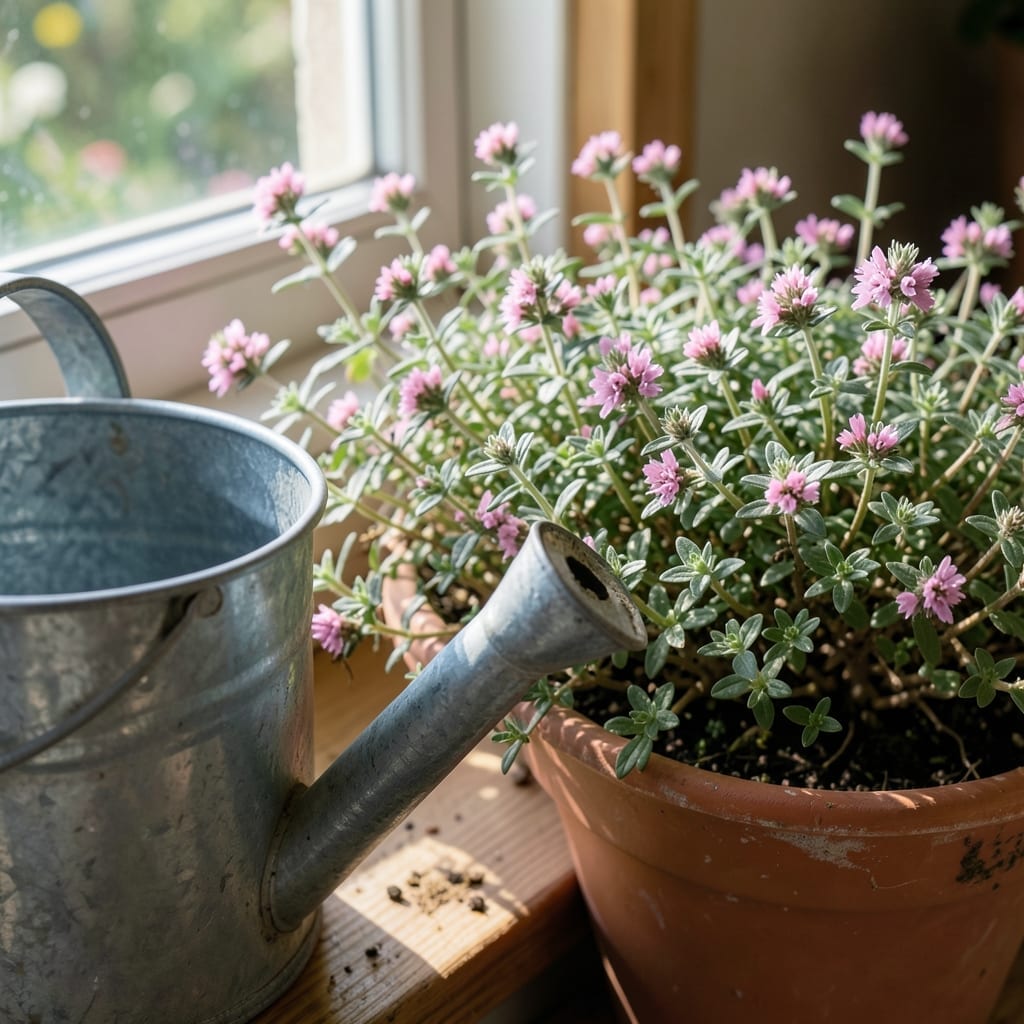
Thyme is that easy-to-grow herb everyone loves, but even the hardiest plants can suffer from too much attention. The most common mistake? Overwatering this drought-tolerant beauty.
I’ve seen 🌿 Thyme thrive in near-neglect and wither from too much care. The trick is finding that sweet spot where your plant gets just enough moisture without drowning its roots.
Let me show you exactly how to create the perfect watering schedule for healthy, flavorful growth. Your thyme will thank you for it.
Getting the watering schedule right for thyme starts with understanding its Mediterranean origins. This herb evolved in dry, rocky soil, so it hates soggy roots but needs consistent moisture early on.
I’ve found that established thyme can go 1-2 weeks without water, while newly planted specimens need more frequent attention. The key is well-draining soil and observing your plant’s needs.
| Growth Stage | Frequency | Amount |
|---|---|---|
| New Plantings | Every 5-7 days | Deep soak (500ml) |
| Established Plants | Every 10-14 days | Moderate soak |
| Drought Conditions | Every 7-10 days | Light watering |
| Winter Dormancy | Every 3-4 weeks | Minimal moisture |
In my experience, morning watering works best—it allows excess moisture to evaporate during the day, reducing fungal risks. Always check the top inch of soil first; if it’s dry, it’s time to water.
Climate matters too. In hot, dry areas, you might water twice a week, while in cooler, humid zones, once every 10 days could suffice. Watch your thyme’s leaf color—yellowing often signals overwatering.
For container-grown thyme, the rules change slightly. Pots dry out faster, so I water mine every 5-7 days in summer. Just ensure your container has drainage holes to prevent root rot.
Soil type is another game-changer. Sandy or loamy soil drains quickly, so you’ll water more often. Clay-heavy soil? Hold back—it retains moisture longer, and thyme despises wet feet.
I always recommend the finger test: Stick your finger 1-2 inches into the soil. If it feels dry, water deeply. If it’s moist, wait a few more days. This simple trick prevents overwatering every time.
Remember, thyme is drought-tolerant, not drought-proof. During prolonged dry spells, give it a deep drink to encourage strong root growth. But don’t overdo it—this herb thrives on a little neglect.
Seasonal adjustments are crucial. In spring and fall, I scale back to weekly watering. In winter, thyme enters dormancy, so monthly watering is often enough unless your area is unusually dry. 🌿
Thyme speaks to you through its leaves and soil. I’ve learned that drooping stems often signal thirst, while yellow leaves usually mean too much water. This herb is tough but not invincible.
The finger test is my go-to: if the top inch of soil feels bone dry, it’s time to water. But if it’s damp or cool to the touch, hold off for a few more days. Thyme prefers drier conditions over soggy ones.
I’ve noticed crispy brown edges on leaves are a classic sign of underwatering. If you see this, give your thyme a deep soak right away. It’s amazing how quickly it can bounce back with the right care.
On the flip side, mushy stems or a foul smell from the soil are red flags for root rot. This usually means too much water and poor drainage. Stop watering immediately and check your soil setup.
Another clue is leaf curl. Thyme leaves naturally curl slightly in hot weather, but if they’re tightly curled and brittle, your plant is likely begging for water. A thorough drink should perk it up.
Don’t ignore soil pulling away from the pot edges either. This gap formation often means the soil is too dry and has contracted. It’s a clear sign to water deeply and consistently for a few days.
Finally, trust your sense of smell. Healthy thyme has a strong, fresh aroma. If the scent is weak or musty, your watering routine may need adjustment. 🌿