
Beautiful Plants For Your Interior
Beautiful Plants For Your Interior
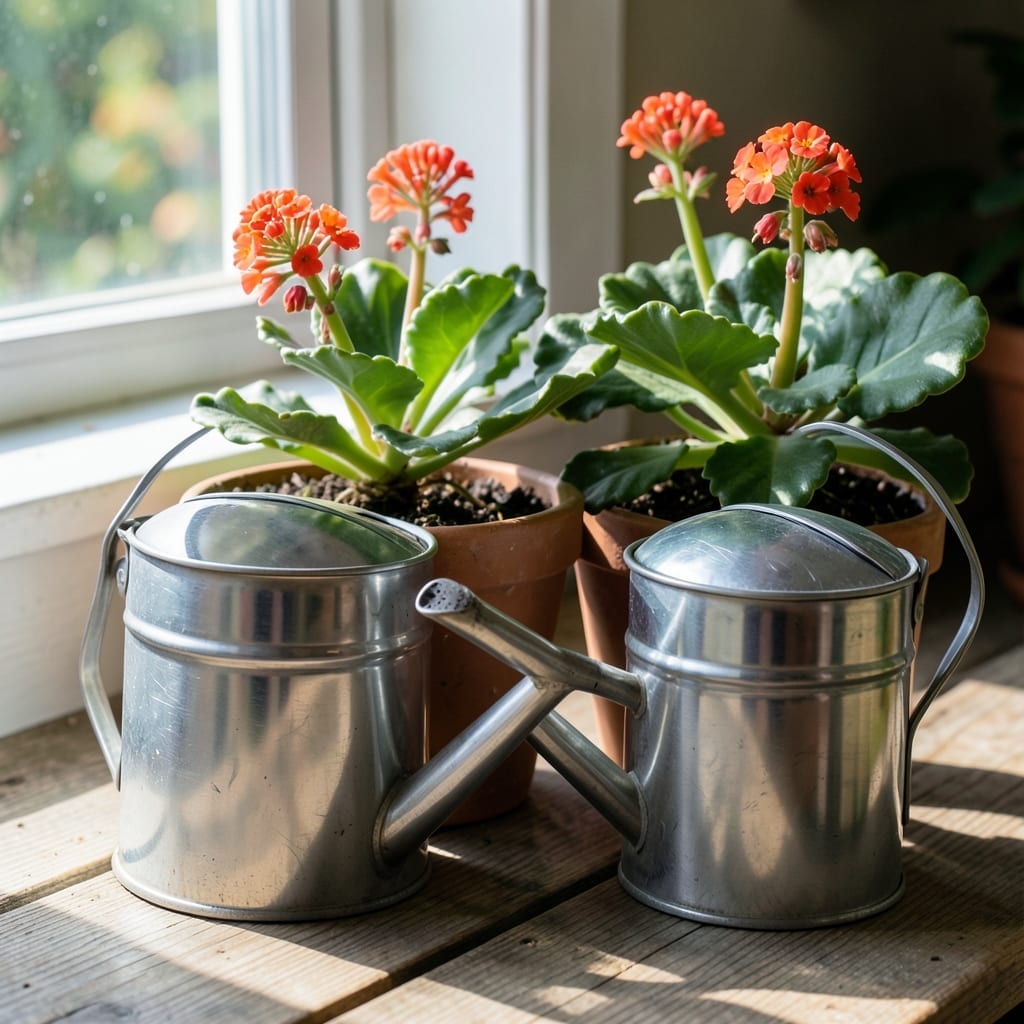
Kalanchoe plants thrive on neglect, but their watering needs can make or break their vibrant blooms. I learned the hard way that too much love can actually harm these resilient succulents.
Finding the right balance is the key to keeping your 🌸 Kalanchoe healthy and flourishing. It’s not about frequent watering – it’s about smart watering.
Discover how to read your plant’s subtle signals and create a watering schedule that works perfectly for your environment. Let’s get started.
I’ve found that Kalanchoe plants prefer a less-is-more approach to watering. These succulents store water in their leaves, making them drought-tolerant but sensitive to overwatering.
In my experience, watering every 2-3 weeks works best for most environments. However, this frequency depends on your climate, soil type, and container size. 🌱
| Factor | Watering Guideline |
|---|---|
| Season | Every 2-3 weeks (spring-fall), Every 3-4 weeks (winter) |
| Soil Type | Well-draining mix reduces frequency needs |
| Pot Size | Smaller pots dry faster, may need weekly checks |
| Climate | Hot/dry areas may need weekly water |
The soak-and-dry method works perfectly for Kalanchoe. I thoroughly water the soil, then wait until it’s completely dry before watering again. This mimics their natural desert habitat.
Watch for wrinkled leaves or dry soil pulling away from the pot edges—these are clear signs of thirst. But remember, yellow leaves often mean too much water, not too little.
I always check the soil before watering by sticking my finger 1-2 inches deep. If it feels dry, it’s time to water. If it’s damp, wait a few days and check again. ☀️
For potted Kalanchoe, I recommend using containers with drainage holes to prevent root rot. Terracotta pots are ideal because they allow soil to dry faster than plastic ones.
In humid environments, you might water even less frequently. I’ve seen Kalanchoe thrive with monthly watering in high-humidity areas. The key is observing your specific plant’s needs.
During the growing season (spring and summer), your Kalanchoe may need slightly more water. But in winter dormancy, I cut back to every 3-4 weeks to match their slower growth.
Remember that overwatering is the most common mistake with these plants. When in doubt, wait another day—your Kalanchoe will thank you with vibrant blooms and healthy growth. 🪴
I adjust my Kalanchoe watering schedule throughout the year to match its natural growth cycles. These succulents have different needs in each season, and I’ve learned to listen to what the plant tells me.
Spring and summer are active growing periods, so I water slightly more often—about every 2 weeks. But I always let the soil dry completely between waterings to prevent root rot. 🌱
During summer heatwaves, I check my Kalanchoe more frequently. If the soil dries out within a week, I’ll water deeply but still ensure proper drainage to avoid waterlogging the roots.
In fall, as temperatures drop, I gradually reduce watering to every 3 weeks. This helps prepare the plant for its winter dormancy period when growth slows dramatically.
Winter is when I’m most cautious. I water just once a month, only when the soil is completely dry. Overwatering during dormancy is a common mistake that can lead to root rot. ☀️
I’ve found that terracotta pots help regulate moisture better in changing seasons. They wick away excess water and allow the soil to dry more evenly, which is perfect for Kalanchoe’s drought-tolerant nature.
Remember, these are general guidelines. Your specific climate and indoor conditions may require slight adjustments. The key is to observe your plant and respond to its needs. 🪴