
Beautiful Plants For Your Interior
Beautiful Plants For Your Interior
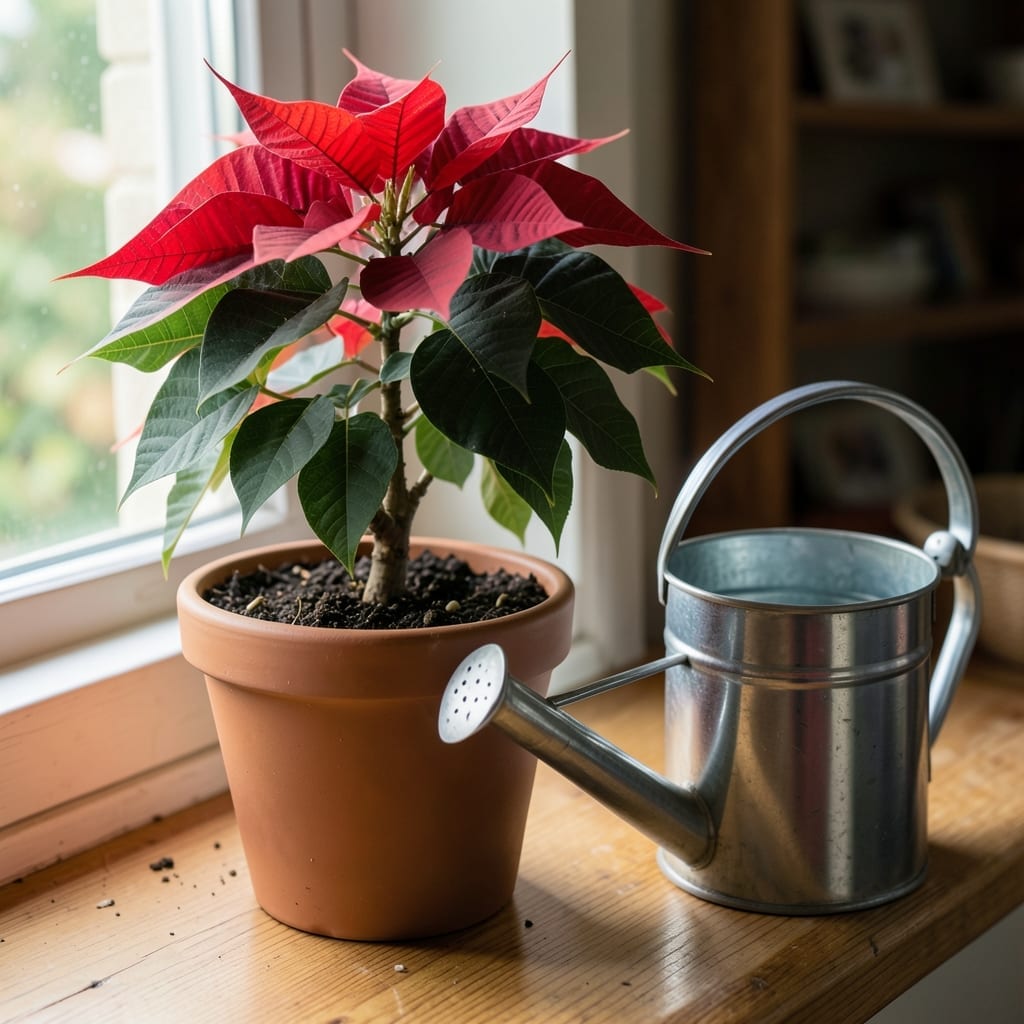
That moment when your 🌺 Poinsettia’s leaves start drooping is every plant lover’s nightmare. What seems like a simple care routine can turn into a guessing game that leaves your holiday centerpiece looking sad.
I’ve learned the hard way that getting the watering right is the key to keeping those vibrant red and green leaves thriving. It’s not just about frequency—it’s about understanding what your Poinsettia is telling you.
Let me share the most important signs to watch for and how often you should really be reaching for that watering can. Your Poinsettia will thank you.
Getting the watering frequency right for your Poinsettia starts with understanding its environment. These plants thrive in consistent moisture but despise soggy roots. I’ve found that seasonal changes dramatically affect their needs.
The key is to check the top inch of soil before watering. If it feels dry, it’s time to hydrate. This simple habit prevents the most common mistakes I see gardeners make.
| Condition | Watering Frequency |
|---|---|
| Active Growth | Every 5-7 days |
| Dormancy | Every 2-3 weeks |
| High Humidity | Reduce to every 7-10 days |
| Low Humidity | Increase to every 3-5 days |
| Bright Light | Check soil every 3-4 days |
During spring and summer, your Poinsettia is in active growth mode. I water mine every 5-7 days, but I always check the soil first. If the weather is hot or dry, I might water a day or two earlier.
In fall and winter, the plant enters dormancy. This is when I scale back to watering every 2-3 weeks. Overwatering during this period is a common mistake that leads to root rot.
Indoor Poinsettias often need more frequent watering than outdoor ones because indoor air tends to be drier. I keep a small humidity tray nearby to help maintain consistent moisture levels.
If your Poinsettia is in a bright, sunny spot, it will dry out faster. I make it a habit to check the soil every 3-4 days in these conditions. The soil should feel slightly moist but never waterlogged.
For outdoor Poinsettias, especially in USDA zones 9-11, the watering schedule depends on rainfall. I water mine deeply once a week and let the rain do the rest, always ensuring the soil drains well.
Remember, the type of pot matters too. Terracotta pots dry out faster than plastic ones, so I adjust my watering accordingly. A pot with drainage holes is non-negotiable to prevent water from pooling at the roots.
Finally, always use room-temperature water. Cold water can shock the roots, and I’ve seen this cause leaf drop in otherwise healthy plants. A little attention to these details makes all the difference. 🌺
Your Poinsettia will tell you when it’s thirsty or drowning. I’ve learned that watching for these visual cues is far more reliable than sticking to a rigid schedule. The plant’s leaves and soil give clear signals.
Start by observing the leaf condition and soil moisture. These signs help me adjust my watering routine before problems escalate. It’s about responding to the plant, not just the calendar.
When I see drooping leaves, my first move is to check the top inch of soil. If it’s bone dry, I water until it drains from the bottom. This usually revives the plant within hours.
Yellowing leaves are trickier. I stop watering and let the soil dry out completely before the next drink. Often, this is a sign of overwatering rather than nutrient deficiency.
For dry, cracked soil, I soak the pot in a water bath for 10-15 minutes. This ensures the root ball rehydrates evenly. I’ve saved many a Poinsettia with this method.
Curling edges usually mean the plant is stressed by uneven moisture. I adjust my schedule to be more consistent, ensuring the soil stays slightly moist but never soggy.
If I spot mushy stems or black roots, I act fast. I remove the plant from its pot, trim the rotten roots, and repot in fresh, well-draining soil. It’s a last resort, but often effective. 🌺