
Beautiful Plants For Your Interior
Beautiful Plants For Your Interior
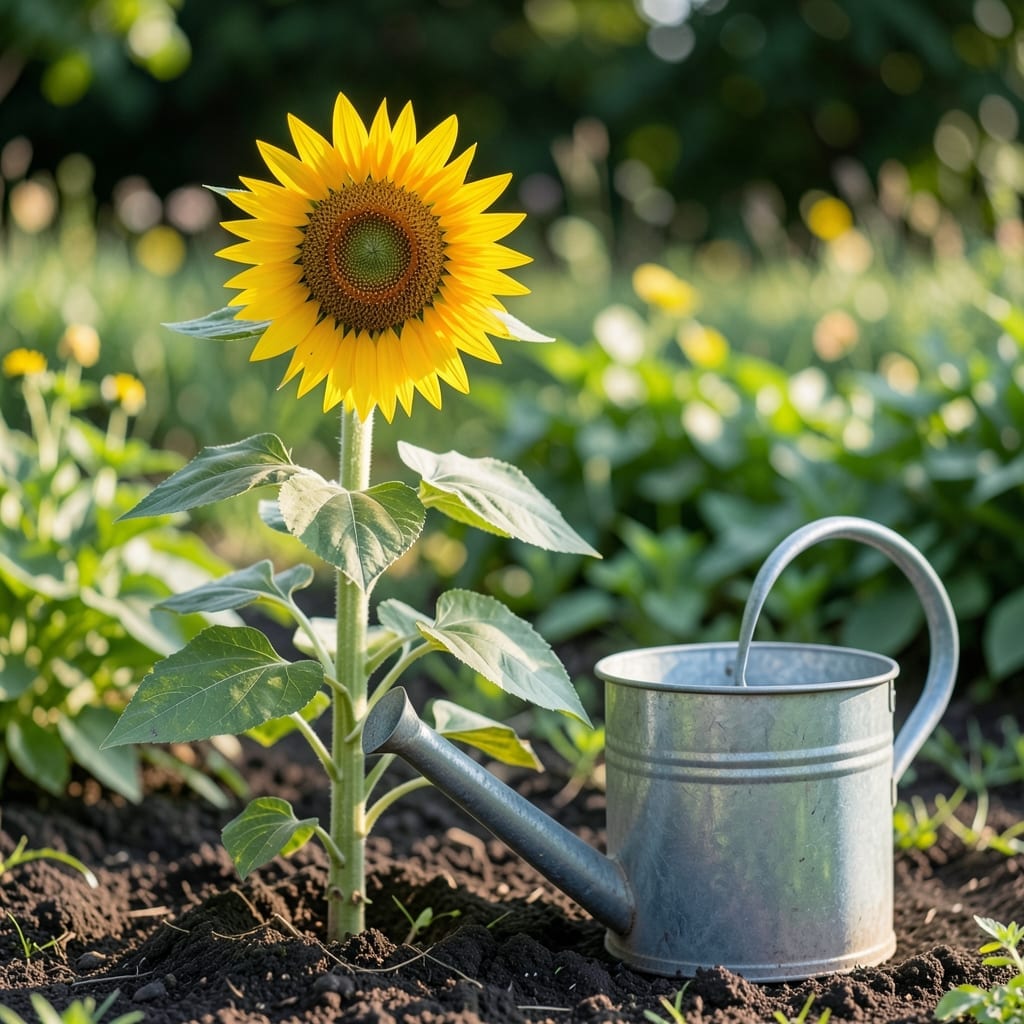
There’s nothing quite like seeing a Sunflower 🌻 standing tall with its bright yellow face turned toward the sun. But getting those gorgeous blooms depends on one crucial factor: proper watering.
Many gardeners struggle with knowing exactly when and how much to water. The difference between a thriving plant and a wilting one often comes down to timing and technique.
Let me show you the easiest way to keep your sunflowers healthy and vibrant throughout the growing season. The answer might surprise you.
Getting your sunflower watering right starts with understanding each growth phase. As a gardener, I’ve learned that what works for seedlings won’t suit mature plants. The key is adjusting your approach as they grow taller and stronger.
Newly planted seeds need consistent moisture to sprout, while established sunflowers can handle slightly drier conditions. I’ll break down exactly how much and how often to water at each stage of development.
| Growth Stage | Water Frequency | Water Amount | Key Tip |
|---|---|---|---|
| Seedling | Daily | Light misting | Keep soil moist |
| Young Plant | Every 2-3 days | 1 inch per week | Morning watering |
| Mature Plant | Weekly | Deep soak | Drought tolerant |
| Flowering | 2x weekly | 1-2 inches | Avoid wetting head |
During the seedling stage, I recommend using a spray bottle to gently mist the soil. This prevents disturbing the delicate seeds while keeping the top inch of soil consistently moist. You’ll typically see sprouts within 7-10 days with this method.
As your sunflowers grow into young plants, switch to a watering can with a gentle shower head. Water at the base every 2-3 days, ensuring the soil stays moist but not soggy. This is when strong roots begin to develop.
Once your sunflowers reach maturity, they become more drought-tolerant. I find that deep watering once a week works best, encouraging the roots to grow deeper into the soil. This makes them more resilient during dry spells.
During the flowering stage, your sunflowers need the most attention. I increase watering to twice weekly, giving them about 1-2 inches of water each time. Be careful to water at the base and avoid wetting the flower head.
The best time to water is always in the early morning. This allows the plants to absorb moisture before the heat of the day and reduces the risk of fungal diseases. I’ve found this simple habit makes a huge difference in plant health.
Remember that these are general guidelines. Your specific watering needs may vary based on your soil type and climate conditions. Sandy soils drain faster and may need more frequent watering, while clay soils retain moisture longer.
In my experience, it’s always better to water deeply and less frequently than to give small amounts of water daily. This encourages your sunflowers to develop deep, strong root systems that will support their impressive height. ☀️
Knowing when your sunflowers are thirsty or drowning can save your plants. I’ve found that visual cues are the most reliable indicators of watering needs. Learning these signs helps prevent both underwatering and overwatering issues.
Some signals are subtle, while others scream for attention. I’ll share the most common warning signs I watch for in my garden, so you can adjust your watering routine before problems escalate.
When I see drooping leaves in the early morning, I know my sunflowers need water right away. This is especially common during hot weather or if I’ve missed a watering day. The plants usually perk up within a few hours after a good drink.
Yellowing leaves at the base of the plant often indicate overwatering. I check the soil by sticking my finger in – if it feels soggy, I hold off on watering. This is a common issue with clay soils that don’t drain well.
For dry, cracked soil, I use the finger test: if the top inch feels dry, it’s time to water. I’ve learned that deep watering encourages stronger roots. This is particularly important for newly planted sunflowers establishing their root systems.
During heat waves, I watch for wilting in the afternoon. This tells me my sunflowers need more frequent watering. I adjust my schedule to water every 2-3 days instead of weekly during these periods.
If I notice mushy stems at the base, I know I’ve been too generous with water. I immediately reduce watering and ensure my sunflowers have good drainage. This often means improving the soil with compost or moving to a better-draining spot.
🌻