
Beautiful Plants For Your Interior
Beautiful Plants For Your Interior
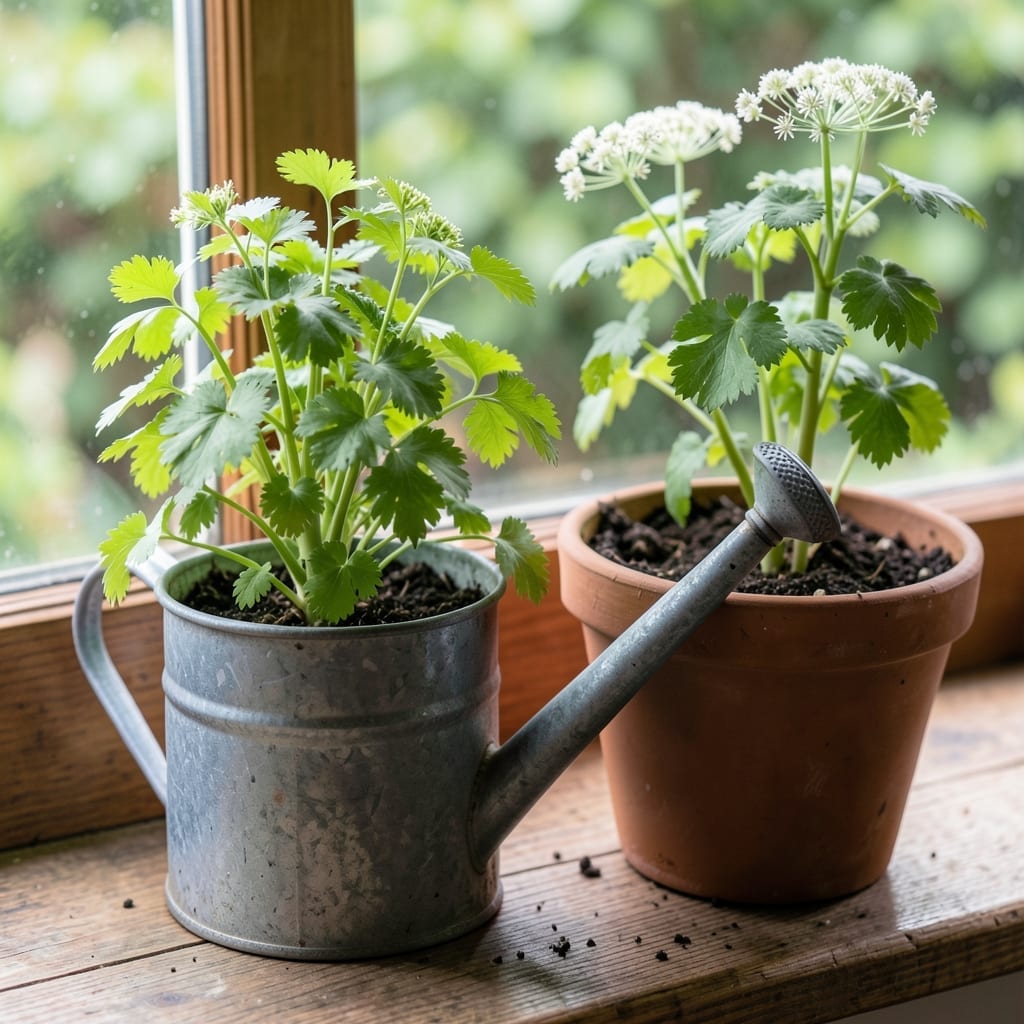
Cilantro thrives with the right watering routine, but overdoing it can lead to wilting or root rot. Discover the perfect balance to keep your 🌿 cilantro lush and flavorful all season long.
Getting the watering right is the key to healthy growth. Too much or too little can stress the plant, affecting its taste and yield.
I’ll share exact weekly guidelines and signs to watch for, so you can adjust with confidence. Let’s get started.
Cilantro prefers consistent moisture but hates soggy roots. I’ve found that 1 inch of water per week works well for most conditions. However, climate and soil type can change this.
In hot climates, cilantro may need 2 waterings per week, while cooler areas can often stick to once weekly. Container-grown cilantro dries out faster than in-ground plants.
| Climate | Frequency | Amount |
|---|---|---|
| Hot & Dry | 2x per week | 1-1.5 inches |
| Moderate | Weekly | 1 inch |
| Cool & Wet | Every 10 days | 0.75 inch |
| Containers | Every 5-7 days | 1 inch |
For potted cilantro, I check soil daily. If the top inch feels dry, it’s time to water. In-ground cilantro can go longer between waterings.
Morning watering is ideal. It gives the plant time to absorb moisture before the heat of the day. Avoid evening watering to prevent fungal diseases.
In summer months, you might need to water every 3-4 days, especially if your cilantro gets full sun. The soil should stay evenly moist but never waterlogged.
If you’re in a drought-prone area, consider mulching around your cilantro. This helps retain moisture and keeps roots cool. I use straw or shredded leaves for best results.
For young seedlings, keep the soil consistently moist. As the plant matures, you can reduce frequency slightly. Always water at the base of the plant to avoid wetting the leaves.
Overwatering is just as harmful as underwatering. If you notice yellow leaves or a foul smell from the soil, you’ve likely overdone it. Let the soil dry out a bit before watering again.
In cool climates, cilantro needs less water. I often get away with watering every 10-14 days in spring and fall. Just monitor the soil and adjust as needed 🌱
Your cilantro plants will tell you when they’re thirsty or drowning. I always look for visual cues before adjusting my watering routine. Catching these early prevents stress and keeps growth on track.
The most common sign of underwatering is drooping leaves that perk up after watering. If the soil feels bone dry an inch down, it’s time to water immediately.
If you see yellowing lower leaves, it’s often a sign of root rot from too much water. I recommend checking the roots—if they’re mushy and dark, cut back on water immediately.
Brown leaf tips usually mean the air is too dry or the plant isn’t getting enough water. I solve this by watering deeply and ensuring the container has good drainage holes.
When cilantro gets too much water, the stems may turn soft and black at the base. This is stem rot, and it’s often fatal. Prevent it by using well-draining soil and proper spacing.
For container cilantro, I lift the pot to check its weight. A light pot means it’s time to water, while a heavy pot can wait. This simple trick helps avoid guesswork.
Finally, remember that cilantro bolts (goes to seed) faster in dry conditions. Keeping the soil consistently moist can delay bolting and extend your harvest 🌿