
Beautiful Plants For Your Interior
Beautiful Plants For Your Interior
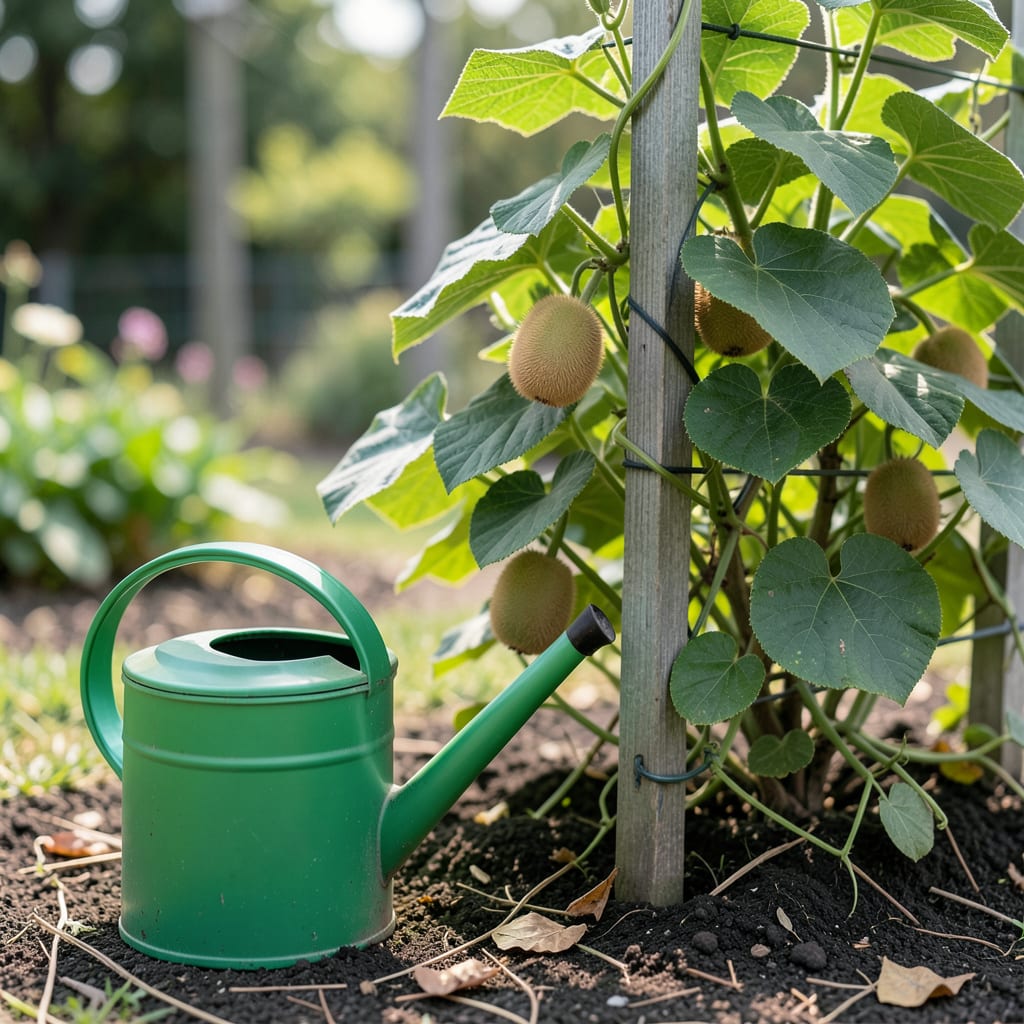
Growing a healthy kiwi plant 🥝 requires understanding its watering needs. In USDA Zone 6, kiwi plants need consistent moisture, especially during their growing season from April to October.
I’ll guide you through the ideal watering schedule and frequency to keep your kiwi plant thriving. Let’s explore the best practices for watering your kiwi plant to ensure optimal growth and fruit production.


Kiwi plants require consistent moisture to thrive, especially during their growing season from April to October in USDA Zone 6. The amount of water a kiwi plant needs depends on several factors, including climate, soil type, plant age, and growth stage 🌟.
I recommend checking the soil moisture by inserting your finger into the soil up to the second knuckle. If the soil feels dry, it’s time to water your kiwi plant. The ideal soil condition is consistently moist but not waterlogged.
The water amount for kiwi plants is typically 2 gallons per watering session for mature plants. However, this can vary based on the plant’s size and soil conditions.
To ensure your kiwi plant receives the right amount of water, consider using drip irrigation or soaker hoses. These methods deliver water directly to the roots, reducing evaporation and runoff.
Soil type also plays a crucial role in determining watering needs. Kiwi plants prefer well-draining soil to prevent root rot. If your soil is heavy clay, consider amending it with organic matter to improve drainage.
During the flowering and fruiting stages, kiwi plants require consistent moisture to support fruit development. Monitor soil moisture closely during these periods to avoid stressing the plant.
In hot and dry climates, you may need to water your kiwi plant more frequently. Check the soil moisture regularly and adjust your watering schedule accordingly.
For kiwi plants in containers, watering needs may be different. Check the soil moisture daily, as containers can dry out quickly, especially during hot weather.
By understanding your kiwi plant’s specific water requirements and adjusting your watering schedule accordingly, you can promote healthy growth and maximize fruit production 🌿.
I recommend keeping a watering log to track your kiwi plant’s watering needs throughout the year. This will help you identify patterns and make adjustments as needed.
With proper watering and care, your kiwi plant should thrive and provide you with delicious fruit for years to come 🥝.
To keep your kiwi plant healthy, it’s essential to follow best watering practices. Kiwi plants prefer consistently moist soil, but overwatering can be detrimental. I’ll share effective techniques to ensure your plant receives the right amount of water 🌟.
First, let’s discuss the importance of soil moisture monitoring. Check the soil moisture by inserting your finger into the soil up to the second knuckle. If the soil feels dry, it’s time to water your kiwi plant.
Water your kiwi plant in the morning to allow the plant to absorb the water throughout the day. Avoid watering in the evening to prevent fungal diseases.
Drip irrigation is an excellent method for watering kiwi plants. It delivers water directly to the roots, reducing evaporation and runoff. This method also helps prevent leaf wetness, which can lead to diseases.
Mulching is another effective technique for retaining soil moisture. Apply a 2-3 inch layer of organic mulch around the base of your kiwi plant. This will help reduce soil temperature and prevent moisture loss.
When watering your kiwi plant,
Avoid overwatering, as it can lead to root rot and other problems. Check the soil moisture regularly, and adjust your watering schedule accordingly.
By following these best watering practices, you’ll be able to provide your kiwi plant with the right amount of water it needs to thrive. Happy growing! 🌿
I recommend monitoring your kiwi plant’s response to your watering schedule and making adjustments as needed. With proper care, your kiwi plant should produce delicious fruit for years to come 🥝.
Understanding how to adjust watering for different growth stages is crucial for optimal kiwi plant care. The watering needs of kiwi plants vary significantly across different growth stages 🌱.
During the flowering stage, kiwi plants require consistent moisture to support fruit development. I recommend checking the soil moisture regularly to ensure it’s not too dry or waterlogged.
Water your kiwi plant 2-3 times a week during the summer months when it’s producing fruit.
In the spring, kiwi plants need weekly watering, ensuring they receive 1-2 inches of water per week. As the weather warms up in summer, increase watering to 2-3 times a week.
During the fall, reduce watering to weekly as temperatures cool down. In the winter, kiwi plants require less water, so water them bi-weekly or when the soil feels dry.
By adjusting your watering schedule according to the growth stage of your kiwi plant, you can ensure optimal growth and fruit production 🌿.
Monitoring your kiwi plant’s response to the watering schedule and making adjustments as needed is key to its health. With proper care, your kiwi plant should thrive and produce delicious fruit for years to come 🥝.
Water your kiwi plant weekly during spring and fall, and 2-3 times a week during summer when it’s producing fruit. Check soil moisture by inserting your finger into the soil up to the second knuckle. If it feels dry, it’s time to water .
Use drip irrigation or soaker hoses to deliver water directly to the roots, reducing evaporation and runoff. This method also helps prevent leaf wetness, which can lead to diseases. Water in the morning to allow the plant to absorb the water throughout the day .
A mature kiwi plant typically needs 2 gallons of water per watering session. However, this can vary based on the plant’s size and soil conditions. Check the soil moisture regularly and adjust your watering schedule accordingly .
No, it’s best to avoid watering your kiwi plant in the evening as it can lead to fungal diseases. Watering in the morning allows the plant to absorb the water throughout the day and reduces the risk of disease .
