
Beautiful Plants For Your Interior
Beautiful Plants For Your Interior
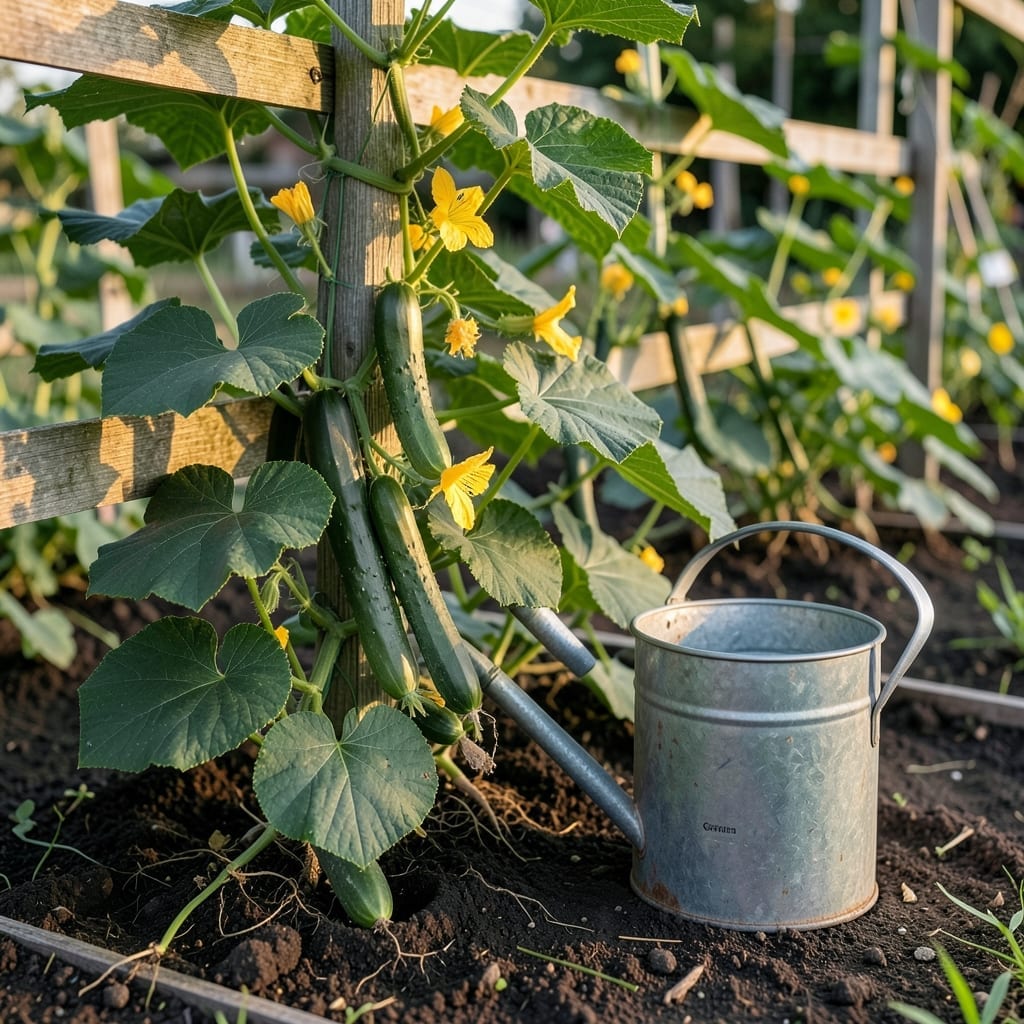
I’ve learned the hard way that cucumbers 🥒 are picky drinkers. Give them too little water and they’ll wilt; drown them and you’ll get mushy fruit. It’s all about finding that sweet spot for healthy growth.
What if I told you there’s a simple weekly schedule that takes the guesswork out of watering? You’ll never have to wonder if your plants are thirsty or swimming again.
Discover the exact balance that keeps your cucumber patch thriving from seedling to harvest. Let’s get started.
I’ve found that cucumbers need different water amounts as they grow. The key is consistent moisture without waterlogging. Each stage has unique watering needs to thrive.
From germination to harvest, your cucumbers will tell you what they need. Let me break down the perfect schedule for each phase of growth.
| Growth Stage | Water Amount | Frequency | Soil Moisture |
|---|---|---|---|
| Germination | Keep moist | Daily | Consistently damp |
| Seedling | 1 inch per week | Every 2-3 days | Moist but not soggy |
| Flowering | 1.5 inches per week | Every 3-4 days | Evenly moist |
| Fruiting | 2 inches per week | Every 2-3 days | Consistently moist |
During germination, I keep the soil consistently damp. This is when your cucumber seeds need the most attention to sprout properly.
Once seedlings emerge, I reduce to about 1 inch of water weekly. Watering every 2-3 days works best at this stage.
When flowers appear, I increase to 1.5 inches weekly. The plants are working harder now, so they need more consistent moisture.
During fruiting, I give my cucumbers about 2 inches weekly. This is when they’re most thirsty, producing all those crisp cucumbers we love.
Remember, these are general guidelines. Your specific needs may vary based on soil type and climate. Always check soil moisture before watering.
I use the finger test – if the top inch of soil feels dry, it’s time to water. This simple trick prevents both overwatering and underwatering. 🌱
I’ve seen firsthand how overwatered cucumbers develop yellow leaves and mushy stems. The plants look drowned and weak, often with root rot setting in.
On the flip side, underwatered cucumbers have dry, brittle leaves that curl at the edges. The soil pulls away from the stem, and growth slows dramatically.
| Issue | Signs | Solution |
|---|---|---|
| Overwatering | Yellow leaves, mushy stems | Reduce water, improve drainage |
| Underwatering | Dry leaves, soil pulling away | Water deeply, add mulch |
| Fungal Issues | White powdery spots | Water at base, avoid leaves |
One clear sign of overwatering is mold growth on the soil surface. This happens when the roots can’t breathe. I always check for standing water after rain.
Underwatered plants often have wilted leaves during the hottest part of the day. But don’t confuse this with natural midday droop – check soil moisture first.
I’ve found that yellowing between veins on leaves often signals overwatering. Meanwhile, brown crispy edges usually mean the plant needs more water.
The finger test is my go-to: if the top 2 inches of soil are dry, it’s time to water. This simple check prevents most watering problems before they start. 🌿