
Beautiful Plants For Your Interior
Beautiful Plants For Your Interior
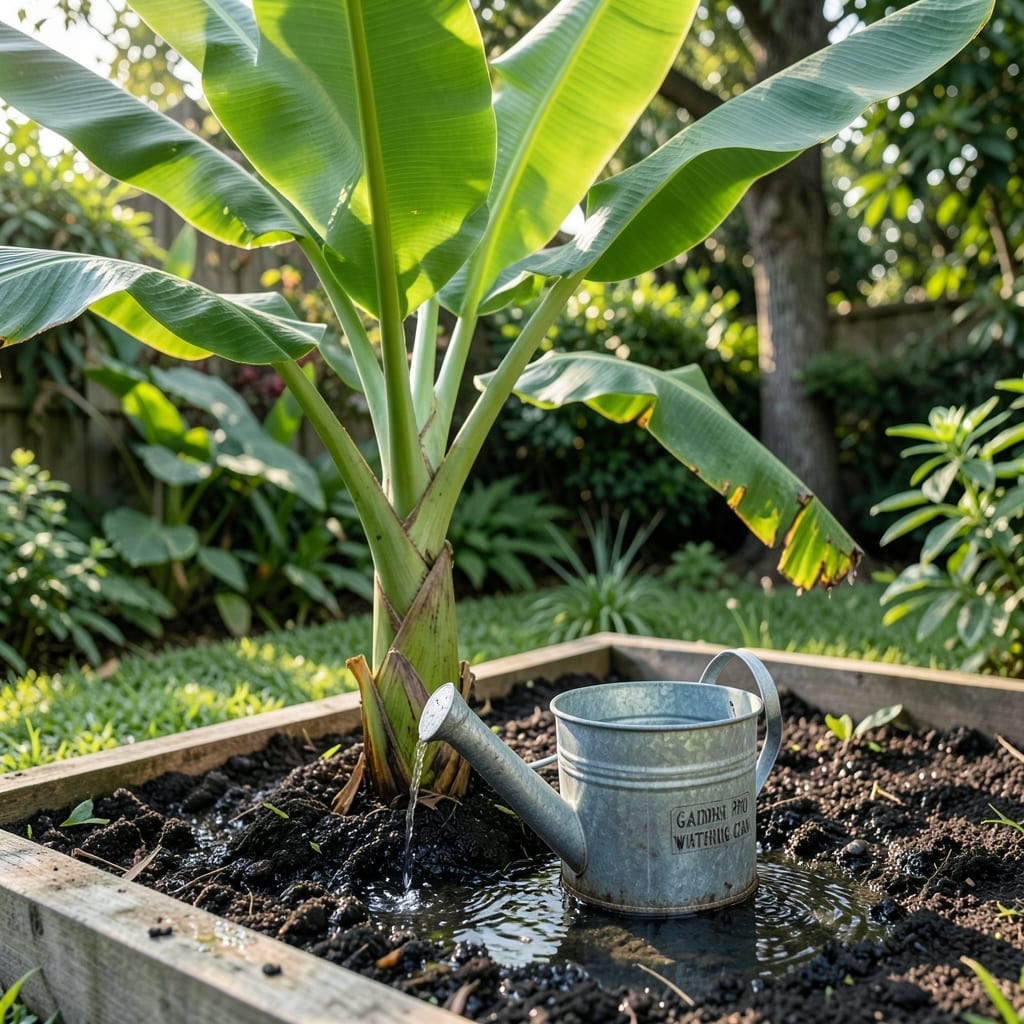
Getting the watering right for your 🍌 Banana can feel like walking a tightrope. Too much and you risk root rot, too little and your plant struggles to thrive.
I’ve learned that consistency is the key to keeping these tropical plants happy. The right schedule prevents stress and promotes healthy growth.
Discover how to create the perfect watering routine that will keep your Banana lush and productive, no matter the season.
Getting your banana plant watering right starts with understanding its growth stage. Young plants need consistent moisture to establish roots, while mature ones require deeper, less frequent watering.
I’ve found that adjusting your schedule by season and plant age prevents both overwatering and underwatering issues. Climate and soil type also play a huge role in how much water your banana plant needs. 🌱
| Growth Stage | Water Frequency | Water Amount |
|---|---|---|
| Young Plants | Every 2-3 days | 1-2 gallons per plant |
| Mature Plants | Every 4-5 days | 5-10 gallons per plant |
| Fruiting Plants | Every 2-3 days | 10-15 gallons per plant |
| Winter (Cooler Zones) | Every 7-10 days | 2-3 gallons per plant |
In hot, dry climates, banana plants often need daily watering to prevent soil from drying out. I recommend checking the top 2 inches of soil—if it’s dry, it’s time to water again.
For potted banana plants, watering frequency increases because containers dry out faster. A deep soak every 1-2 days keeps the roots hydrated without waterlogging.
Well-draining soil is crucial for banana plants. I use a mix of compost, sand, and loam to ensure water drains properly while retaining enough moisture for the roots.
During the summer months, I water my banana plants in the early morning. This allows the water to soak deeply before the heat of the day causes evaporation.
Mulching around the base helps retain moisture. I apply a 2-3 inch layer of organic mulch, like straw or wood chips, to keep the soil consistently damp.
If you notice yellowing leaves, it might be a sign of overwatering. Reduce your watering frequency and ensure the soil has proper drainage to avoid root rot. 🌿
For young banana plants, I use a drip irrigation system to deliver water directly to the roots. This method is efficient and prevents water waste through runoff.
Recognizing water stress in banana plants is crucial for their health. Overwatering often leads to yellowing leaves and root rot, while underwatering causes drooping stems and dry, crispy leaves. 🌱
I always check the soil moisture first. If it feels soggy, it’s a sign of excess water. If it’s bone dry, the plant needs a deep drink to recover.
For overwatered plants, I stop watering immediately and let the soil dry out. If root rot is present, I trim the affected roots and repot in fresh, well-draining soil.
With underwatered plants, I give them a thorough soak and adjust my watering schedule. A mulch layer helps retain moisture between waterings.
I’ve noticed that banana plants in pots dry out faster than those in the ground. This means they need more frequent checks to prevent underwatering.
In hot climates, the signs of underwatering can appear quickly. I make it a habit to check soil moisture daily during heatwaves to keep my plants thriving. 🌿