
Beautiful Plants For Your Interior
Beautiful Plants For Your Interior
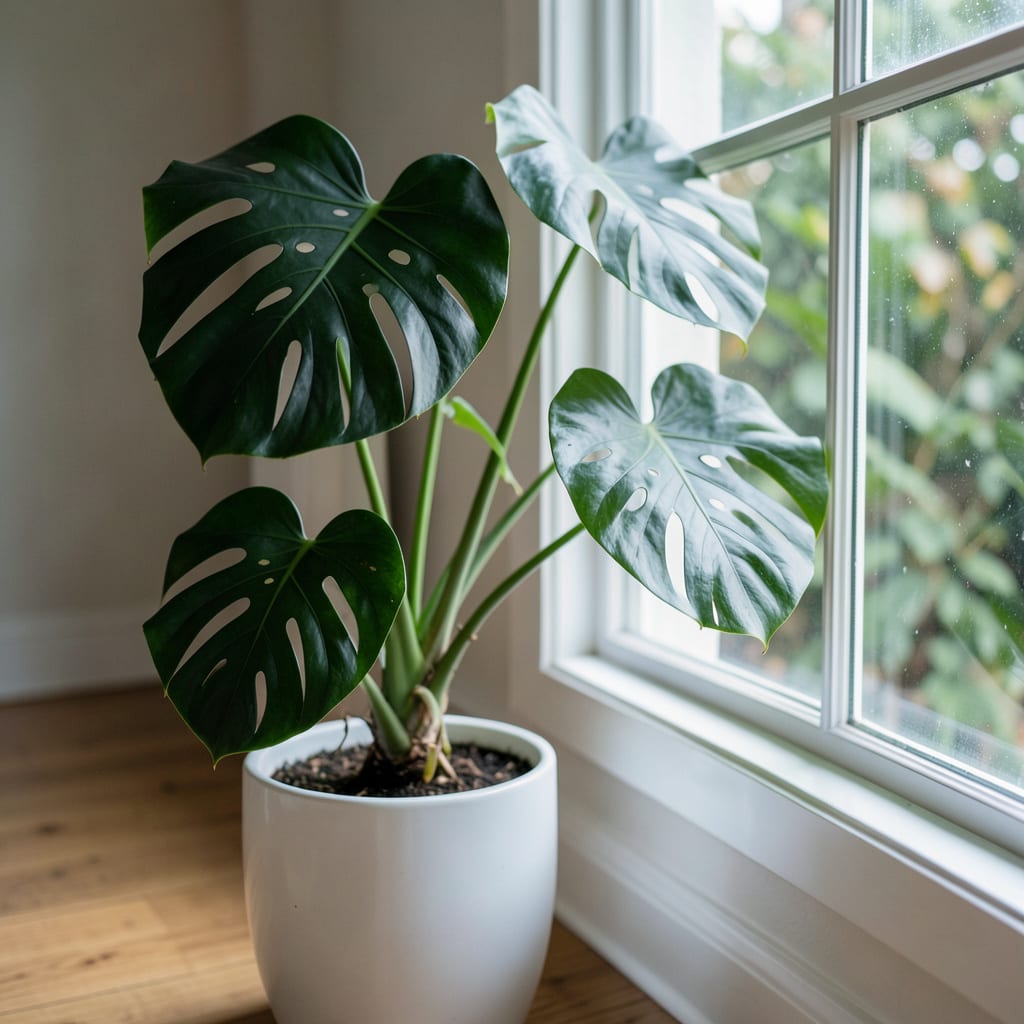
As a Swiss Cheese Plant 🪴 owner in USDA Zone 6, you’re probably wondering how much light your plant needs to thrive. The answer isn’t as straightforward as you might think – it depends on replicating the right conditions found in its natural habitat.
I’ll walk you through the ideal lighting conditions for your Swiss Cheese Plant, helping you determine if it’s getting enough light and what adjustments you can make to keep it healthy and happy in your General location.

Swiss Cheese Plants (Monstera deliciosa) are native to the tropical regions of Central and South America, where they grow under the canopy of larger trees. This natural habitat provides them with bright, indirect light, which is essential for their growth and development 🌱.
In indoor settings, replicating these light conditions is crucial for the health of your Swiss Cheese Plant. Understanding the plant’s light requirements will help you provide the optimal environment for it to thrive. Let’s dive into the specifics of what your plant needs 🔍.
The Swiss Cheese Plant prefers medium to bright indirect light. Direct sunlight can cause the leaves to become scorched, so it’s essential to filter the light if it’s too intense. An east or west-facing window is ideal for providing the right amount of light without the harsh direct rays 🌞.
When it comes to the duration of light exposure, Swiss Cheese Plants benefit from 4-6 hours of bright, indirect light per day. This duration supports healthy growth and helps maintain the plant’s distinctive foliage. If you’re unsure about the light conditions in your space, consider using a light meter to measure the intensity 📊.
Low light conditions can lead to leggy growth and less vibrant foliage. If your plant isn’t receiving enough light, you might notice the leaves becoming more spaced out on the stem or the characteristic holes not developing as they should. Adjusting the plant’s position or supplementing with grow lights can help mitigate these issues 💡.
It’s also worth noting that while Swiss Cheese Plants can adapt to various light conditions, they do best in consistent lighting. Avoid placing your plant in areas with drastic changes in light exposure, as this can stress the plant and lead to health issues 🌿.
By understanding and meeting the light requirements of your Swiss Cheese Plant, you can ensure it remains a healthy and beautiful addition to your indoor garden. Keep in mind the plant’s natural preferences and adjust your care routine accordingly to provide the best possible conditions 🌱.
For more specific guidance on caring for your Swiss Cheese Plant, including tips on watering, fertilizing, and pruning, be sure to check out our other articles on Monstera deliciosa care 🌻.
Providing the right light is just the first step in caring for your Swiss Cheese Plant. Stay tuned for more expert tips on how to keep your plant thriving in the next sections of this guide 📚.
Now that you understand the basic light requirements for your Swiss Cheese Plant, let’s dive into the practical aspects of providing optimal lighting. Proper positioning and supplemental lighting can make a significant difference in your plant’s health 🌿.
First, consider the placement of your plant in relation to windows. An east or west-facing window is ideal as it provides bright, indirect light for most of the day. If you only have a south-facing window, use sheer curtains to filter the intense afternoon sun 🌞.
For optimal results, rotate your Swiss Cheese Plant every 1-2 weeks to ensure even light distribution across all leaves. This prevents uneven growth and maintains the plant’s aesthetic appeal 🌱.
If natural light is insufficient, consider using grow lights to supplement your plant’s lighting needs. LED grow lights are a popular choice as they provide the necessary spectrum without generating excessive heat 💡.
When using grow lights, follow these guidelines:
It’s also important to be aware of common lighting mistakes that can affect your Swiss Cheese Plant’s health. Avoid placing your plant in direct sunlight for extended periods, as this can cause leaf scorch 🔥.
By following these tips and providing your Swiss Cheese Plant with the right lighting conditions, you’ll be well on your way to growing a healthy and thriving plant. In the next section, we’ll discuss how to recognize and address any lighting issues that may arise 📚.
As a Swiss Cheese Plant owner, it’s crucial to recognize the signs of improper lighting and know how to adjust your plant’s environment accordingly. Both too much and too little light can cause issues with your plant’s health 🌿.
Let’s examine the common problems associated with incorrect lighting and how to address them effectively 🔍.
If your Swiss Cheese Plant is receiving too little light, you may notice symptoms such as leggy stems, smaller leaves, and a lack of the characteristic fenestration. In such cases, consider relocating the plant to a brighter location or supplementing with grow lights 💡.
On the other hand, if your plant is exposed to too much direct sunlight, the leaves may develop sunburn spots or become scorched 🔥. To prevent this, ensure your plant is placed in a spot with bright, indirect light, or use sheer curtains to filter the sunlight.
Maintaining consistent lighting conditions is also vital for your Swiss Cheese Plant’s health. Avoid placing your plant in areas with drastic changes in light exposure, as this can cause stress and lead to health issues 🌿.
By being aware of these lighting issues and taking appropriate action, you can ensure your Swiss Cheese Plant remains healthy and continues to thrive in your care 🌱.
For more detailed information on other aspects of Swiss Cheese Plant care, including watering and fertilizing, be sure to explore our comprehensive guides 📚.
An east or west-facing window is perfect for Swiss Cheese Plants as it provides bright, indirect light for most of the day. This direction helps prevent leaf scorch while promoting healthy growth .
Yes, you can use grow lights to supplement natural light, especially during winter months or in low-light spaces. Position LED grow lights 12-18 inches above your plant and keep them on for 12-14 hours daily .
If your plant is exposed to too much direct sunlight, you may notice sunburn spots or scorched leaves. To prevent this, use sheer curtains to filter the sunlight or move the plant to a spot with bright, indirect light .
In low light conditions, Swiss Cheese Plants may develop leggy stems, smaller leaves, and reduced fenestration. Consider relocating the plant to a brighter spot or using grow lights to supplement the natural light .
