
Beautiful Plants For Your Interior
Beautiful Plants For Your Interior
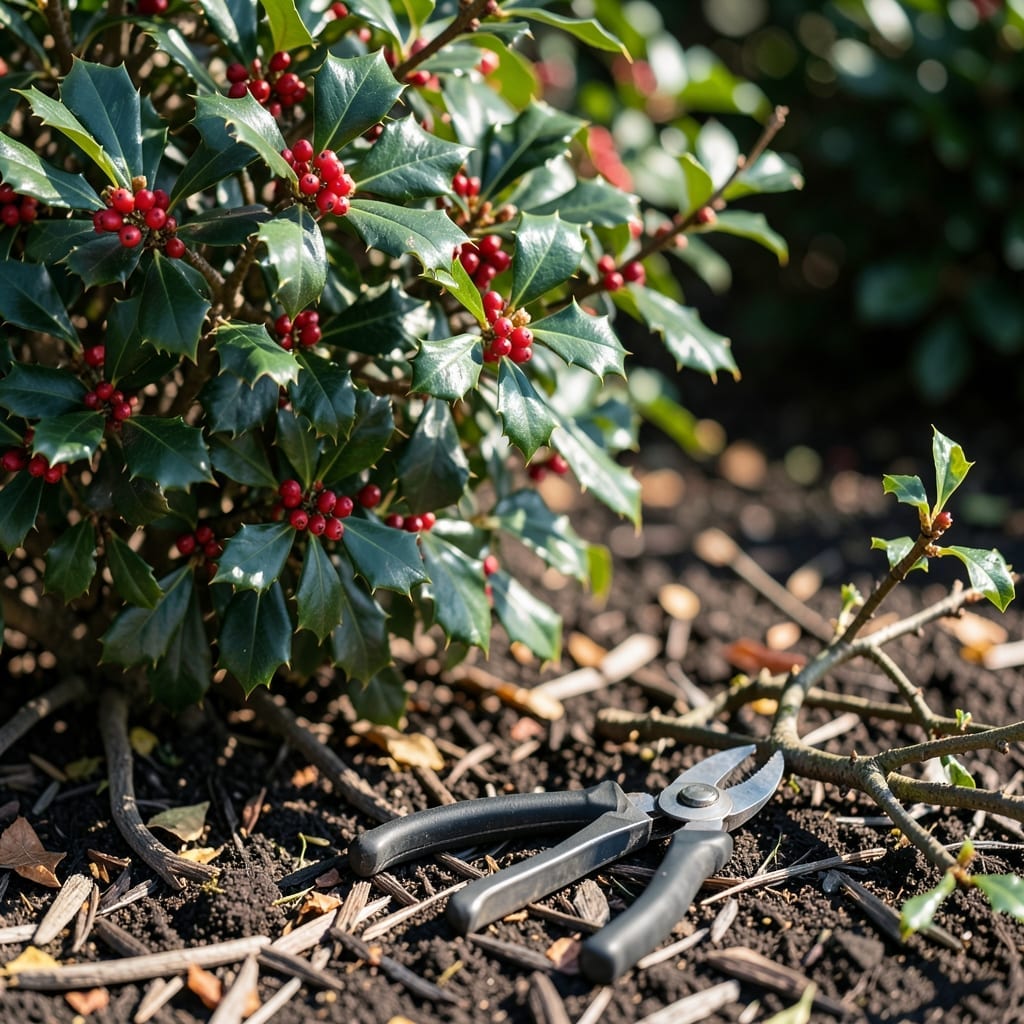
Holly bushes are hardy and forgiving, but knowing how much you can safely cut them back is key to keeping them healthy and vibrant. Over-pruning can stress the 🌿 Holly Bush, while under-pruning may leave your garden looking wild.
I’ve learned through experience that finding the right balance keeps these shrubs thriving in zones 5-9. Whether you’re shaping for aesthetics or maintaining size, the approach matters more than you think.
Discover the safe pruning limits that will help your Holly Bush flourish without the risk of damage. Let’s make your garden the envy of the neighborhood.
Pruning holly bushes requires knowing the limits to avoid harming these resilient shrubs. I always start by identifying the holly variety, as each type has different needs and tolerances for trimming.
American holly can handle a 25-30% cutback annually, while Japanese holly is more forgiving, often tolerating up to 50% if needed for rejuvenation.
| Holly Type | Max Safe Cutback | Best Time to Prune |
|---|---|---|
| American Holly | 25-30% | Late winter |
| English Holly | 20-25% | Early spring |
| Japanese Holly | Up to 50% | Early spring or fall |
| Dwarf Holly | 15-20% | Spring or fall |
For English holly, I recommend staying conservative with a 20-25% trim to maintain its classic shape. This variety is less tolerant of drastic cuts but responds well to regular light pruning.
The best time to prune most hollies is in late winter or early spring, just before new growth begins. This timing helps the plant recover quickly and reduces stress.
If your holly is overgrown, don’t panic. You can remove up to 1/3 of the oldest stems at the base to rejuvenate the shrub. This method works well for mature holly bushes that need a refresh.
Avoid pruning during late summer or early fall, as this can stimulate new growth that won’t have time to harden off before winter. This is especially important in colder zones like 5 and 6.
For dwarf holly varieties, I keep cuts minimal, usually around 15-20%. These smaller shrubs don’t need much pruning, but a light trim helps maintain their compact shape and encourages dense growth.
Always use sharp, clean pruning shears to make precise cuts. This prevents tearing the bark and reduces the risk of disease. I also sanitize my tools between cuts, especially when working with multiple plants.
After pruning, I like to mulch around the base of the holly to retain moisture and protect the roots. A 2-3 inch layer of organic mulch works wonders for keeping the plant healthy and stress-free. ✂️
Pruning holly bushes the right way keeps them healthy and shaped without causing stress. I always start by gathering the essential tools: sharp bypass pruners, loppers for thicker branches, and gloves to protect my hands.
First, I inspect the bush for dead, damaged, or diseased branches. These should be removed first, as they can drain the plant’s energy and spread issues to healthy growth.
When shaping, I
For formal hedges, I use a light touch and prune more frequently, taking off just a few inches at a time. This keeps the shape neat without stressing the plant.
I always step back frequently to assess my progress. It’s easy to get carried away, but maintaining a balanced shape ensures the holly looks natural and healthy.
After pruning, I clean up all fallen debris to prevent pests and diseases. A final deep watering helps the plant recover and thrive after the trim. ✂️