
Beautiful Plants For Your Interior
Beautiful Plants For Your Interior
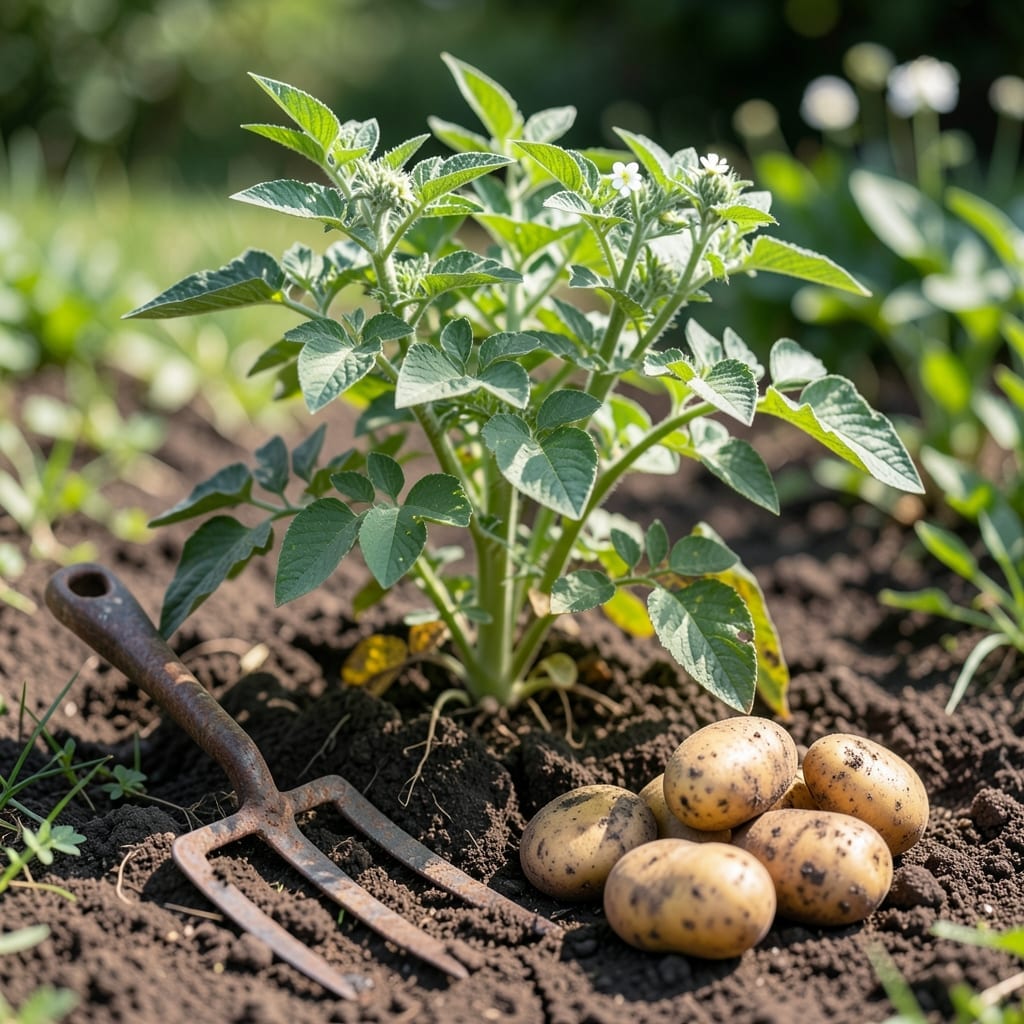
Planting a single 🥔 potato can yield a surprising harvest, but the exact number depends on factors you can control. I was amazed to learn how those little eyes on a seed potato hold the secret to your yield.
Understanding this simple relationship between eye count and production changed my gardening approach. With the right knowledge, you can turn one seed piece into a bountiful harvest.
Discover how variety, spacing, and care techniques directly impact your potato count. Let me show you how to maximize every plant’s potential.

Those little indentations on your seed potato aren’t just bumps—they’re dormant buds called eyes. Each one can sprout into a new potato plant with proper conditions.
More eyes typically mean more stems, and more stems produce more tubers. I’ve seen seed potatoes with 5-10 eyes yield significantly more than those with just 2-3 eyes.
| Factor | Impact on Yield |
|---|---|
| Eye Count | More eyes = more stems = more potatoes |
| Eye Health | Plump eyes sprout faster than shriveled ones |
| Seed Size | Larger tubers have more eyes for potential |
| Variety | Some varieties naturally produce more eyes |
When I first started growing potatoes, I didn’t realize that cutting seed potatoes affects the eye count per piece. A whole seed potato with 8 eyes might produce 8-12 potatoes if planted intact.
But if I cut it into 4 pieces with 2 eyes each, each piece can still produce 3-5 potatoes. The total yield remains similar, but I get 4 plants instead of one.
The sprouting process begins when soil temperatures reach 45°F. Each eye sends up a green shoot that becomes a stem. The more stems, the more tuber-forming sites develop underground.
I’ve noticed that early varieties like Yukon Gold tend to have fewer eyes but mature faster, while maincrop varieties like Russet often have more eyes and produce more potatoes.
Proper curing of cut seed pieces is crucial. I always let them heal for 24-48 hours before planting to prevent rot. This gives the eyes time to callus over while still maintaining their viability.
Remember that planting depth matters too. I bury seed pieces 4-6 inches deep with the eyes facing up. This gives each sprout room to grow without competing for space.
With good care, each stem can produce 3-5 potatoes at the base. In ideal conditions, I’ve harvested up to 20 potatoes from a single seed piece with 10 eyes! 🌱
Not all potato varieties produce the same yield from one seed piece. I’ve learned that early varieties like Red Pontiac typically give 3-5 potatoes per plant, while maincrop types can double that.
Yukon Gold and Kennebec often yield 5-8 potatoes each. For maximum production, I recommend Russet Burbank, which can produce 10-15 potatoes under ideal conditions.
| Variety | Avg. Potatoes | Maturity Days |
|---|---|---|
| Early (Red Pontiac) | 3-5 | 70-90 |
| Mid-Season (Yukon Gold) | 5-8 | 90-110 |
| Late (Russet Burbank) | 10-15 | 110-130 |
Cutting your seed potatoes affects yield too. A whole medium-sized potato with 8 eyes might produce 8-12 potatoes. If I cut it into 4 pieces with 2 eyes each, each piece yields 3-5 potatoes.
This means the total harvest stays similar, but I get more plants spread out. I’ve found that smaller seed pieces with 1-2 eyes can still produce 2-4 potatoes each if given proper care.
Soil quality and spacing impact results. I space my plants 12 inches apart in rows 30 inches apart to prevent competition. With rich, loose soil, each stem can develop multiple tubers more effectively.
In my experience, consistent moisture and full sun help maximize yield. I’ve harvested up to 20 potatoes from a single large seed potato with 10+ eyes in perfect conditions. 🌱