
Beautiful Plants For Your Interior
Beautiful Plants For Your Interior
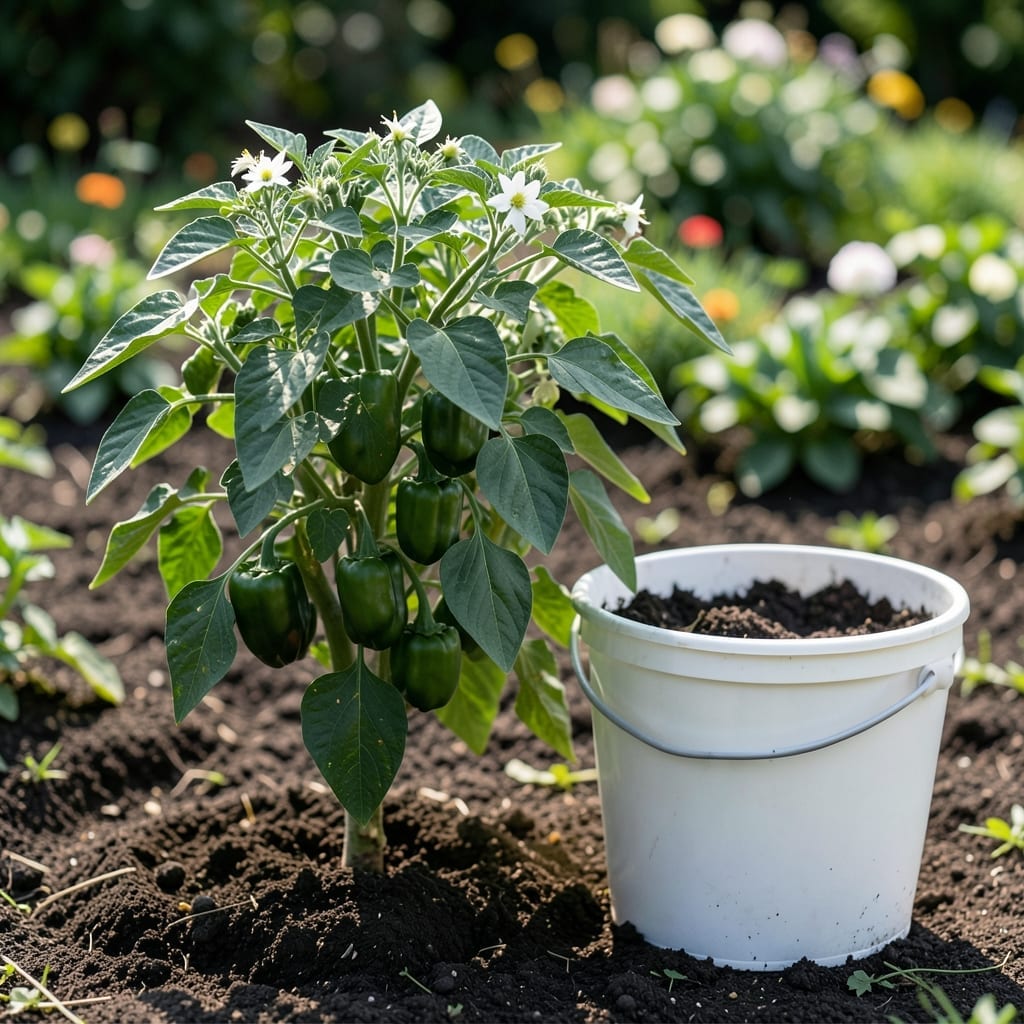
Growing 🌶️ Pepper plants in 5 gallon buckets is a game-changer for small-space gardeners. But here’s the catch: crowd too many in one container, and you’ll sacrifice both health and harvest.
I’ve seen firsthand how the right spacing transforms struggling plants into thriving ones. The difference between a sparse bucket and an overcrowded one is night and day.
Discover the sweet spot for plant count that ensures each Pepper gets the root room and nutrients it needs. Your future harvest will thank you.
When I first tried growing pepper plants in containers, I quickly learned that root space is non-negotiable. A 5 gallon bucket offers about 1.5 cubic feet of soil volume, which seems spacious until you consider a mature pepper’s root system. 🌱
Most pepper varieties need 12-18 inches of root depth to thrive. This means you can’t just cram plants in and expect success. The golden rule is one plant per bucket for large varieties like bell peppers. 🌿
| Pepper Variety | Plants per 5 Gal | Root Depth Needed |
|---|---|---|
| Bell Peppers | 1 | 18 inches |
| Jalapeño | 1-2 | 12-15 inches |
| Habanero | 1-2 | 12 inches |
| Cayenne | 2 | 10-12 inches |
For compact varieties like jalapeños or habaneros, I’ve had success with two plants per bucket. But this only works if you’re vigilant about care. These plants will compete for water and nutrients, so you’ll need to monitor more closely. ☀️
I discovered that overcrowding leads to stunted growth and smaller yields. The plants end up fighting for resources, which stresses them and makes them more susceptible to pests and diseases. It’s just not worth the risk.
Another factor is the bucket’s drainage. Even with perfect plant count, poor drainage can rot the roots. I always drill 4-6 holes in the bottom and use a well-draining potting mix. This prevents water from pooling at the roots. 💧
If you’re determined to maximize space, consider companion planting. Pairing one pepper with shallow-rooted herbs like basil can work, but avoid other heavy feeders that will compete too much.
Remember that container color matters too. Dark buckets absorb more heat, which can overheat the roots. I prefer light-colored containers or wrap dark ones in reflective material. 🌡️
In my experience, the best approach is to start with one plant per bucket. This gives you the highest chance of success, especially if you’re new to container gardening. You can always add more buckets as your confidence grows.
Finally, don’t forget about support structures. Even in containers, many pepper plants benefit from staking or caging. This is especially true for taller varieties that might topple in wind or under the weight of their fruit. ✂️
I always start by preparing the bucket properly. First, drill 4-6 drainage holes in the bottom to prevent root rot. Without proper drainage, your peppers will struggle no matter how perfect your plant count is. 🌱
Next, I fill the bucket with a high-quality potting mix designed for container gardening. Regular garden soil is too dense and can compact over time, which suffocates the roots. 🌿
When planting, I make sure the seedling sits at the same depth as it was in its nursery pot. Planting too deep can bury the stem and cause rotting. For multiple plants in one bucket, space them 8-10 inches apart. ☀️
After planting, I water deeply to help the soil settle around the roots. This also helps eliminate air pockets that could stress the plant. I use a watering can with a gentle shower head to avoid disturbing the soil. 💧
For the first week, I keep the soil moist but not soggy. This helps the pepper plant establish its roots in the new environment. I also avoid fertilizing immediately—wait at least 2-3 weeks after planting.
I’ve found that mulching the surface with straw or shredded leaves helps retain moisture and prevent weeds. Just be sure to leave a small gap around the stem to prevent rotting. This simple step makes a big difference in container gardening.