
Beautiful Plants For Your Interior
Beautiful Plants For Your Interior
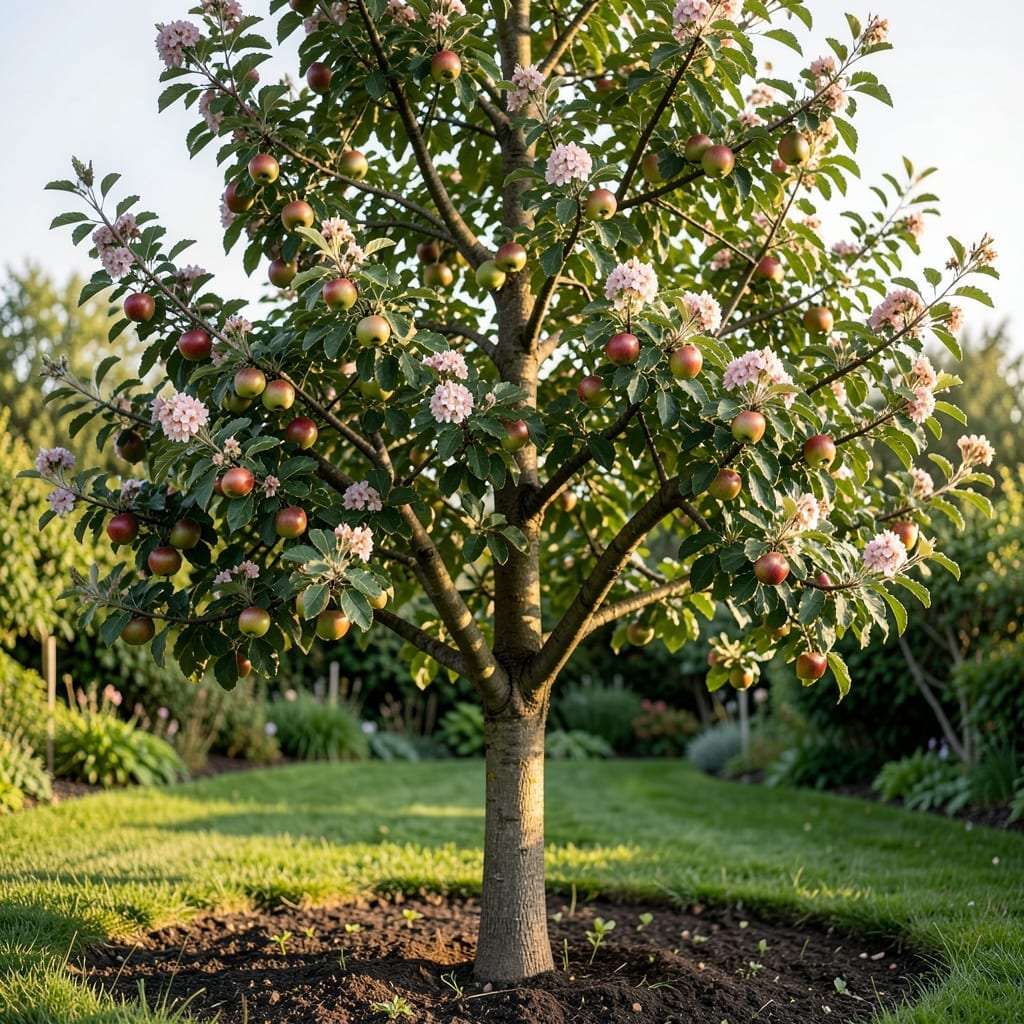
Patience is key when growing Apple Trees 🍎, as the wait for that first crisp bite can feel endless. The timeline for fruit production varies wildly depending on the type of tree and growing conditions.
Some varieties may surprise you with fruit in just 2-3 years, while others take a decade or more to mature. I’ve seen gardeners make the mistake of expecting immediate results, only to be disappointed.
Discover what influences your tree’s timeline and how to encourage earlier fruiting. Whether you’re planting a dwarf or standard variety, knowing these factors can make all the difference.
If you’re wondering how long until apple trees bear fruit, the answer depends on the type. Dwarf apple trees can produce fruit in as little as 2-3 years, making them ideal for impatient gardeners.
Semi-dwarf varieties typically take 3-5 years to bear fruit, while standard apple trees may require 5-10 years or more. The rootstock used also plays a significant role in determining fruiting time.
The age of the tree at planting also impacts fruiting time. A 1-year-old whip will take longer than a 3-year-old tree from a nursery. I always recommend buying the oldest tree your budget allows.
Environmental factors like sunlight, soil quality, and water availability can speed up or delay fruit production. Apple trees need full sun and well-draining soil to thrive.
In my experience, pollination partners are crucial. Most apple varieties need cross-pollination from a different variety. Planting two compatible types ensures better fruit set and earlier harvests.
Climate zone affects timelines too. Trees in warmer zones often fruit sooner than those in cooler regions. I’ve seen Gala apples bear fruit in year 3 in Zone 7, but take 5 years in Zone 4.
For the quickest results, choose a dwarf variety on precocious rootstock. These are bred to fruit early. Columnar apples are another great option for small spaces with fast fruiting.
Remember that first fruits may be small or sparse. It takes a few years of full production to get abundant harvests. Be patient – the wait is worth it for those homegrown apples!
If your tree isn’t fruiting by year 5, check for disease, pest issues, or nutrient deficiencies. Sometimes a simple adjustment in care can make all the difference. 🌳
I know waiting for apples can test any gardener’s patience. While you can’t rush nature completely, I’ve found several proven techniques to encourage earlier fruiting in young trees.
Proper pruning is your first step. I always recommend structural pruning in the first 2-3 years to establish a strong framework that supports fruit production.
Fertilization plays a crucial role. Use a balanced 10-10-10 fertilizer in early spring to promote new growth and flower buds. I avoid high-nitrogen feeds that produce leafy growth at the expense of fruit.
Don’t underestimate watering practices. Young trees need consistent moisture, especially during fruit set. I water deeply once a week, more in hot spells, always in the morning to prevent disease.
Pollination partners are non-negotiable for most varieties. Plant at least two compatible types within 50 feet of each other. I’ve seen Gala paired with Fuji produce fruit a year earlier than isolated trees.
Finally, mulching helps maintain soil moisture and temperature. Apply a 2-3 inch layer of organic mulch, keeping it 6 inches from the trunk. This simple step can improve fruiting timelines significantly.
With these practices, I’ve helped many gardeners see their first apples 1-2 years earlier than expected. 🌳