
Beautiful Plants For Your Interior
Beautiful Plants For Your Interior
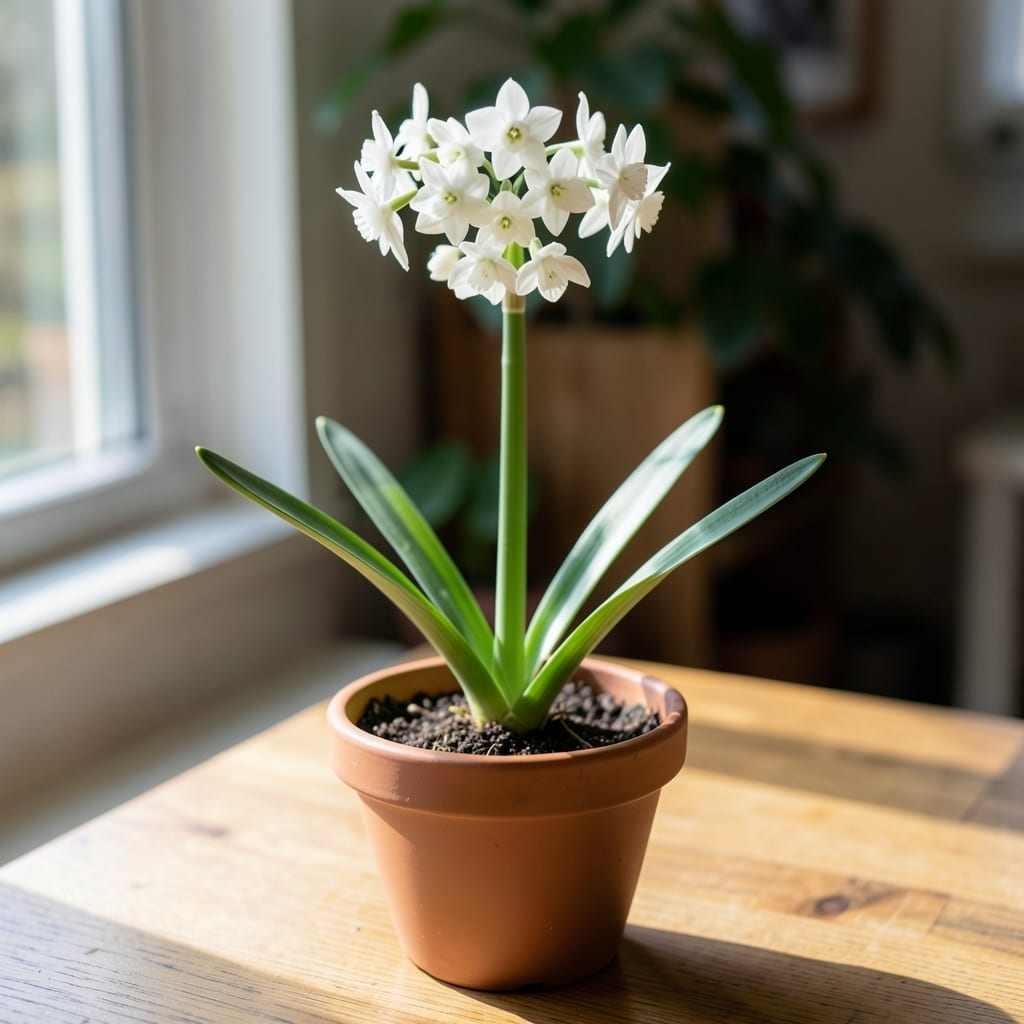
There’s something magical about watching Paperwhite 🌷 bulbs transform from dormant to dazzling. As a gardener, I love how these fragrant blooms bring life indoors during the dreariest months.
But here’s what many don’t realize: the time from planting to first flowers isn’t set in stone. Several factors can speed up or slow down the process, and knowing these can help you time your display perfectly.
Discover the typical timeline and key influences on your Paperwhite’s journey to bloom. With a few simple adjustments, you’ll be enjoying their sweet scent right on schedule.
If you’ve planted Paperwhite narcissus bulbs, you’re probably counting the days until those fragrant blooms appear. The typical timeline from planting to first flowers is 4 to 6 weeks, but this can vary.
In my experience, most Paperwhites follow a predictable pattern. The bulbs first develop roots, then stems emerge, followed by bud formation, and finally, the flowers open.
| Stage | Timeframe | What to Expect |
|---|---|---|
| Root Growth | 1-2 weeks | White roots emerge from bulb base |
| Shoot Emergence | 2-3 weeks | Green shoots appear above soil |
| Stem Elongation | 3-4 weeks | Stems grow rapidly toward light |
| Bud Formation | 4-5 weeks | Flower buds develop at stem tips |
| Blooming | 5-6 weeks | Fragrant white flowers open fully |
The first 2 weeks are crucial for root development. I always check for white roots emerging from the bulb’s base, which signals healthy growth. This is when the bulb is establishing its foundation.
During weeks 3-4, you’ll see rapid stem growth. The shoots will elongate quickly, often reaching 12-18 inches tall. This is when your Paperwhites start to look like the classic flowers we know and love.
Bud formation typically begins in week 5. You’ll notice small green buds at the tips of the stems. These will gradually swell and turn white as they prepare to open.
Finally, in weeks 5-6, the magic happens. The buds open to reveal those beautiful, fragrant white flowers. The exact timing can shift based on temperature and light conditions.
Cooler temperatures (60-65°F) can slow the process, while warmer spots (70°F+) may speed it up. I’ve found that bright indirect light helps maintain steady growth.
Remember, these are averages. Some bulbs may bloom in as little as 30 days, while others might take up to 8 weeks. The key is patience and consistent care.
For the best results, I recommend planting multiple bulbs in stages. This way, you’ll enjoy a continuous display as different batches reach their blooming phase. 🌷
I love how Paperwhite bulbs can be coaxed to bloom exactly when you want them. With a few simple adjustments, you can speed up or slow down their timeline to fit your schedule perfectly.
Temperature is your most powerful tool. Warmer spots (70-75°F) accelerate growth, while cooler areas (60-65°F) slow it down. I’ve used this trick to time blooms for holiday gatherings.
Light exposure also plays a key role. Bright indirect light for 6+ hours daily encourages steady growth. I place mine near a south-facing window for best results.
Watering consistency matters too. Keep soil moist but not soggy. I check mine daily, as dry conditions can pauses growth, while overwatering may cause rot.
For the most control, try the “cool treatment” method. After planting, store bulbs in a 50-55°F spot for 2-3 weeks before moving to warmth. This mimics winter and creates more uniform blooming.
Remember, each bulb is unique. Even in the same container, some may bloom a week earlier than others. That’s part of their charm! With practice, you’ll learn to read your plants’ needs. 🌷