
Beautiful Plants For Your Interior
Beautiful Plants For Your Interior
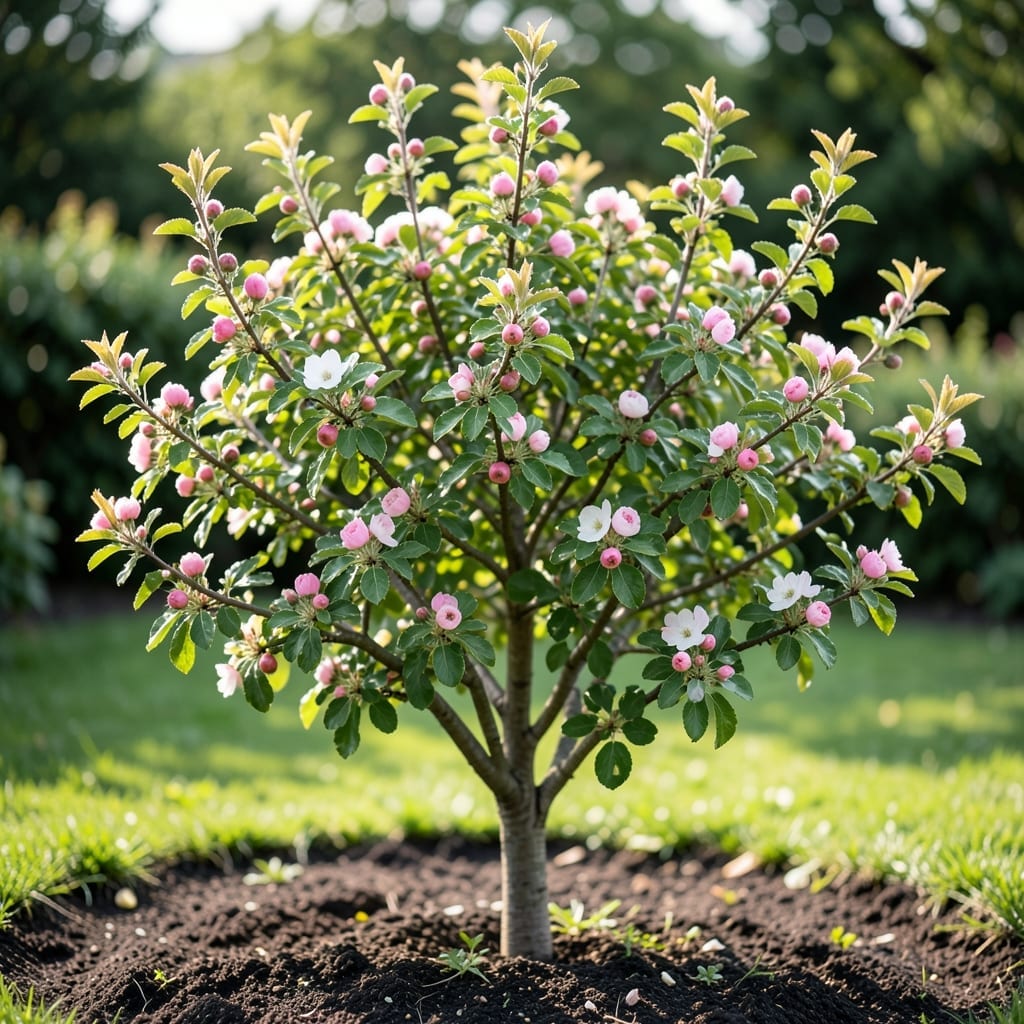
Curious about how quickly your Crabapple Tree 🌳 will reach its full glory? Understanding its growth rate helps you plan your landscape and enjoy those stunning spring blooms sooner.
From planting that first sapling to watching it mature, the timeline might surprise you. I’ll break down what to expect year by year, so you can track progress with confidence.
Discover the key factors that influence growth speed and how to give your tree the best start. Let’s dig into the details together.


I get asked all the time: how fast do crabapple trees grow? The answer depends on the variety, but most standard crabapples add 12-24 inches in height annually in their early years. That means you’ll see noticeable progress each season.
For gardeners planning their landscape, knowing the growth trajectory helps with spacing and design. Dwarf varieties grow slower, while semi-dwarf types fall somewhere in between. Let’s break it down by type and year.
| Variety | Annual Growth | Mature Height |
|---|---|---|
| Dwarf | 6-12 inches | 8-12 ft |
| Semi-Dwarf | 12-18 inches | 12-18 ft |
| Standard | 18-24 inches | 15-30 ft |
In the first year, expect your crabapple to establish its root system while adding 4-6 feet in height. This is when proper planting depth and soil prep really pay off. A well-nourished sapling will grow faster.
By year two, growth accelerates as the tree matures. Most crabapples will reach 8-12 feet tall at this stage. This is when you’ll start seeing the signature spreading canopy develop, creating that beautiful shade.
Year three brings even more dramatic growth, with many trees hitting 12-18 feet. At this point, you’ll want to start structural pruning to encourage a strong framework. Proper pruning now prevents problems later.
For standard varieties, full maturity typically takes 5-7 years. That’s when you’ll see the tree reach its 15-30 foot potential. The spread often matches the height, creating a balanced, picturesque shape.
Remember, these are averages. Your tree’s growth depends on soil quality, water availability, and sunlight exposure. In ideal conditions, growth can exceed these estimates. In poor conditions, it may lag behind.
I’ve seen crabapples in rich, well-drained soil with full sun outpace these projections by 20-30%. Conversely, trees in shady spots or hard clay may struggle to reach half these rates.
To maximize growth, focus on consistent watering during the first two years. A deep watering once a week is better than daily light sprinkles. This encourages deep root development, which supports faster above-ground growth.
Don’t forget about annual fertilization in early spring. A balanced 10-10-10 fertilizer gives your crabapple the nutrients it needs for optimal growth. 🌳
If you want your crabapple tree to reach its full potential quickly, you need to understand what influences its growth rate. I’ve seen firsthand how small adjustments in care can make a big difference in how fast these trees grow.
From sunlight exposure to soil conditions, several factors can either accelerate or hinder development. Let’s explore the most critical elements that determine whether your tree thrives or struggles. 🌳
The biggest mistake I see gardeners make is underestimating sunlight needs. Crabapples planted in shady spots often grow at half the rate of those in full sun. If your yard lacks sunlight, consider dwarf varieties that tolerate partial shade better.
Soil quality is another game-changer. Trees in compacted clay or sandy soil struggle to establish roots. Amending the planting area with compost or organic matter can improve growth rates by 25-40% in the first few years.
Watering practices also play a crucial role. Shallow watering leads to weak root systems, while deep soaking encourages roots to grow downward. I recommend using a soaker hose to deliver water slowly at the base of the tree.
Finally, don’t overlook proper pruning. Removing crossing branches and suckers directs the tree’s energy toward upward growth. Just be sure to prune during late winter when the tree is still dormant. ✂️