
Beautiful Plants For Your Interior
Beautiful Plants For Your Interior
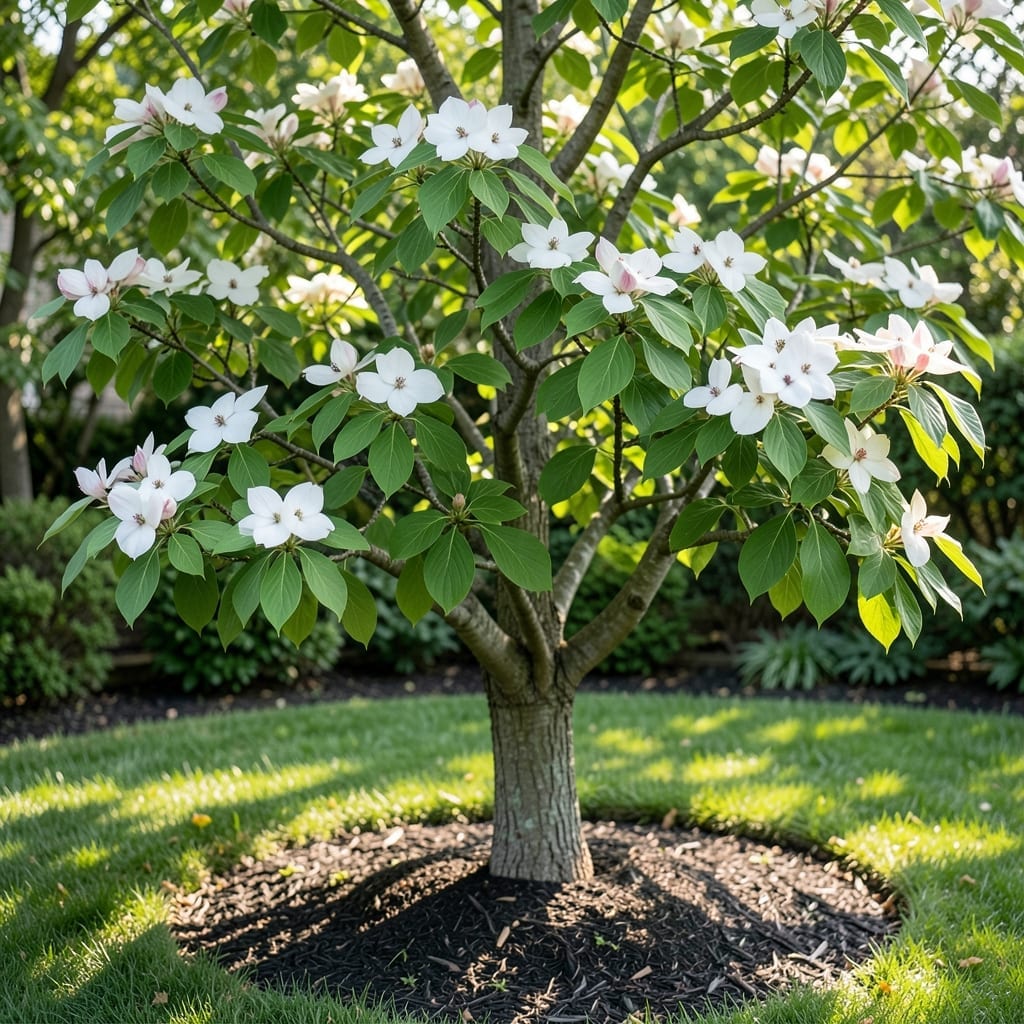
I love how the 🌳 Dogwood Tree transforms landscapes with its seasonal beauty, but many gardeners underestimate its growth potential. What starts as a small sapling can become a stunning focal point in your yard.
Understanding its mature size helps you plant it in the perfect spot. Whether you have a spacious garden or a cozy backyard, there’s a Dogwood variety that fits.
Discover how tall and wide these trees typically grow, and what factors might influence their final dimensions. Let’s dig into the details together.

I’ve found that flowering dogwoods typically reach 15-30 feet tall with a 15-20 foot spread at maturity. Their elegant form makes them perfect for small to medium yards or as understory trees.
For something different, Kousa dogwoods grow slightly larger, often hitting 20-30 feet in height with a similar spread. They’re known for their exfoliating bark and later bloom time.
| Variety | Mature Height | Mature Spread |
|---|---|---|
| Flowering Dogwood | 15-30 ft | 15-20 ft |
| Kousa Dogwood | 20-30 ft | 15-25 ft |
| Cornelian Cherry | 15-25 ft | 10-15 ft |
The Cornelian cherry dogwood stays more compact, usually topping out at 15-25 feet tall with a 10-15 foot spread. This makes it ideal for tighter spaces where you still want impact.
Growth rates vary too. Most dogwoods grow 12-24 inches per year under ideal conditions. I’ve seen young trees establish quickly with proper watering and mulching practices.
Soil conditions significantly impact final size. In rich, well-draining soil, dogwoods often reach their maximum potential. Poor soil may stunt growth, resulting in smaller mature sizes.
Climate plays a role as well. In warmer zones (7-9), dogwoods tend to grow larger than in cooler areas (5-6). I always recommend checking your USDA zone before planting.
For urban gardens, consider dwarf varieties like ‘Little Roy’ or ‘Pagoda’. These stay under 10 feet tall while maintaining the classic dogwood charm.
Remember that pruning can control size. Regular shaping helps maintain your desired dimensions. I suggest pruning in late winter before new growth starts.
Proper spacing is crucial. Plant standard dogwoods 15-20 feet apart to allow for mature spread. This prevents crowding and competition as they grow 🌳
I’ve learned that sunlight exposure greatly affects how big a dogwood tree grows. With 4-6 hours of daily sun, they reach maximum size, but partial shade keeps them more compact.
Watering practices matter too. Consistent deep watering encourages strong root development and taller growth, while drought stress stunts it.
Pruning techniques can significantly control size. I always prune my dogwoods in late winter to shape them and remove deadwood, which keeps them at my desired height.
Soil quality is another critical factor. Dogwoods thrive in acidic, well-draining soil with plenty of organic matter. Poor soil often results in stunted growth and smaller mature sizes.
Don’t overlook climate zone. In USDA zones 7-9, dogwoods typically grow larger than in zones 5-6. I’ve noticed my trees in warmer areas develop thicker canopies.
For smaller spaces, I recommend controlling growth through container planting or choosing dwarf varieties. This lets you enjoy dogwood beauty without overwhelming your landscape 🌳