
Beautiful Plants For Your Interior
Beautiful Plants For Your Interior
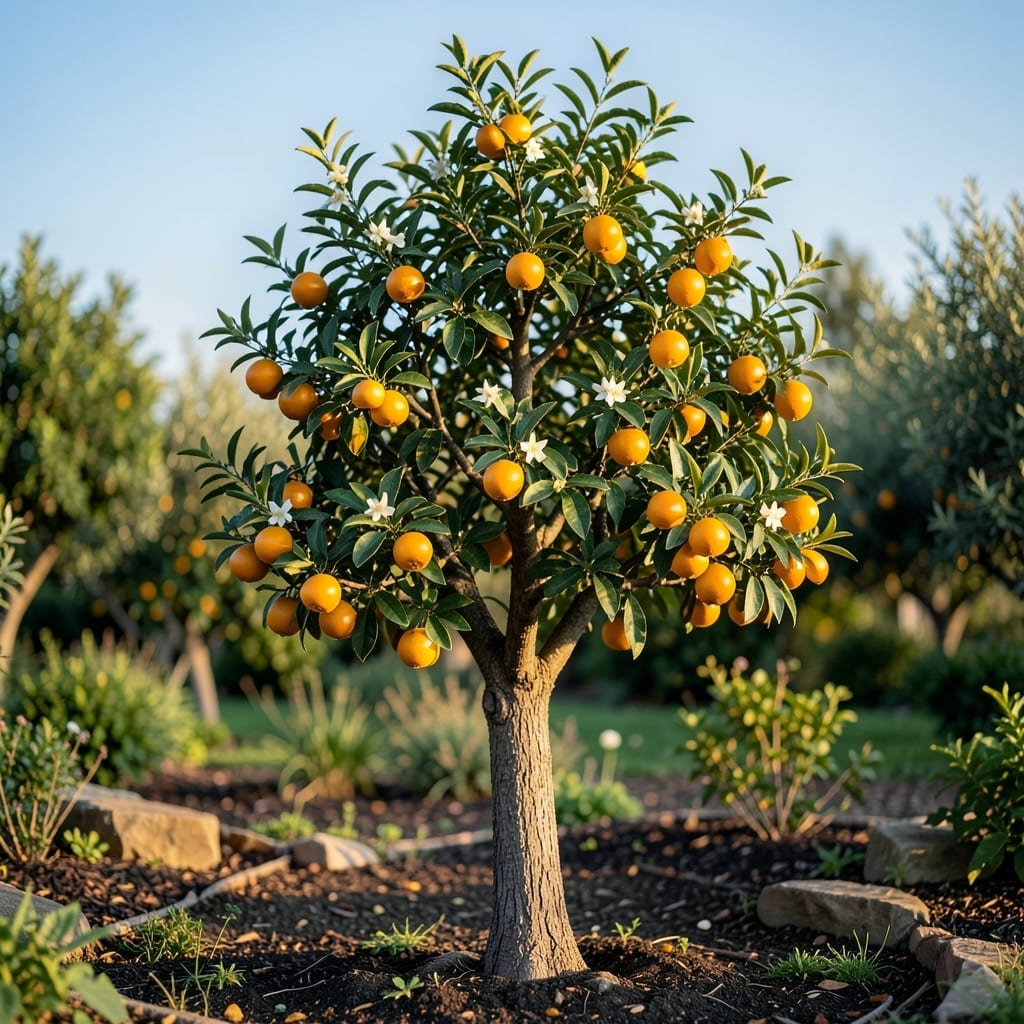
Ever dreamed of picking fresh oranges from your own 🍊 Orange Tree? Before you plant, it’s crucial to know how much space these citrus beauties need to thrive.
From dwarf varieties to towering standards, the size can vary dramatically. I’ll help you understand what to expect so you can plan your garden layout perfectly.
Discover how climate, variety, and care practices influence growth, and learn the key factors for cultivating healthy, productive trees in your outdoor space.

If you’re planning to grow orange trees, understanding their mature size is essential for proper spacing. Standard varieties typically reach 20-30 feet tall with a 15-25 foot spread, making them ideal for large landscapes.
For smaller spaces, dwarf orange trees stay compact at 8-12 feet tall, while semi-dwarf varieties grow 12-18 feet tall. Their size depends heavily on the rootstock used.
| Variety | Height Range | Spread Range |
|---|---|---|
| Standard (Navel, Valencia) | 20-30 ft | 15-25 ft |
| Semi-Dwarf | 12-18 ft | 10-15 ft |
| Dwarf | 8-12 ft | 6-10 ft |
Navel oranges and Valencia oranges are popular standard varieties that can grow quite large. I recommend these for gardeners with ample space and full sun exposure.
Dwarf varieties like ‘Calamondin’ or ‘Improved Meyer Lemon‘ (though technically a lemon) are perfect for container gardening on patios. They produce full-sized fruit on smaller trees.
The rootstock significantly affects final size. For example, ‘Flying Dragon’ rootstock keeps trees smaller, while ‘Sour Orange’ allows for larger growth. Always check with your nursery about rootstock options.
In my experience, semi-dwarf trees offer the best balance for most home gardeners. They’re large enough for good fruit production but small enough for easier maintenance and harvesting.
Remember that mature size is typically reached after 5-7 years of growth. During this time, proper pruning and care can help shape your tree and encourage healthy development.
For those in USDA zones 9-11, these trees thrive in ground planting. In cooler climates, consider dwarf varieties in containers that can be moved indoors during winter.
I’ve found that regular pruning helps maintain desired size and shape, especially for semi-dwarf and standard varieties. This practice also improves air circulation and fruit quality. ✂️
Several key factors determine how big your orange trees will grow. I’ve found that climate conditions play a major role, with trees in warmer zones often reaching their maximum potential size.
Soil quality and drainage also impact growth. Orange trees thrive in well-draining, slightly acidic soil with a pH between 6.0 and 7.0. Poor soil can stunt their development.
Watering practices are crucial. I recommend deep watering every 7-10 days, allowing the soil to dry slightly between sessions. Overwatering can lead to root rot and stunt growth.
Pruning techniques help control size and shape. Regular pruning, especially in late winter, removes dead wood and opens the canopy for better air circulation and light penetration.
The rootstock you choose dramatically affects mature size. For example, ‘Cleaopatra Mandarin’ rootstock produces smaller trees, while ‘Sour Orange’ results in larger, more vigorous growth.
Whether you plant in containers or in-ground also matters. Container-grown trees stay smaller due to root restriction, while in-ground trees can reach their full potential. I’ve seen container trees thrive with proper care and regular repotting.
Finally, sunlight exposure is non-negotiable. Orange trees need 6+ hours of direct sun daily. Without it, growth slows and fruit production suffers. ☀️