
Beautiful Plants For Your Interior
Beautiful Plants For Your Interior
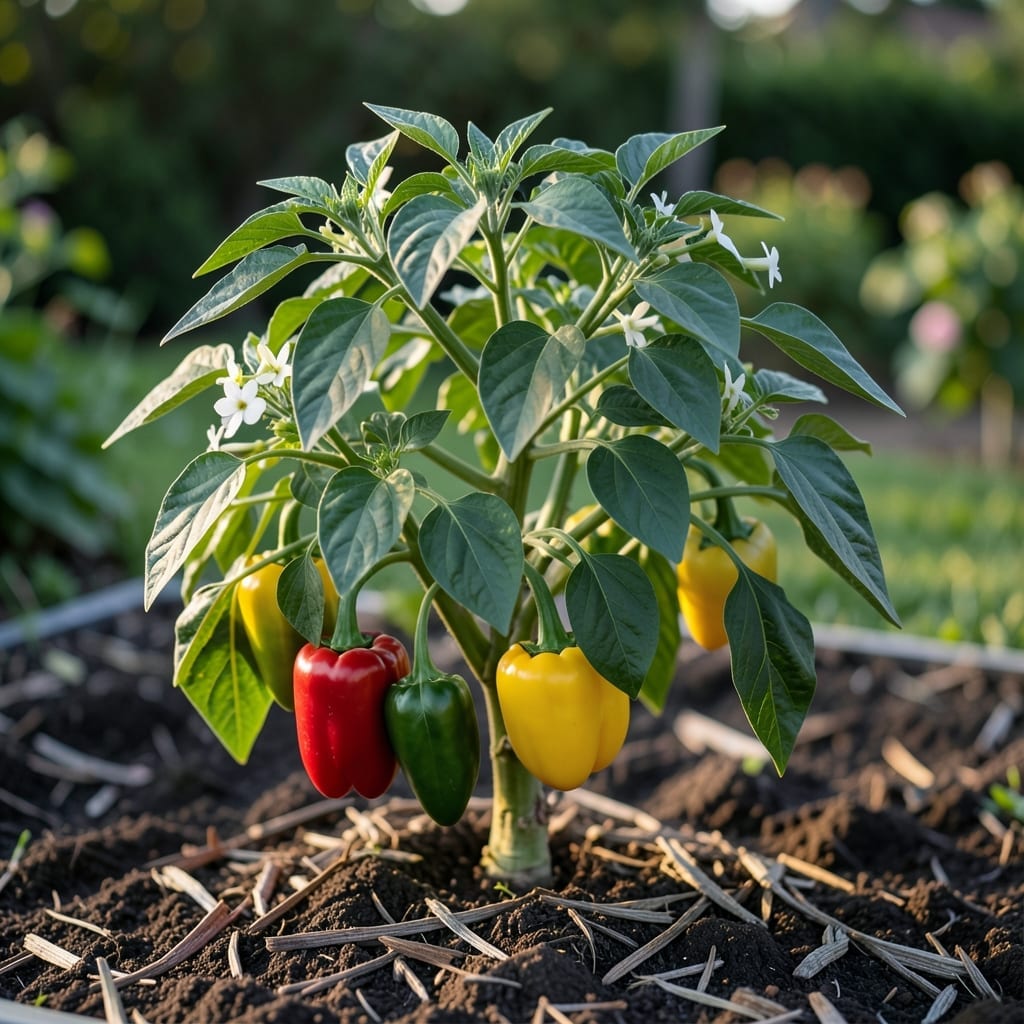
Wondering how much space your 🌶️ Bell Pepper plants will need in the garden? Their size varies dramatically by variety, from compact patio types to sprawling giants.
Some stay under 2 feet tall while others reach 3 feet or more. This difference can make or break your garden layout if you don’t plan ahead.
I’ll break down the size ranges you can expect and share tips to help your peppers thrive in whatever space you have. Let’s get growing.
If you’re planning a garden, knowing bell pepper plant sizes helps avoid overcrowding. These plants range from compact patio varieties to larger garden types that need more room.
Dwarf types like ‘Lunchbox’ stay under 18 inches tall, while standard varieties such as ‘California Wonder’ can reach 30 inches or more in both height and width.
| Variety | Height | Width | Spacing Needs |
|---|---|---|---|
| Lunchbox | 12-18 inches | 12-18 inches | 12 inches apart |
| Jupiter | 18-24 inches | 18-24 inches | 18 inches apart |
| California Wonder | 24-30 inches | 24-30 inches | 24 inches apart |
| Sweet Banana | 24-36 inches | 24 inches | 24 inches apart |
For container gardening, compact varieties like ‘Snackabelle’ work perfectly. They thrive in 5-gallon pots and stay under 2 feet tall, ideal for patios or balconies.
Standard bell peppers, however, need more space to reach their full potential. Varieties like ‘Big Bertha’ can grow 3 feet tall and produce larger fruits when given room to spread.
I recommend checking the seed packet or plant tag for exact dimensions. These labels often specify mature plant size and spacing requirements tailored to each variety.
If space is limited, consider vertical gardening techniques. Staking or caging larger varieties can save ground space while still allowing plants to reach their full height potential.
Remember, plant health affects size too. Proper watering, fertilizing, and sunlight ensure your bell peppers grow to their expected dimensions and produce abundant harvests.
In my experience, consistent care makes the biggest difference. Even dwarf varieties can underperform if they’re stressed by poor soil or inadequate water conditions.
Whether you’re growing in containers or in-ground beds, matching the plant to your space ensures optimal growth and a bountiful harvest of delicious peppers. 🌿
Several key elements determine how big your bell pepper plants will grow. The growing environment plays a huge role, whether you’re using containers or in-ground beds. Containers often limit root spread, which can stunt plant growth.
Sunlight exposure is another critical factor. Bell peppers need 6-8 hours of sun daily. Less light means smaller plants and fewer peppers. I’ve seen plants struggle in shady spots, barely reaching 1 foot tall.
Pruning practices can also shape your plant’s size. Pinching off early flowers encourages the plant to grow taller and bushier before fruiting. I do this with my ‘California Wonder’ plants to get bigger harvests.
Soil fertility directly impacts growth. Amend your soil with compost before planting. A balanced fertilizer every 4-6 weeks keeps plants thriving. Poor soil often results in stunted, weak plants.
Watering consistency matters too. Bell peppers need 1-2 inches weekly. Inconsistent watering causes stress, leading to smaller plants and bitter fruits. I use drip irrigation for even moisture.
Finally, spacing affects air circulation and root development. Give standard varieties 24 inches between plants. Crowding leads to competition and reduced growth. In my garden, proper spacing always yields healthier, larger plants.
With the right care, your bell peppers will reach their full size potential and reward you with a bountiful harvest. 🌱