
Beautiful Plants For Your Interior
Beautiful Plants For Your Interior
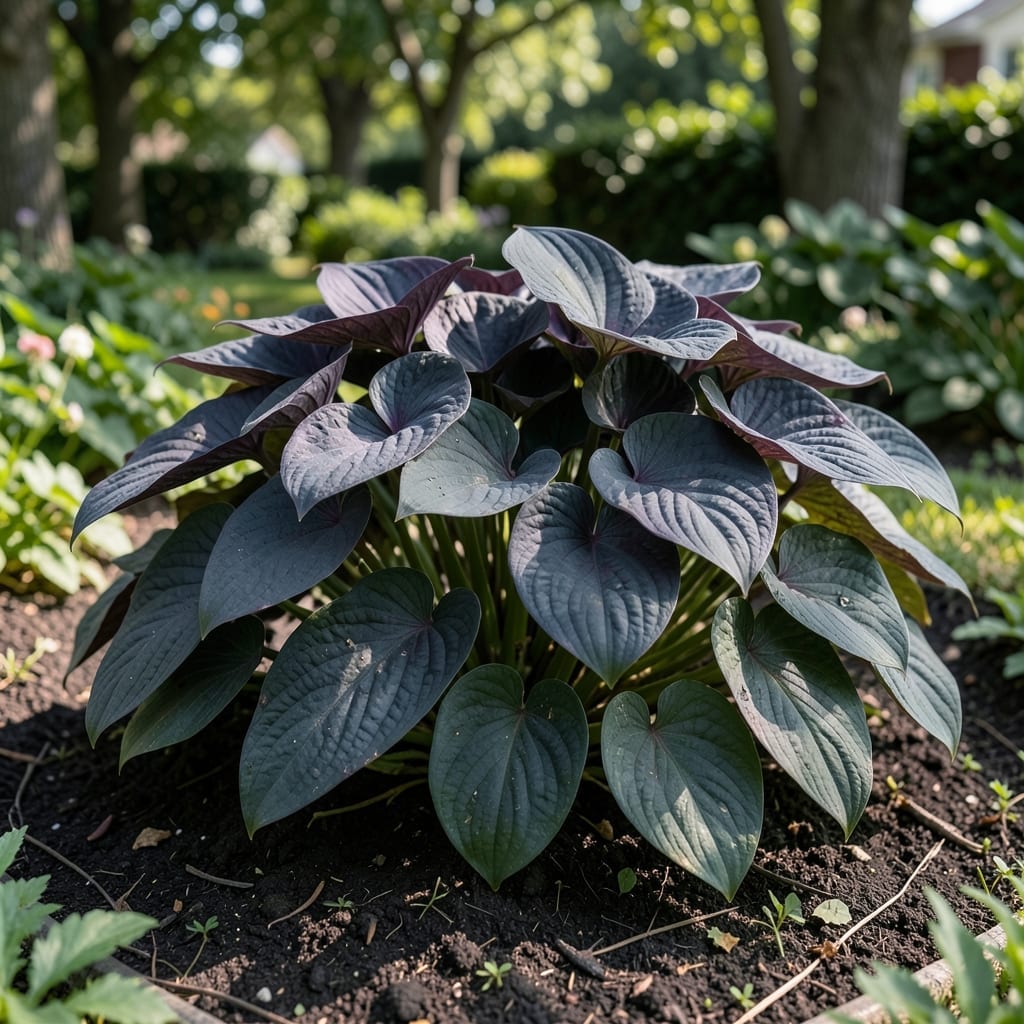
That first glimpse of Hosta Jet Black in my garden stopped me in my tracks. The foliage isn’t just dark—it’s a deep, dramatic purple that looks almost black in the right light.
It thrives in shade where other plants struggle, and with minimal care, those bold leaves keep their color all season. Perfect for adding contrast to shady corners without the fuss.
📚 In This Guide
Here’s the method I use to cultivate those stunning deep purple leaves year after year.
Hosta Jet Black thrives in partial to full shade, making it perfect for those tricky spots under trees or on the north side of buildings. I’ve found it tolerates morning sun in cooler climates, but the foliage color stays richest with consistent shade. Avoid hot afternoon sun—it can scorch the leaves.
Look for a location with well-draining soil. These plants hate soggy roots, so test your spot by digging a 12-inch deep hole and filling it with water. If it drains within 2-3 hours, you’re good to go.
Work the soil to a depth of about 12-18 inches, removing any rocks or debris. I always mix in a generous amount of organic matter like compost or aged manure to improve fertility and drainage. This gives the roots a loose, nutrient-rich environment to establish quickly.
Space your plants 18-24 inches apart to allow for their mature spread. Hosta Jet Black typically reaches 18-22 inches wide, so giving it room prevents overcrowding and ensures good air circulation, which helps prevent fungal issues.
Dig a hole just as deep as the root ball and about twice as wide. Place your plant in the hole, ensuring the crown (where the roots meet the foliage) sits slightly above soil level. This prevents rot and encourages healthy growth.
Backfill the hole with soil, gently firming it around the roots to eliminate air pockets. Water thoroughly after planting to settle the soil and help the roots make contact with their new home. You’ll want to see water pooling briefly before it soaks in.
Keep the soil consistently moist but not waterlogged during the first growing season. I water deeply 2-3 times per week unless rain provides about 1 inch of moisture. After establishment, Hosta Jet Black is fairly drought-tolerant but looks best with regular watering.
Apply a 2-3 inch layer of organic mulch like shredded bark or compost around the base of the plant, keeping it a few inches away from the crown. This conserves moisture, suppresses weeds, and regulates soil temperature. You’ll notice fewer weeds and more vibrant foliage with consistent mulching.
Fertilize lightly in early spring with a balanced, slow-release fertilizer. I use about 1 tablespoon per plant, worked into the soil around the base. Avoid high-nitrogen fertilizers, as they can promote leafy growth at the expense of that gorgeous deep purple color.
Remove any yellow or damaged leaves as they appear to keep the plant looking its best. Divide clumps every 3-4 years in early spring or fall to maintain vigor and propagate new plants for other shady spots in your garden.
These practical insights will help you grow vibrant Hosta Jet Black with minimal fuss.
The Shade Factor: While this plant tolerates morning sun in cooler climates, I’ve found the deepest purple foliage comes from consistent partial to full shade. Hot afternoon sun can scorch the leaves, so avoid south-facing spots without protection. The color difference is noticeable within just a few weeks of planting.
Drainage Test: Don’t skip the drainage test in Step 1—dig that 12-inch deep hole and fill it with water. If it doesn’t drain within 2-3 hours, amend your soil with compost or consider raised beds. Soggy roots are the number one killer of hostas in my experience.
Planting Depth: In Step 3, pay special attention to the crown placement. I learned the hard way that planting too deep causes rot, while planting too shallow leads to weak growth. The crown should sit slightly above soil level—about the width of your finger—to allow for settling while preventing water pooling.
Mulch Maintenance: The 2-3 inch layer of mulch mentioned in Step 4 isn’t just for looks. I refresh my mulch every spring to maintain that depth. It’s amazing how much it reduces my watering needs and keeps the soil temperature consistent, which this plant absolutely loves.
Hosta Jet Black thrives in partial to full shade and moist, well-drained soil. Water regularly, especially in dry spells, and mulch to retain moisture. Avoid direct sunlight to prevent leaf scorch.
Early spring or fall is ideal for planting. This allows the roots to establish before extreme temperatures. Ensure the soil is workable and frost-free for best results.
Consider Hosta ‘Halcyon’ for similar deep blue-green foliage or Hosta ‘Obsidian’ for a dark, dramatic look. Both are low-maintenance and shade-tolerant.
Yellowing leaves often indicate overwatering, poor drainage, or too much sun. Check soil moisture and adjust watering. Ensure the plant is in a shady spot.
Use organic slug baits, beer traps, or diatomaceous earth. Handpick slugs at night or create barriers with copper tape. Keep the garden clean to reduce hiding spots.