
Beautiful Plants For Your Interior
Beautiful Plants For Your Interior
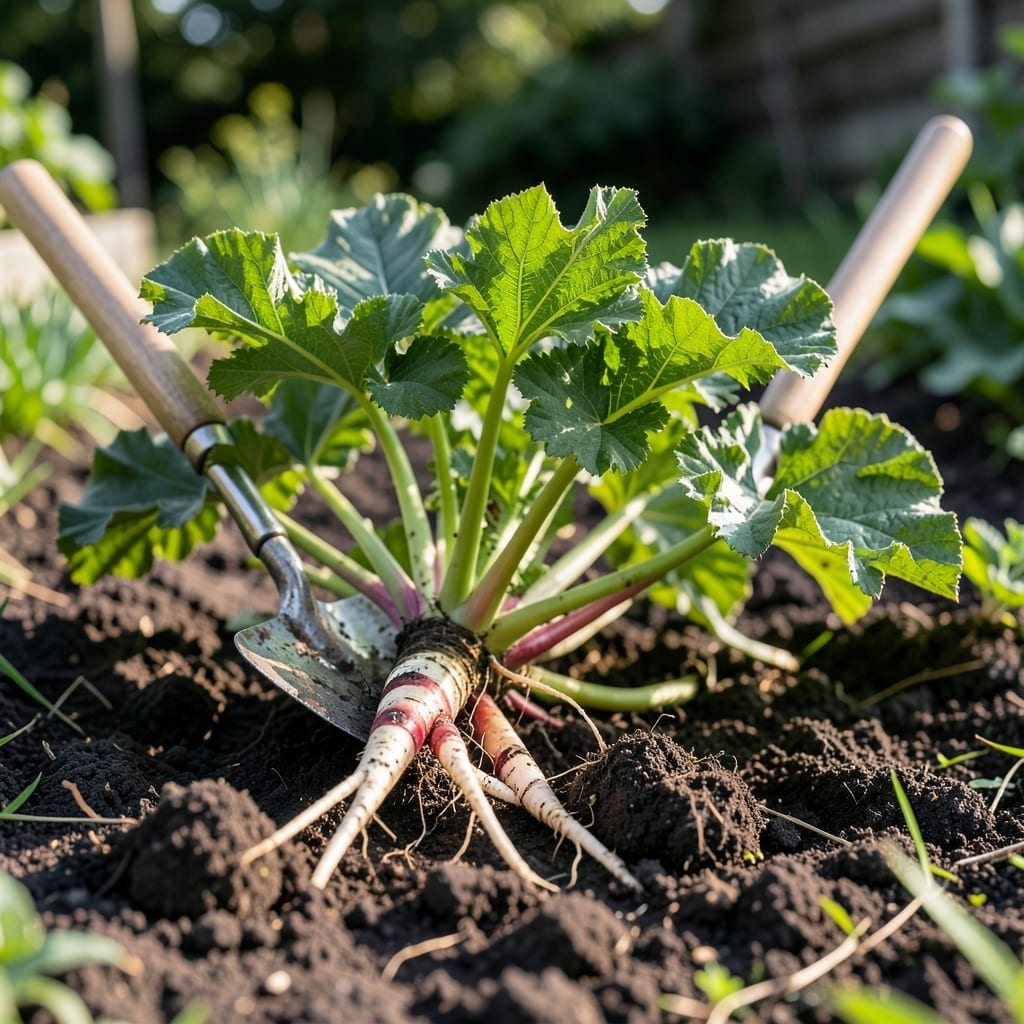
I pulled my first horseradish roots last fall and lost half the harvest to rot within weeks. Proper storage changes everything—keeping them fresh for 6+ months with the right approach.
No fancy equipment needed. Just clean, dry roots stored in cool, dark conditions. You’ll maintain that sharp, pungent flavor and avoid waste. Simple steps, big payoff.
📚 In This Guide
Here’s how I keep my harvest crisp and pungent for months with minimal effort.
Dig roots in late fall after the first light frost, as the cold snap boosts their flavor. Use a garden fork to loosen the soil and carefully lift the entire plant. I always wear gloves—the oils can irritate skin and the roots are surprisingly tough to grip.
Brush off excess soil but do not wash the roots. Moisture is the enemy of long-term storage. Trim the leafy tops down to 1-2 inches above the crown, but leave the crown intact to prevent rot from entering through open cuts.
Lay the roots in a single layer on a screen or rack in a cool, dark, well-ventilated area. A basement or garage works perfectly. Let them cure for 1-2 weeks until the outer skin feels dry and slightly shriveled to the touch.
This drying period thickens the skin, creating a natural barrier against moisture loss and spoilage. You’ll know it’s working when the roots develop a slightly tougher exterior. Don’t rush this step—it’s what separates short-term storage from months of freshness.
For refrigerator storage, wrap each root individually in a damp paper towel and place in a perforated plastic bag. This maintains humidity without trapping moisture against the root. Check weekly and replace towels if they dry out.
For longer storage, pack roots in a box of slightly damp sand or sawdust in a 35-40°F location. The medium should feel cool and barely moist, like a wrung-out sponge. Roots will keep for 4-6 months this way.
Buried in the ground is another option—replant roots in a sandy trench 12 inches deep and cover with 6 inches of straw. Dig up as needed through winter in all but the coldest climates.
Check stored roots every 2-3 weeks for soft spots or mold. One bad root can spoil the whole batch, so remove any showing signs of decay immediately. The sand or sawdust should never feel soggy—just barely damp.
If roots begin to shrivel excessively, increase humidity slightly. For buried roots, ensure the straw mulch stays in place and the soil doesn’t freeze solid. You’ll find the flavor actually improves with proper storage, becoming more intense over time.
Small details make the difference between roots that last weeks and those that stay fresh for months.
Harvest Timing: That first light frost in late fall isn’t just tradition—it’s science. The cold triggers the plant to concentrate its oils, giving you that signature pungent kick. I’ve tried harvesting earlier and the flavor was noticeably milder, so wait for that frost.
Curing Secret: The 1-2 week curing period in Step 2 is non-negotiable. I learned this the hard way after skipping it once—my roots softened within a month. That dry, shriveled skin you feel is the plant’s natural protection developing, and it’s what keeps moisture from seeping in later.
Storage Medium: For the sand or sawdust method in Step 3, think “wrung-out sponge” level dampness. I’ve ruined a batch by using sand that was too wet, which caused rot. The medium should feel cool to the touch and barely hold together when squeezed.
Monitoring Routine: Those 2-3 week checks in Step 4 aren’t just about removing bad roots—they’re your chance to adjust conditions. I once found my sand had dried out completely, and the roots were starting to shrivel. A quick spritz with water saved the rest of the batch.
Fresh horseradish root can last 2-3 weeks in the refrigerator if stored properly in a paper bag or wrapped in a damp cloth. For long-term storage, freeze it for up to 6 months or preserve it in vinegar for even longer shelf life.
It’s not ideal. Room temperature speeds up spoilage, so store horseradish root in the fridge or a cool, dark place (like a root cellar) to maintain its pungency and freshness.
Grated horseradish loses its bite quickly. Store it in an airtight container with a splash of vinegar or lemon juice in the fridge for up to 1-2 weeks. Freezing is another option for longer storage.
Discard it if it’s soft, moldy, or has a foul odor. Fresh horseradish should feel firm and smell sharp. Sprouting or shriveled roots are also signs it’s past its prime.
Yes! Freeze whole, unpeeled roots in an airtight bag for up to 6 months. Peel and grate after thawing. This preserves flavor and texture better than freezing pre-grated root.