
Beautiful Plants For Your Interior
Beautiful Plants For Your Interior
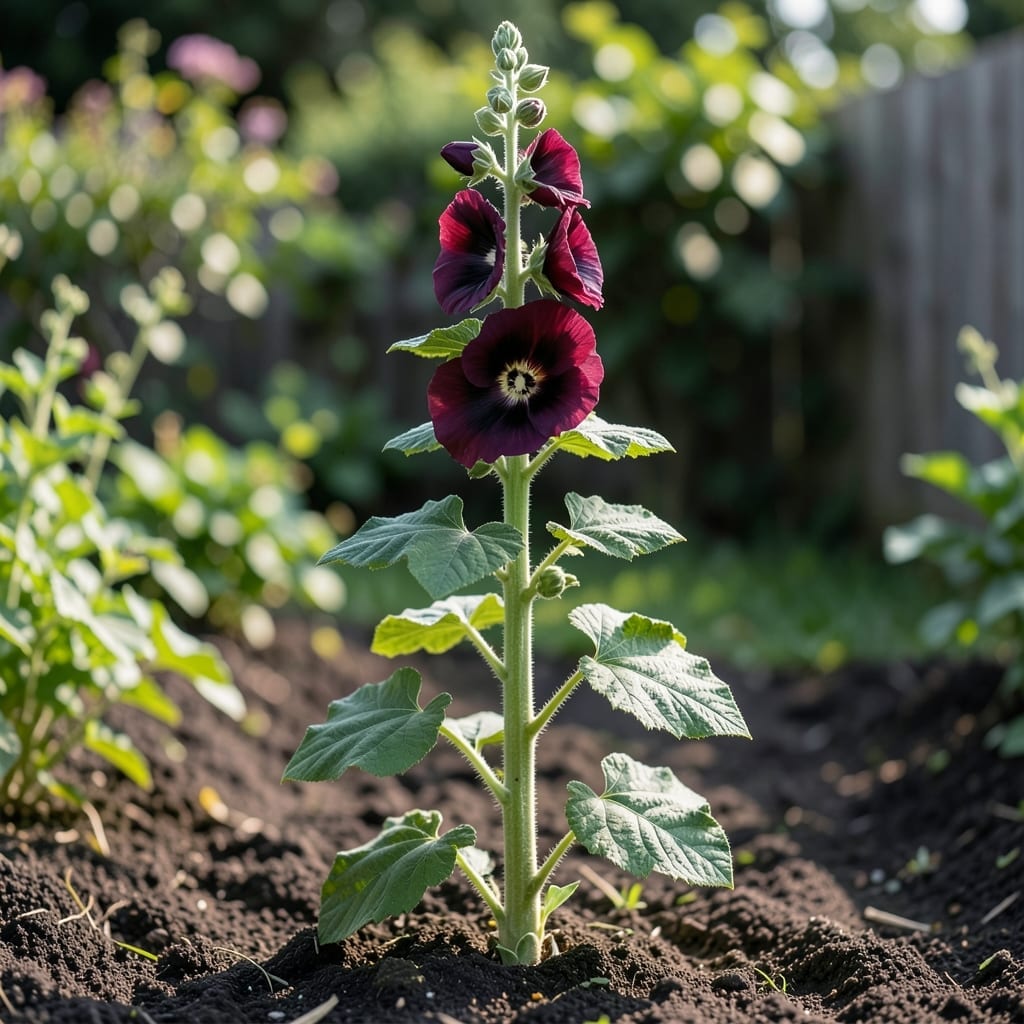
The first time I saw Jet Black hollyhocks towering in a cottage garden, I swore they were painted. Those deep purple-black blooms against the green foliage create a look you won’t find anywhere else.
This variety thrives in full sun and well-draining soil, and once established, it’s surprisingly low-maintenance. With the right care, you’ll get a 6-8 foot showstopper that brings drama to any garden space.
📚 In This Guide
Here’s the method I rely on for bold, deep blooms that stop neighbors in their tracks.
Select a spot with full sun to light shade, though these perform best with at least 6-8 hours of direct sunlight daily. The soil should be well-draining but rich in organic matter—I always amend with compost before planting. Avoid low-lying areas where water collects, as hollyhocks despise wet feet.
Jet Black varieties grow tall, often reaching 5-6 feet, so place them toward the back of borders or against a fence. Wind protection helps prevent stem breakage, especially in exposed locations. Test your soil pH—hollyhocks thrive in slightly alkaline conditions around 6.5-7.5.
Start seeds indoors 8-10 weeks before the last frost for earlier blooms, or direct sow after danger of frost has passed. Plant seeds ¼ inch deep and 12-18 inches apart. If using transplants, dig holes twice as wide as the root ball and set them at the same depth they grew in their containers.
I space my Jet Blacks 2 feet apart to allow for air circulation, which prevents rust—a common hollyhock issue. Water thoroughly after planting, then mulch with 2-3 inches of organic material to retain moisture. You’ll see germination in 10-14 days if conditions are ideal.
Keep the soil evenly moist but not soggy during the first growing season. Once established, hollyhocks are moderately drought-tolerant, but Jet Black’s deep blooms benefit from regular watering. I water at the base 2-3 times weekly, increasing to daily during extreme heat.
Check soil moisture by inserting your finger 1 inch deep—if it feels dry, it’s time to water. Morning watering allows foliage to dry before evening, reducing disease risk. Reduce watering in late summer as the plant prepares for dormancy.
Jet Black hollyhocks produce heavy flower spikes that may require staking. I use bamboo stakes or a decorative trellis, tying stems loosely with soft twine. Deadhead spent blooms to encourage a second flush of flowers, though I often leave some late-season blooms to self-seed.
Apply a balanced fertilizer in early spring, then again after the first bloom cycle. Watch for rust spots on leaves—remove affected foliage immediately and avoid overhead watering. These are biennials, so expect the first blooms in the second year, with peak performance in the third.
After flowering, cut back stems to 6 inches above ground level in late autumn. In colder zones, add a 2-3 inch layer of mulch around the base for winter protection. I leave some seed heads for birds and to ensure natural propagation.
Divide clumps every 3-4 years in early spring to maintain vigor. Jet Black hollyhocks may self-seed prolifically—thin seedlings to 12 inches apart to prevent overcrowding. This variety often blooms true from seed, so you’ll enjoy those dramatic dark flowers year after year.
The right approach makes all the difference between mediocre and spectacular blooms.
The Sunlight Factor: Those 6-8 hours of direct sunlight in Step 1 aren’t just a suggestion—they’re critical for achieving the deep, rich color Jet Blacks are famous for. I learned the hard way that plants in partial shade produce paler blooms and weaker stems. If your garden has limited sun, prioritize morning sunlight over afternoon.
Planting Depth Precision: When direct sowing in Step 2, that ¼ inch depth is non-negotiable. Plant too deep and seeds may rot; too shallow and they’ll dry out. Use the tip of your finger to create the perfect shallow trench. And trust me on this—your germination rate will thank you.
Watering Wisdom: The 2-3 times weekly watering schedule in Step 3 assumes average conditions. During heat waves, check soil moisture daily by inserting your finger 1 inch deep as instructed. Morning watering is key—it gives foliage time to dry, which significantly reduces rust risk, that common hollyhock nemesis mentioned in Step 4.
Support Strategy: Those 5-6 feet tall stems from Step 1 will need support. Don’t wait until they’re flopping over—install your bamboo stakes early, as mentioned in Step 4. I tie stems with soft twine in a figure-eight pattern, which allows for growth while preventing damage.
Plant in well-draining soil with full sun to partial shade. Water moderately and stake tall stems to prevent toppling. These striking, near-black blooms thrive in USDA zones 3-9 with minimal fuss!
Sow seeds indoors 6-8 weeks before the last frost or directly outdoors in early spring or fall. They germinate best in 60-70°F soil and bloom the following year.
Watch for rust (orange spots on leaves) and aphids. Improve airflow, avoid overhead watering, and remove infected foliage. Neem oil or fungicides can help if issues persist.
Try ‘Nigra’ (black hollyhock) or ‘Black Adder’ agastache for dark, dramatic blooms. Both offer deep hues and vertical height, though care needs may vary slightly.
Lack of sunlight, poor soil fertility, or over-fertilizing (especially with nitrogen) can delay blooms. Ensure 6+ hours of sun and balanced fertilizer to encourage flowers.