
Beautiful Plants For Your Interior
Beautiful Plants For Your Interior
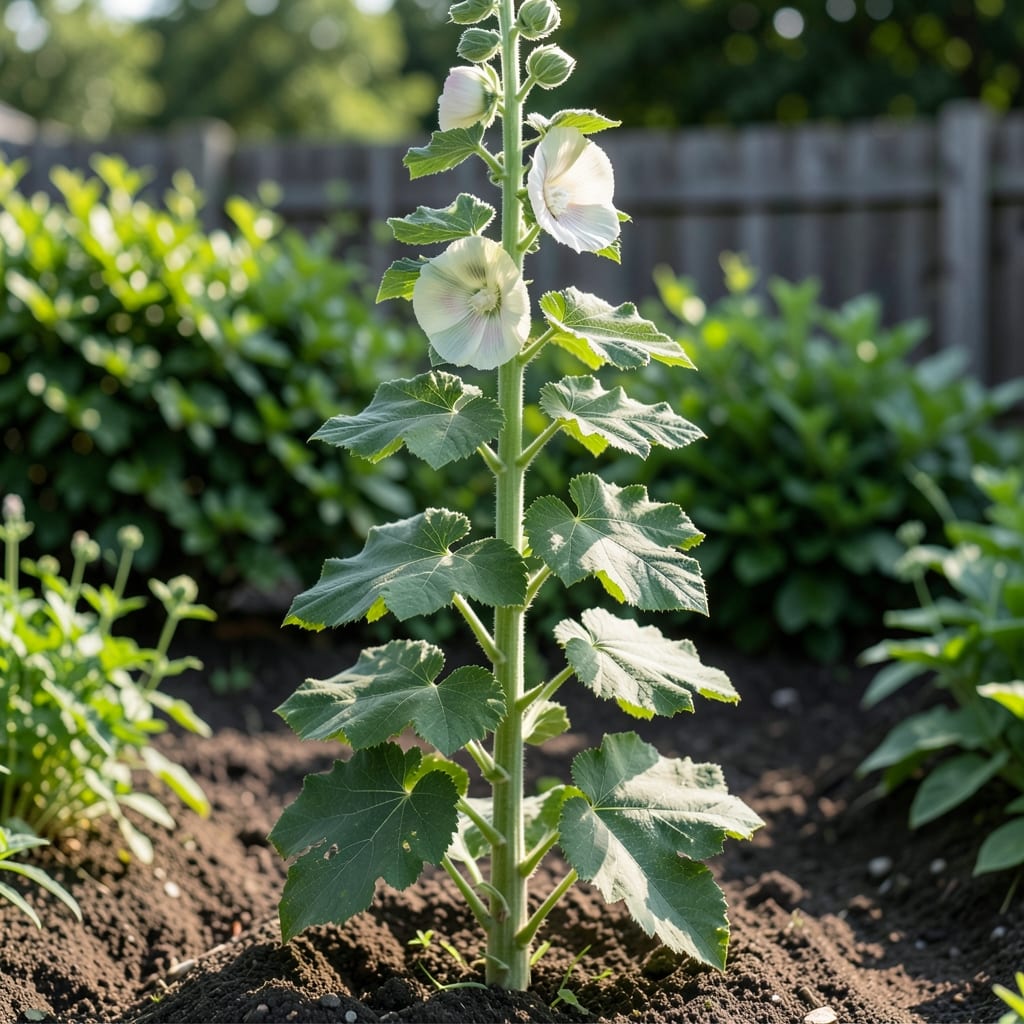
Hollyhock leaves caught my attention when I noticed their dramatic size and texture. They add old-fashioned charm to any garden, but there’s more to consider than just their looks.
I learned the hard way that some varieties can cause skin irritation. The key is understanding which types you’re growing and how to handle them safely. Proper care keeps both you and your plants thriving.
📚 In This Guide
Here’s how to handle hollyhock plants safely to avoid any skin irritation or accidental ingestion.
Always start by putting on long-sleeved shirts and gardening gloves before touching hollyhock leaves. The tiny hairs on the leaves can cause skin irritation for sensitive individuals. I use nitrile-coated gloves because they provide a good grip while protecting my hands completely.
If you’re working with large hollyhock plants, consider wearing long pants and closed-toe shoes as well. The stems can be rough, and brushing against them bare-legged often leads to itchy red patches. This simple precaution prevents most contact-related issues entirely.
Choose a well-ventilated area for pruning or handling hollyhock leaves, preferably outdoors. The fine hairs can become airborne when disturbed, potentially causing respiratory irritation. I like to work on a calm day to minimize wind spreading these irritants.
Lay down a tarp or work on a clean surface to contain any fallen leaves or plant debris. This makes cleanup easier and prevents the hairs from spreading to other areas of your garden. Keep pets and children away from your workspace during this process.
When pruning or examining hollyhock leaves, use clean, sharp pruners to make precise cuts. Avoid tearing the leaves, as this releases more of the irritating hairs into the air. I hold the stem with one gloved hand while cutting with the other to maintain control.
Never touch your face, especially your eyes or mouth, while handling hollyhock leaves. The irritation can be particularly unpleasant if these hairs come into contact with mucous membranes. If you need to adjust your glasses or wipe your brow, remove your gloves first and wash your hands thoroughly.
After finishing your work, carefully gather all plant material and dispose of it in a sealed bag. This prevents the hairs from becoming airborne during disposal. I use a damp paper towel to wipe down my tools and work surface, which helps capture any lingering hairs.
Remove your gloves and wash your hands with soap and warm water for at least 20 seconds. Pay special attention to the areas between your fingers and under your nails. If you’ve worn long sleeves, change your shirt and wash any exposed skin to remove potential irritants completely.
After handling hollyhock leaves, watch for any signs of skin irritation over the next 24 hours. Redness, itching, or a rash may indicate sensitivity. If these symptoms appear, wash the area with mild soap and water and apply a soothing lotion like calamine.
Store your gardening tools and gloves in a clean, dry place away from children and pets. This prevents accidental exposure to any residual plant hairs. I keep my hollyhock-handling tools separate from my other gardening equipment to avoid cross-contamination.
These practical pointers will help you stay safe while working with this plant.
The Identification Check: Confession: I skipped verifying the fuzzy texture for years and accidentally handled lookalike plants. Always confirm those characteristic fine hairs on stems and leaves in Step 1—it’s your first line of defense against accidental exposure to other potentially harmful species.
Pruning Precision: That 45-degree angle mentioned in Step 3 isn’t just for aesthetics. Cutting at this angle prevents water from pooling on the stem, which can lead to rot. I learned this the hard way after losing several plants to poor pruning technique.
Cleanup Discipline: The 20-second handwashing rule in Step 4 is non-negotiable. I keep a timer by my sink because it’s easy to rush this step. Pay extra attention to under your nails where those irritating saponins love to hide.
Yes, hollyhock leaves contain saponins and other compounds that can be mildly toxic if ingested, causing stomach upset or skin irritation. Avoid eating them and handle with care, especially around children and pets.
No, it’s not recommended. While some traditional remedies use hollyhock flowers, the leaves may contain toxins. Stick to safer herbal teas like chamomile or mint to avoid risks.
Monitor for vomiting, diarrhea, or lethargy. Contact your vet immediately if symptoms appear, as the leaves can be toxic to cats, dogs, and other animals.
Wear gloves when pruning or touching hollyhock leaves to prevent skin irritation. Wash your hands thoroughly afterward, and keep pets and kids away from the plants.
Yes! For crafts, use non-toxic leaves like rose or lavender. For gardening, opt for pet-safe plants like marigolds or sunflowers to avoid toxicity concerns.