
Beautiful Plants For Your Interior
Beautiful Plants For Your Interior
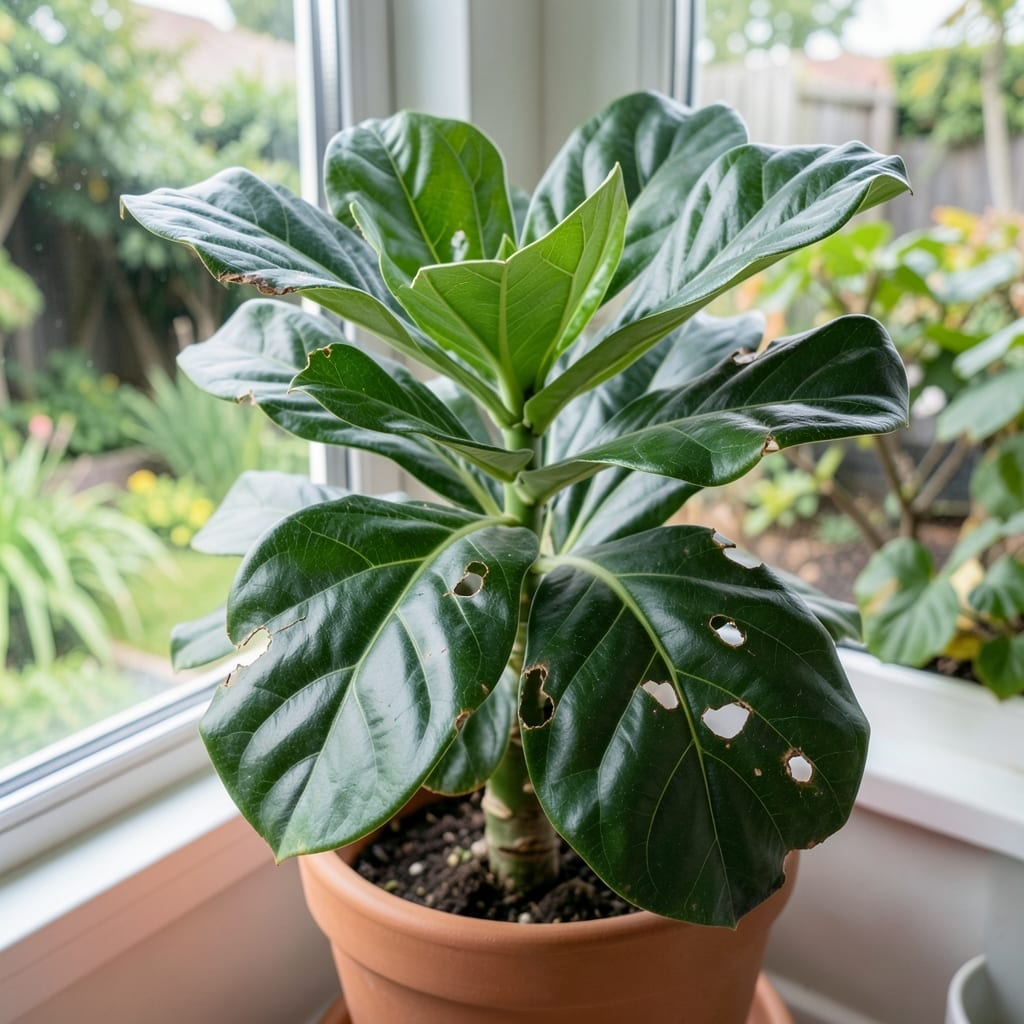
Watching holes appear in your fiddle leaf fig leaves is enough to keep you up at night. I’ve been there—staring at those jagged edges, wondering if it’s pests, disease, or just my own clumsy care.
The truth is, most holes come from pests like spider mites or mealybugs, or physical damage from pets or rough handling. Root rot can also show up as leaf issues, but it usually starts with yellowing, not holes.
Once you identify the culprit, fixing it is straightforward. Isolate the plant, treat with neem oil or insecticidal soap, and adjust your watering routine if needed.
Prevention is simpler than you think: regular leaf inspections, proper drainage, and keeping your plant out of high-traffic areas.
Holes in your fiddle leaf fig’s leaves are a distress signal, and the culprits often fall into a few key categories. Identifying the root cause is the first step to saving your plant.
Insects like spider mites, mealybugs, or thrips are common offenders. These pests feed on the plant’s sap, weakening the tissue and leaving behind small holes or pits. Spider mites, for example, pierce the leaf cells, causing stippling that can progress to holes if left untreated. Check the undersides of leaves for webbing, white cottony deposits, or tiny moving specks.
While root rot itself doesn’t directly create holes, the stress it places on the plant makes it vulnerable. Overwatering leads to oxygen-deprived roots, which struggle to absorb nutrients. This weakens the leaves, making them more susceptible to secondary issues like pests or fungal infections that do cause holes. Yellowing leaves and mushy stems often accompany this problem.
Pathogens such as bacterium Xanthomonas or fungi like Colletotrichum can create dark, water-soaked spots that eventually dry out and perforate. These infections thrive in high humidity or poor air circulation. Look for irregular brown or black spots with yellow halos—these often precede hole formation.
Extreme conditions—like low humidity, direct hot sunlight, or drafts—can cause leaf tissue to die in patches, leading to holes. For instance, intense sunlight may scorch the leaves, while dry air can make edges brittle and prone to tearing. Ensure your plant is in stable, indirect light and a humidity range of 40-60%.
Dealing with holes in your fiddle leaf fig can be frustrating, but the right approach can restore its health. Below are targeted solutions for the most common causes, along with prevention tips to keep your plant thriving.
If pests like spider mites or mealybugs are the culprits, start by isolating the plant. Wipe leaves with a damp cloth and neem oil solution (1 tbsp oil per gallon of water) every 3–5 days until pests are gone. For severe cases, use insecticidal soap. Prevention tip: 💡 Inspect new plants before bringing them home and mist leaves regularly to deter pests.
Overwatering leads to root rot, which can cause leaf damage. Gently remove the plant from its pot, trim black, mushy roots with sterilized scissors, and repot in fresh, well-draining soil. Use a pot with drainage holes and water only when the top 2 inches of soil are dry. Prevention tip: 🌡️ Stick to a consistent watering schedule and avoid letting the plant sit in saucers of water.
Holes from accidental tears or animal scratches won’t regrow, but you can prevent further damage. Trim affected leaves with clean shears to redirect energy to healthy growth. Keep your fiddle leaf fig away from high-traffic areas or curious pets. Prevention tip: ✨ Place the plant in a stable spot with ample space to avoid bumps and scrapes.
Yellowing leaves with holes may signal a lack of nutrients. Use a balanced liquid fertilizer (e.g., 10-10-10) diluted to half strength every 4–6 weeks during growing season. Avoid over-fertilizing, which can burn roots. Prevention tip: 🎯 Flush the soil with water every 2–3 months to remove excess salts from fertilizers.
With these fixes, your fiddle leaf fig can bounce back and stay hole-free!
Inspect the undersides of leaves for tiny webs, white cottony spots, or moving insects. Spider mites and mealybugs are common culprits that leave small, irregular holes.
Overwatering itself doesn’t create holes, but it weakens the plant, making it prone to pests or infections that do. Check for mushy stems and yellowing leaves as signs of root rot.
Isolate the plant and wipe leaves with a neem oil solution every 3–5 days. For severe cases, use insecticidal soap. Regular inspections help prevent future issues.
Yes, trimming affected leaves redirects energy to healthy growth. Use clean shears and remove only the damaged portions to avoid stressing the plant further.