
Beautiful Plants For Your Interior
Beautiful Plants For Your Interior
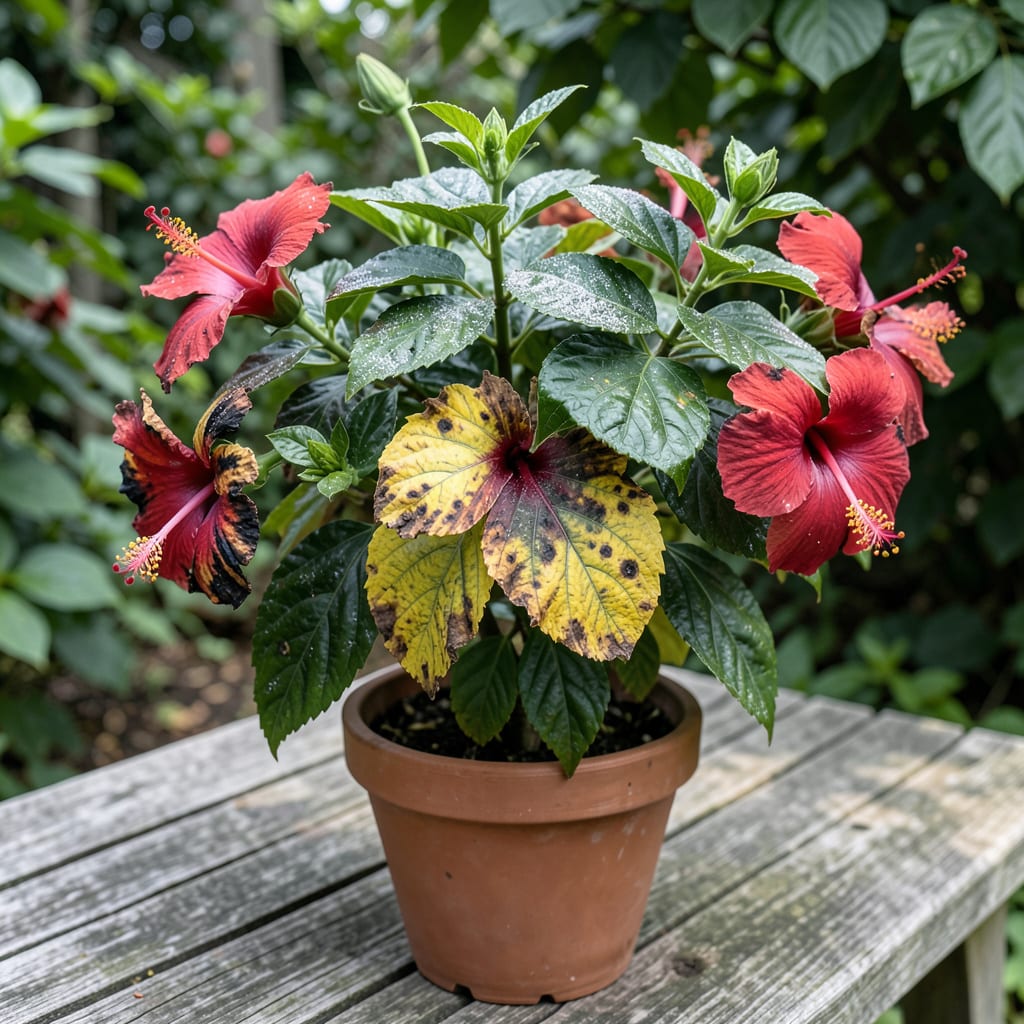
Spotted yellow leaves on your hibiscus last week? I’ve been there—watching healthy blooms turn sickly overnight. These plants shout for help through their foliage, and I’ve learned to read the signs.
The most common culprits appear as dark spots, powdery coatings, or wilting leaves. Each symptom points to a different issue, from fungal infections to pests hiding under the surface.
With the right approach, you can reverse the damage and restore those vibrant flowers. Early action makes all the difference between a struggling plant and one that bounces back.
This guide helps you match the visual clues to solutions, so your hibiscus stays thriving all season long.
Understanding why diseases attack your hibiscus is the first step to prevention. These vibrant plants are susceptible to a range of issues triggered by environmental, biological, and cultural factors. Here’s a breakdown of the most common causes:
Hibiscus thrives in warm, humid climates, but extreme conditions can weaken them. Drought stress (from underwatering) or root rot (from poor drainage or overwatering) creates entry points for pathogens like Phytophthora and Fusarium. High humidity without airflow encourages fungal diseases such as powdery mildew and leaf spot.
Fungi like Cercospora (causing leaf spots) and Botrytis (gray mold) spread via spores in water or soil. Bacteria such as Xanthomonas (bacterial leaf spot) thrive in wet foliage or contaminated tools. These pathogens often exploit wounds from pruning or insect damage.
Insects like aphids, whiteflies, and thrips don’t just sap plant strength—they transmit viruses (e.g., hibiscus chlorotic ringspot) and create open wounds for secondary infections. Their honeydew residue also fosters sooty mold, a black fungal growth that blocks sunlight.
Poor soil health leads to weak plants. Nitrogen deficiency causes yellowing leaves, while potassium or magnesium shortages trigger leaf scorch or interveinal chlorosis. Over-fertilization, especially with high nitrogen, can promote lush but disease-susceptible growth.
Actionable takeaway: Monitor watering, improve airflow, sterilize tools, and balance soil nutrients to reduce disease risks.
Keeping your hibiscus healthy starts with quick action. Below are targeted fixes for the most common problems, along with prevention tips to stop them from returning. 🌿
Fix: Test your soil’s pH—hibiscus thrives in slightly acidic soil (6.0–6.5). If it’s too alkaline, amend with sulfur or iron chelates. For nutrient deficiencies, use a balanced fertilizer (10-10-10) or a magnesium supplement (Epsom salt: 1 tbsp/gallon of water).
Prevent: Water with rainwater or distilled water if your tap is hard. Fertilize every 4–6 weeks during growing season.
Fix: Blast pests off with a strong stream of water early in the day. For stubborn infestations, apply neem oil (mix 1 tsp oil + ½ tsp dish soap per quart of water) or insecticidal soap. Repeat every 5–7 days until gone.
Prevent: Inspect leaves weekly, especially undersides. Keep humidity up (mist plants or use a tray of pebbles + water). 💡 Pro tip: Ladybugs are natural predators—invite them to your garden!
Fix: Remove infected leaves immediately and destroy them (don’t compost). Apply a copper-based fungicide or a baking soda spray (1 tsp baking soda + 1 quart water + a drop of soap). Space plants for airflow.
Prevent: Water at the base to keep foliage dry. Avoid overhead watering in the evening. Sterilize pruning tools with rubbing alcohol.
Fix: Move potted hibiscus to shade if leaves look crispy. For in-ground plants, create temporary shade with a burlap screen. Trim damaged leaves to redirect energy. Water deeply at dawn.
Prevent: Acclimate plants gradually to full sun. Mulch around the base to retain moisture and cool roots.
Act fast, stay consistent, and your hibiscus will reward you with vibrant blooms! ✨
Check the pattern. Uniform yellowing often signals nutrient deficiency or overwatering. Spotty or veined yellowing usually points to disease or pests.
Yes! A mix of 1 tsp baking soda + 1 quart water + a drop of soap works as a mild fungicide. Apply weekly until spots disappear.
Black spots often indicate sooty mold from pest honeydew or bacterial leaf spot. Remove affected leaves and treat with neem oil or copper fungicide.
No. Diseased leaves can spread pathogens. Always destroy (burn or trash) infected material, never compost it.
