
Beautiful Plants For Your Interior
Beautiful Plants For Your Interior
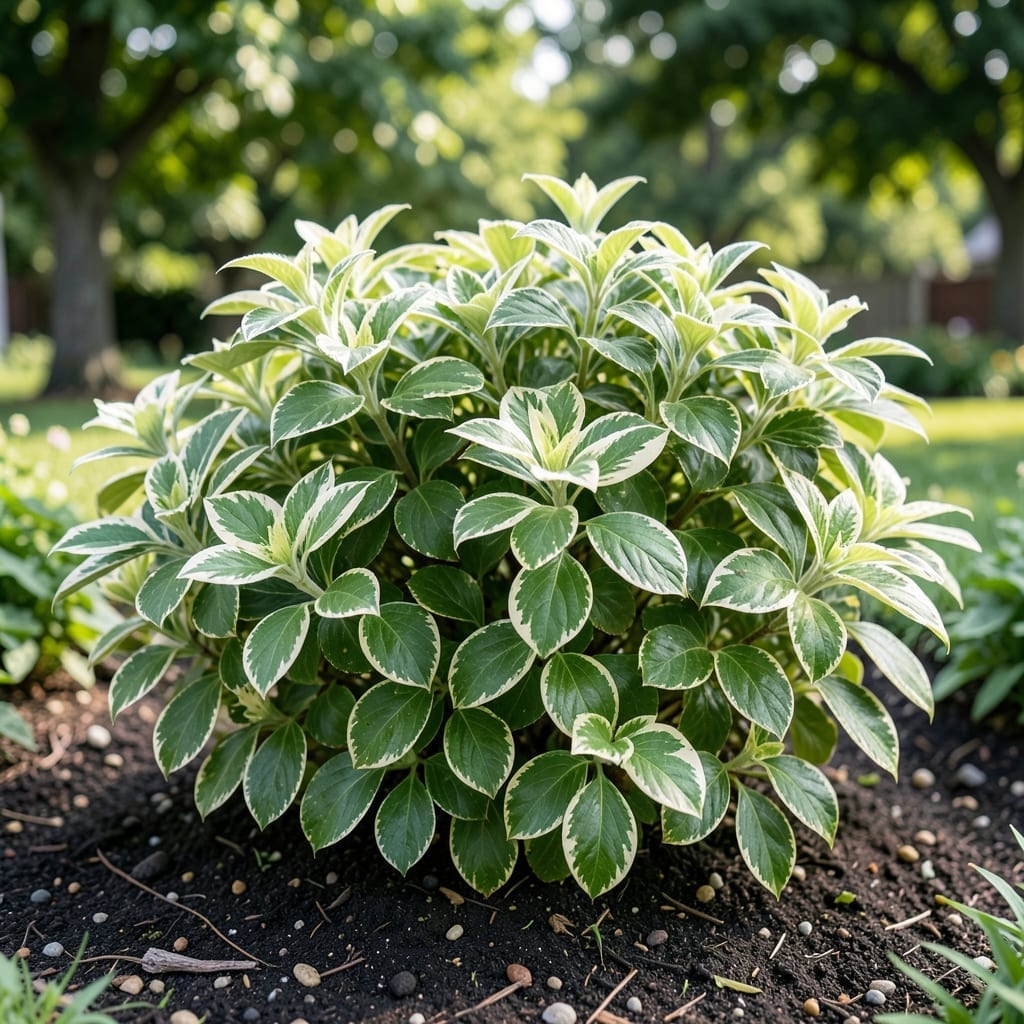
Common bushes with green and white leaves include variegated dogwood, hydrangea, and hosta. These plants feature striking foliage patterns that add visual interest to gardens and landscapes.
I love how these variegated varieties create natural contrast in any garden setting. The green and white coloration often results from genetic mutations that affect chlorophyll production, giving the leaves their distinctive patterned appearance. 🌟 These bushes thrive in partial shade but can adapt to full sun with proper care.
💡 In This Article
The green and white pattern in leaves is called variegation, which occurs when parts of the leaf lack chlorophyll. This happens due to genetic mutations that suppress chlorophyll production in specific cells. The white sections can’t photosynthesize, so the plant relies on the green parts for energy.
This creates the striking contrast we see in variegated bushes. 🌟
Chlorophyll distribution varies by species and even within individual plants. In variegated dogwood, the white margins often contain no chlorophyll, while the center remains green. In hostas, the variegation can be more random, with splashes of white across the leaf surface. Environmental factors like light exposure can intensify or fade these patterns.
The most common types of variegation are marginal (white edges), sectoral (white sections), and mottled (random patches). These patterns are stable in some plants but can revert to solid green if the plant produces a shoot without the variegation mutation. Gardeners often propagate from variegated stems to maintain the desired appearance. ✨
Light plays a crucial role in maintaining variegation. Too much shade can cause the plant to produce more green leaves to compensate for reduced photosynthesis. Conversely, too much sun can scorch the white sections, which are more sensitive to light. The ideal balance keeps the variegation vibrant and the plant healthy. 🔥
Some variegated bushes, like certain hydrangeas, may show more intense variegation in cooler temperatures. This is because chlorophyll production is temperature-dependent. The white sections often feel slightly thinner or more delicate than the green parts, as they contain less structural material.
Variegation happens when parts of the leaf lack chlorophyll due to genetic mutations. The white sections can’t photosynthesize, so the plant depends on the green areas for energy.
Most handle full sun, but white sections are sensitive and may scorch. Ideal conditions are partial shade to maintain vibrant variegation without leaf damage.
Prune any solid green shoots immediately, as they can overtake the variegated growth. Always propagate from variegated stems to maintain the pattern.
Most prefer well-draining soil with a pH of 6.0-7.0. Amend heavy clay with compost. Consistent moisture keeps leaves looking fresh.
Dwarf options like ‘Francee’ hosta or variegated euonymus stay compact. They work well in containers or tight garden spots.