
Beautiful Plants For Your Interior
Beautiful Plants For Your Interior
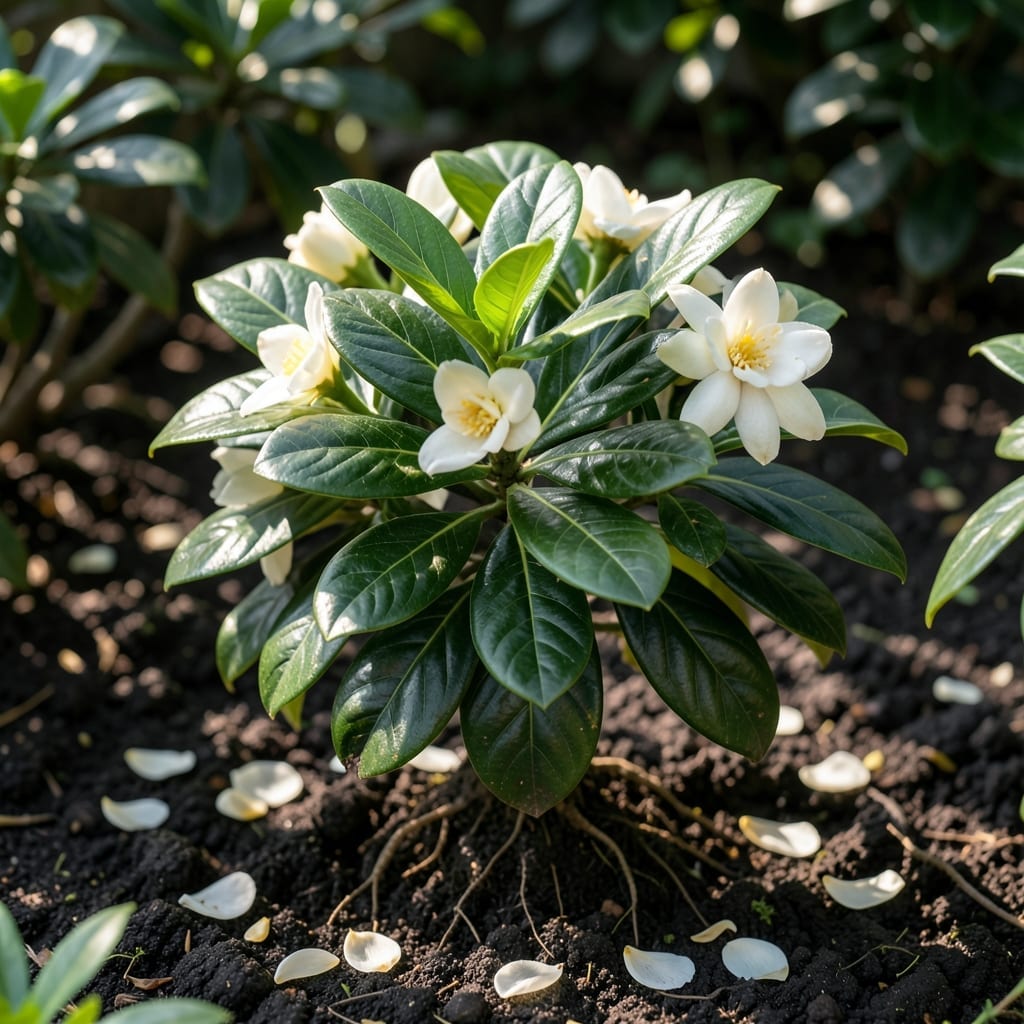
The gardenia root system is shallow and fibrous, spreading horizontally rather than deeply. It forms a dense mat near the soil surface, requiring consistent moisture and well-draining, acidic soil for optimal growth.
This horizontal spread allows gardenias to efficiently capture surface nutrients and water, which is why they thrive in loamy, acidic conditions. I’ve noticed these roots are particularly sensitive to compaction, so maintaining loose soil helps them expand properly. 🌟
Their shallow nature also means they benefit from regular mulching to retain moisture and protect from temperature swings. This setup mirrors their natural forest floor habitat.
💡 In This Article
The fibrous nature of gardenia roots creates a vast network of fine root hairs, dramatically increasing the surface area for absorption. These hairs specialize in capturing water and dissolved nutrients from the top 2-6 inches of soil, where organic matter tends to concentrate.
This adaptation mirrors their native forest understory habitats, where leaf litter provides a steady supply of nutrients near the surface. ✨
Mycorrhizal fungi form symbiotic relationships with these roots, extending their reach by 100-1000x. The fungi’s hyphae access microscopic soil pores that roots can’t penetrate, delivering phosphorus and micronutrients in exchange for carbohydrates from the plant. This partnership is so efficient that gardenias with healthy mycorrhizal networks can absorb 30% more water than those without. 💫
Shallow roots also allow gardenias to respond quickly to rainfall or irrigation. You’ll notice new growth often appears within 48 hours of watering—a visible sign of their rapid nutrient uptake. However, this same efficiency makes them vulnerable to drought stress, as their limited depth can’t access moisture from lower soil layers. 🌟
The dense mat formation serves another purpose: it stabilizes the plant while preventing soil erosion. In windy conditions, this horizontal root system acts like a natural anchor, spreading up to 3x the width of the plant’s canopy. This adaptation explains why gardenias often thrive in slightly sloped garden beds where other plants might struggle. ⚡
What most gardeners overlook is the root’s sensitivity to temperature. Ideal soil temperature for active nutrient uptake is 65-75°F. Below 50°F, root activity slows dramatically, which is why gardenias often enter dormancy in cooler climates. This temperature dependence is why consistent mulching is so critical for maintaining optimal root zone conditions. 🔥
Gardenia roots stay close to the surface, usually within the top 2-6 inches of soil. Their fibrous, horizontal spread creates a dense mat rather than growing deep into the ground. This shallow system makes them especially sensitive to drought.
Acidic soil (pH 5.0-6.0) allows gardenia roots to absorb essential nutrients like iron and manganese. In alkaline conditions, these nutrients become locked in the soil, leading to yellowing leaves and stunted growth.
No, their shallow fibrous roots need loose, well-draining soil to spread and access oxygen. Compaction restricts growth and can lead to root rot. Always amend heavy clay soils with organic matter before planting.
Check soil moisture by inserting your finger 1 inch deep. If dry, water until moisture reaches 4-6 inches down. Morning watering is best to allow roots to absorb moisture before the heat of the day.