
Beautiful Plants For Your Interior
Beautiful Plants For Your Interior
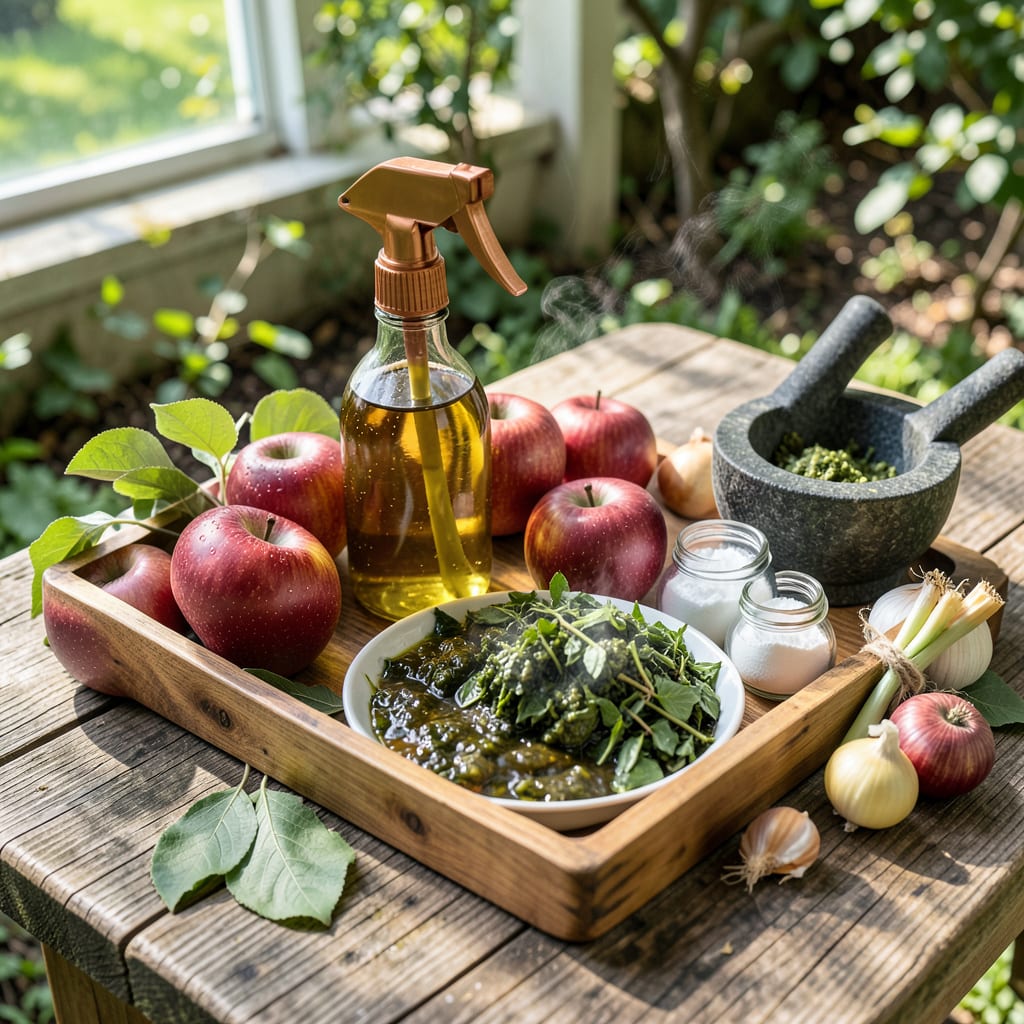
Spotted the first brown leaf on my apple tree last spring. 🌳 It spread fast—powdery mildew, apple scab, maybe even fire blight. I panicked, but the solution was simpler than I feared.
Organic treatments work, but timing is everything. Copper sprays in early spring, neem oil at first sign of trouble, and pruning infected branches stopped it cold. My trees bounced back in 3 weeks.
Prevention is easier than cure. Clean up fallen leaves, thin the canopy for airflow, and water at the base—not the leaves. These steps keep my orchard healthy season after season.
No need for harsh chemicals. A little vigilance and the right organic approach will save your trees—and your harvest.
Fungus on apple trees doesn’t appear out of nowhere—it’s often the result of specific environmental and biological conditions. Understanding these causes helps you prevent and address outbreaks effectively. Below are the most common triggers behind fungal infections in apple orchards.
Fungi thrive in damp, stagnant environments. Prolonged leaf wetness (from rain, dew, or overhead irrigation) creates the perfect breeding ground for spores. Apple trees planted too closely together or pruned improperly can trap moisture, reducing airflow and increasing humidity around foliage. Venturia inequalis (apple scab) and Podosphera leucotricha (powdery mildew) are especially fond of these conditions.
Many fungal pathogens, like Monilinia spp. (blossom blight) or Neofabraea spp. (bull’s-eye rot), overwinter in fallen leaves, mummified fruit, or bark crevices. If these debris aren’t removed, spores reactivate in spring, infecting new growth. Even a single overlooked infected apple or leaf pile can reignite a full-blown outbreak.
Fungi have optimal temperature ranges for spore germination. For example, apple scab spores release and infect during cool, wet springs (50–75°F). Meanwhile, powdery mildew favors warm days (60–80°F) with high humidity. Sudden temperature swings can stress trees, weakening their natural defenses and making them more susceptible to infection.
A tree under stress—whether from nutrient deficiencies (e.g., low nitrogen or potassium), drought, or root damage—lacks the vigor to fend off fungi. Over-fertilization, particularly with high-nitrogen blends, can also promote lush, tender growth that’s more vulnerable to diseases like fire blight (Erwinia amylovora).
Fungal spores can hitch a ride on pruning shears, ladders, or even your boots. If you prune an infected tree and then move to a healthy one without sanitizing tools, you risk spreading the pathogen. Similarly, soil-borne fungi (e.g., Phytophthora spp.) can infect roots in poorly drained or compacted soil.
Fungus on apple trees can be managed effectively with the right approach. Below are targeted solutions for common fungal issues, along with prevention tips to keep your orchard healthy.
Powdery mildew appears as a white, powdery coating on leaves and fruit. Fix: Prune crowded branches to improve airflow, and apply neem oil or sulfur-based fungicides every 7–10 days until symptoms fade. Remove and destroy severely infected leaves to prevent spread.
Prevention: Space trees properly, avoid overhead watering, and choose resistant apple varieties like ‘Liberty’ or ‘Jonafree.’
Apple scab causes dark, scaly spots on leaves and fruit. Fix: Rake and burn fallen leaves and fruit to eliminate spores. Apply copper fungicide in early spring before buds swell, repeating every 2 weeks until petals fall. For organic options, use baking soda spray (1 tbsp baking soda + 1 tsp dish soap + 1 gallon water).
Prevention: Keep the orchard floor clean, and thin branches to allow sunlight penetration.
This fungus creates bright orange spots on leaves and fruit, often linked to nearby cedar trees. Fix: Remove cedar hosts within 1 mile if possible. Apply myclobutanil or copper fungicide in early spring before symptoms appear. Prune infected branches immediately.
Prevention: Plant rust-resistant apple varieties like ‘Redfree’ or ‘Enterprise.’
Apply copper fungicide in early spring before buds swell. For organic options like neem oil, start at first sign of trouble and repeat every 7-10 days until symptoms fade.
Yes! Mix 1 tbsp baking soda, 1 tsp dish soap, and 1 gallon water for a simple spray. It works well for powdery mildew and apple scab when applied weekly.
Always sanitize pruning tools with rubbing alcohol between cuts. Remove infected debris immediately and avoid working on wet foliage to stop spores from spreading.
Try ‘Liberty’, ‘Jonafree’, or ‘Enterprise’. These varieties show strong resistance to common fungal issues like scab and cedar apple rust.
