
Beautiful Plants For Your Interior
Beautiful Plants For Your Interior
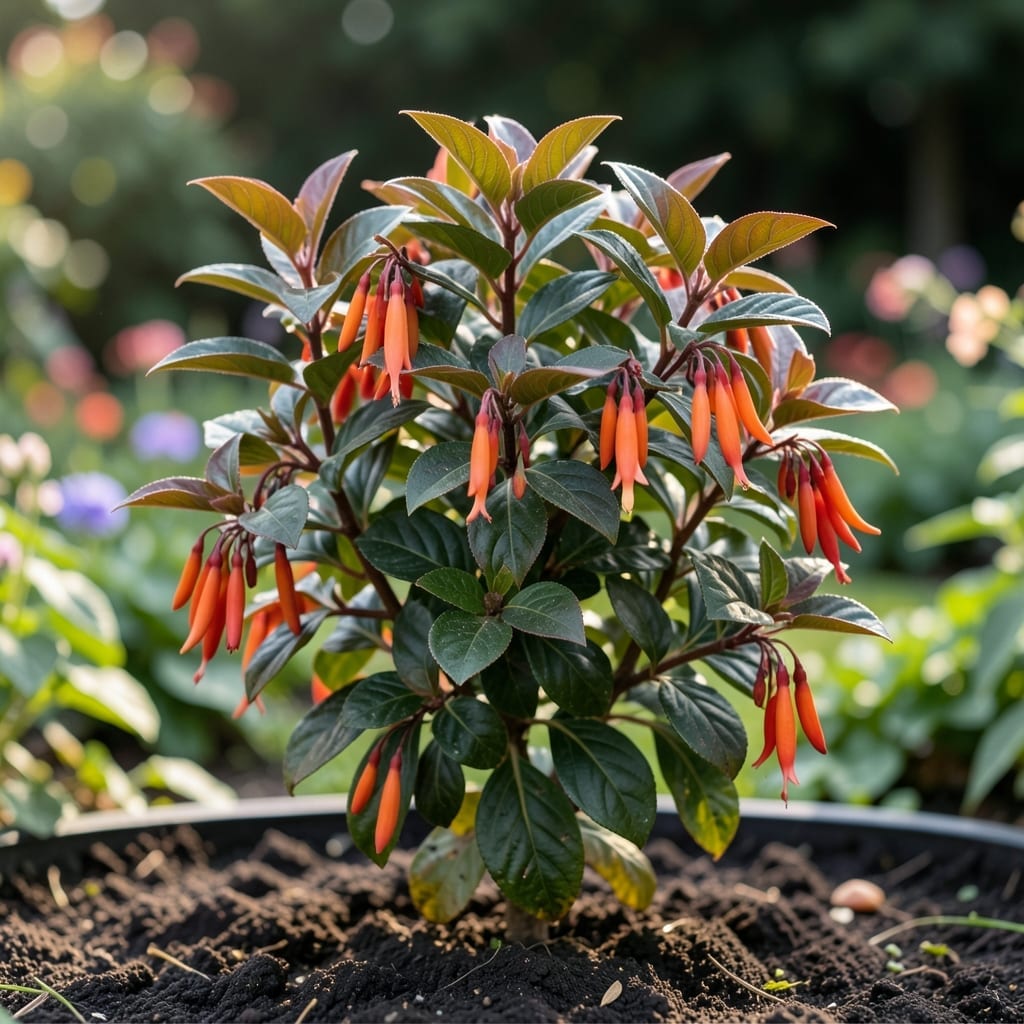
This compact fuchsia changed my shaded patio forever. Gartenmeister Bonstedt stays lush year-round with minimal fuss, producing deep red blooms that hummingbirds can’t resist.
It thrives where other plants struggle—partial shade, containers, even dry spells. The upright habit and glossy leaves make it a standout, and it bounces back from light frosts like a champ.
📚 In This Guide
This compact evergreen thrives with minimal effort once you establish the right conditions.
Choose a spot with partial shade, especially in hotter climates, as direct afternoon sun can scorch the delicate foliage. Fuchsia Gartenmeister Bonstedt performs best in areas receiving morning sun and afternoon shade or dappled light throughout the day.
Ensure the location has well-draining soil to prevent waterlogging, which can lead to root rot. I’ve found that slightly acidic to neutral soil (pH 6.0-7.0) works best for this variety. Test your soil’s drainage by digging a 1-foot hole, filling it with water, and checking if it drains within 1-2 hours.
Amend the soil with organic matter like compost or well-rotted manure to improve fertility and drainage. Fuchsia Gartenmeister Bonstedt benefits from a loose, rich growing medium that retains moisture without becoming soggy.
Work the organic material into the top 6-8 inches of soil before planting. If your soil is heavy clay, consider adding perlite or coarse sand to enhance drainage. This preparation ensures the roots can establish quickly and access the nutrients they need for vigorous growth.
Dig a hole that is twice as wide and just as deep as the root ball of your Fuchsia Gartenmeister Bonstedt. Gently remove the plant from its container and loosen any tightly bound roots to encourage outward growth.
Place the plant in the hole, ensuring the top of the root ball is level with the surrounding soil. Backfill with the amended soil, pressing lightly to remove air pockets. Water thoroughly after planting to settle the soil and hydrate the roots. I always mulch around the base with 2 inches of organic mulch to retain moisture and suppress weeds.
Keep the soil consistently moist but not waterlogged, especially during the first growing season. Fuchsia Gartenmeister Bonstedt has a moderate drought tolerance once established, but it thrives with regular watering. Aim to provide 1-1.5 inches of water per week, either through rainfall or supplemental irrigation.
Feed the plant with a balanced, water-soluble fertilizer every 4-6 weeks during the growing season to promote healthy foliage and abundant blooms. Reduce watering in late fall and winter, allowing the soil to dry slightly between waterings. This adjustment helps the plant prepare for dormancy in colder climates.
Prune lightly after flowering to maintain its compact shape and encourage bushier growth. Remove any dead or damaged branches as needed to keep the plant looking its best.
Small adjustments make a big difference when growing this hardy plant.
Light Conditions: Fuchsia Gartenmeister Bonstedt thrives in partial shade, particularly with morning sun and afternoon shade. In hotter climates, avoid direct afternoon sun which can scorch the delicate foliage. Dappled light throughout the day works equally well for vibrant growth.
Soil Preparation: The drainage test from Step 1 is critical. Dig that 1-foot hole, fill it with water, and verify it drains within 1-2 hours. If it doesn’t, amend with perlite or coarse sand as suggested in Step 2. The pH range of 6.0-7.0 is ideal, so test and adjust if needed before planting.
Planting Depth: In Step 3, ensure the top of the root ball sits level with the surrounding soil. Planting too deep can suffocate the roots, while planting too shallow may expose them. The hole should be twice as wide as the root ball to give roots room to spread outward.
Watering Schedule: The 1-1.5 inches of water per week guideline from Step 4 is a baseline. During extreme heat or drought, you may need to increase frequency, but always check soil moisture first. Overwatering is just as harmful as underwatering for this variety.
Water when the top inch of soil feels dry—typically every 2-3 days in warm weather. Avoid soggy soil to prevent root rot. In cooler months, reduce frequency to weekly or less.
Yellowing leaves often signal overwatering or poor drainage. Check soil moisture and ensure pots have drainage holes. Nutrient deficiencies or excessive sun can also cause this.
Yes! It thrives indoors with bright, indirect light. Keep it near a south- or east-facing window and maintain humidity with misting or a pebble tray.
This variety blooms from late spring to early fall, producing vibrant red and purple flowers. Consistent watering and fertilization can extend the blooming period.
For similar compact, evergreen shrubs, try Fuchsia ‘Mrs. Popple’ or ‘Tom Thumb.’ Both offer colorful blooms and are low-maintenance, ideal for containers or borders.