
Beautiful Plants For Your Interior
Beautiful Plants For Your Interior
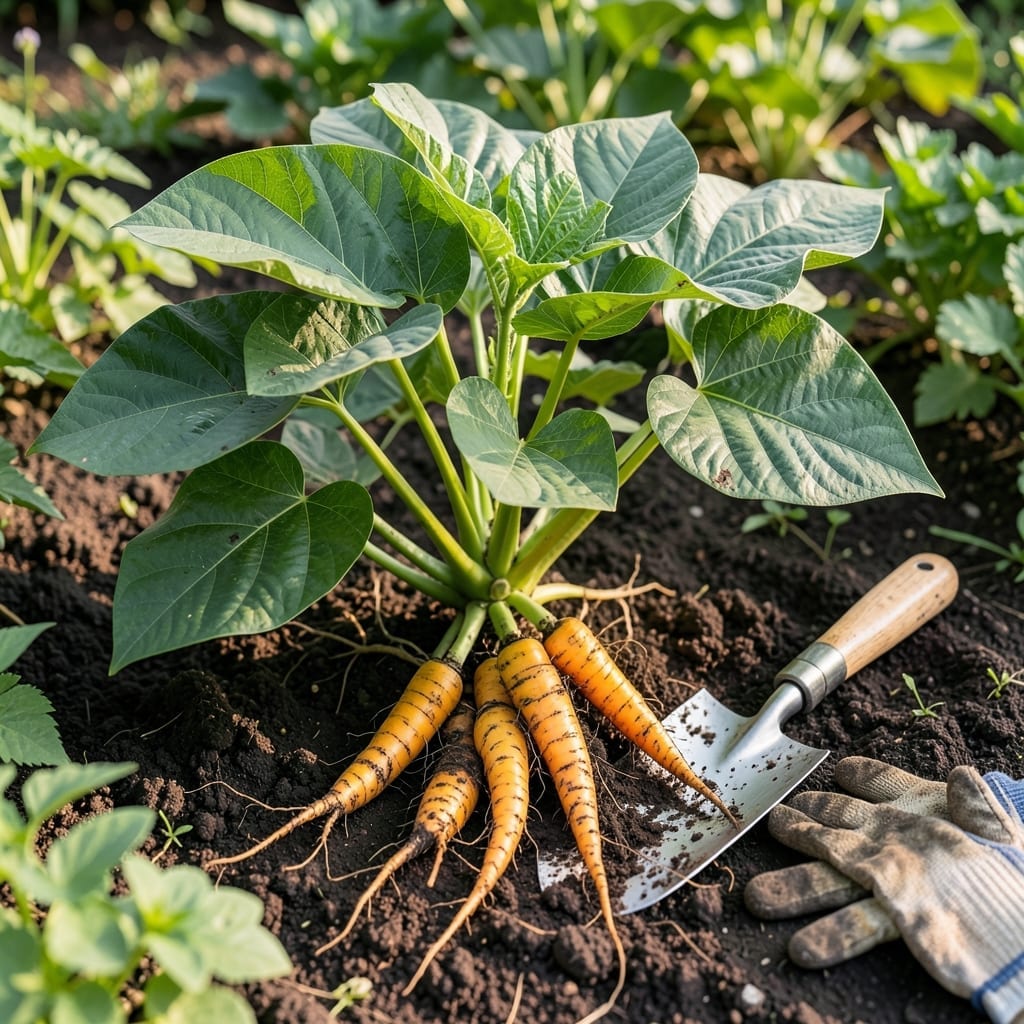
I started growing turmeric on a whim after seeing the bright orange roots at a farmer’s market. The plant itself is shockingly beautiful with tropical foliage that looks great in any garden space.
With the right soil mix and consistent moisture, you’ll harvest vibrant roots in 8-10 months. The process is simpler than most tropical plants, and the reward is fresh turmeric that puts store-bought to shame.
📚 In This Guide
Here’s the method I rely on for producing vibrant, healthy rhizomes every time.
Start with organic turmeric root from a reputable source—this ensures it hasn’t been treated with growth inhibitors. Choose a rhizome with at least 2-3 visible buds (they look like small, rounded protrusions). Larger rhizomes with multiple buds will produce more vigorous growth and a higher yield.
Soak the rhizome in lukewarm water for 2-3 hours to rehydrate it and encourage bud activation. I’ve found this step significantly speeds up initial growth. After soaking, pat it dry gently—you want it moist but not dripping when planting.
Use a container that’s at least 12-14 inches deep with good drainage. Turmeric develops an extensive root system, and shallow pots restrict growth. Fill the container with a well-draining potting mix amended with 30% compost for nutrients.
The soil should be loose and airy—turmeric rhizomes rot easily in compacted or waterlogged conditions. I mix in a handful of perlite to improve drainage further. Moisten the soil thoroughly before planting, aiming for consistency like a wrung-out sponge.
Place the rhizome horizontally 2-3 inches below the soil surface, with the buds facing upward. This orientation mimics how it grows naturally. If your rhizome has multiple buds, space them at least 4-6 inches apart in the container.
Cover gently with soil, pressing down lightly to eliminate air pockets. Don’t pack the soil tightly—turmeric needs room for its roots to expand. Water lightly after planting to settle the soil, but avoid soaking it. The top 1 inch of soil should remain just barely moist to the touch.
Turmeric thrives in warm conditions—maintain soil temperature between 70-85°F and ambient temperature above 65°F. A heat mat can help in cooler climates. Place the container in a location with bright, indirect light (direct sun can scorch the leaves).
Water when the top inch of soil feels dry, usually every 3-5 days depending on your environment. I check by sticking my finger in the soil—if it comes out clean, it’s time to water. Overwatering is the most common mistake; yellowing leaves are often the first sign.
Fertilize every 4-6 weeks with a balanced, organic fertilizer to support growth. Turmeric is a heavy feeder, and regular feeding results in larger, more vibrant rhizomes. Watch for the first leaves to emerge in 2-4 weeks, with full foliage developing in 6-8 weeks.
Harvest when the leaves begin to yellow and dry, typically 8-10 months after planting. Dig carefully to avoid damaging the rhizomes. Fresh turmeric can be used immediately or stored in the refrigerator for up to 3 weeks. For longer storage, freeze or dry the rhizomes.
Here are the details that make the difference between a struggling plant and a thriving harvest.
The Soaking Advantage: Don’t skip the 2-3 hour lukewarm water soak in Step 1. This rehydration step kickstarts bud activation and can shave weeks off your initial growth time. I learned this the hard way after planting several rhizomes that took forever to sprout.
Depth Matters: The 12-14 inch container depth in Step 2 isn’t arbitrary—turmeric’s extensive root system needs room to expand. Shallow pots lead to stunted growth and smaller rhizomes. Real talk: this is where most beginners go wrong.
Watering Wisdom: In Step 4, the 3-5 day watering schedule is just a guideline. The finger test (checking the top inch of soil) is your real indicator. Overwatering is the #1 killer of turmeric plants, so when in doubt, wait another day.
Temperature Control: Maintaining that 70-85°F soil temperature range in Step 4 is crucial for vigorous growth. If your home runs cool, a heat mat under the container can be a game-changer, especially during those first critical 2-4 weeks when leaves emerge.
Keep it in a cool, dark place or refrigerate in a paper bag for up to 3 weeks. For longer storage, freeze peeled and grated turmeric in airtight containers for up to 6 months.
Yes! Use a well-draining pot (12+ inches deep) and place it in a warm, sunny spot. Turmeric thrives in temperatures above 68°F (20°C) and needs consistent moisture.
Dried turmeric powder is the most common substitute (use 1 tsp powder for 1 tbsp fresh). For a closer flavor, try galangal or ginger, though the color and health benefits may differ.
Mold usually appears due to excess moisture or poor airflow. Ensure the root is dry before storing, and avoid plastic bags. If mold appears, discard the affected parts immediately.
Harvest when the leaves turn yellow (9-10 months after planting). Dig carefully to avoid damaging the rhizomes. Early harvests yield smaller roots, while waiting too long may reduce potency.