
Beautiful Plants For Your Interior
Beautiful Plants For Your Interior
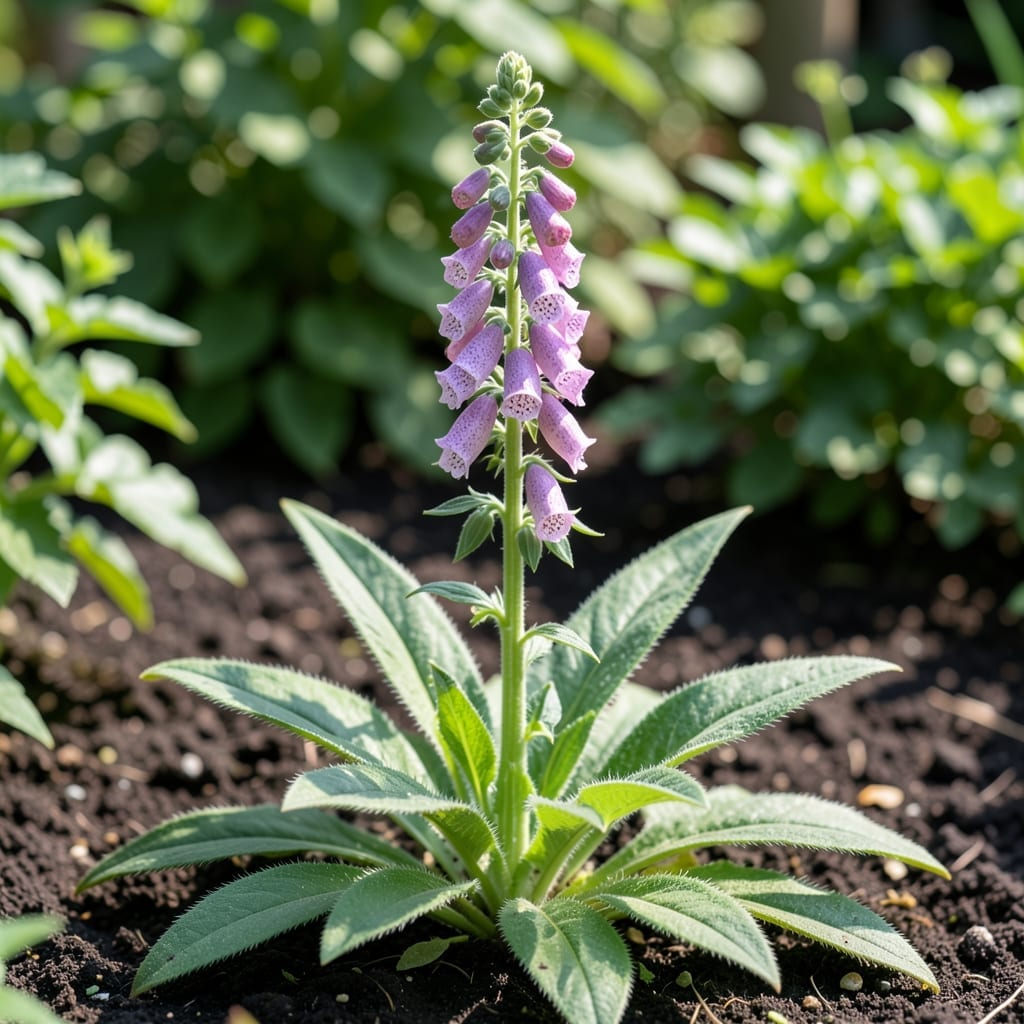
I can spot foxglove leaves from across the garden now. Their long, oval shape with softly toothed edges makes them unmistakable once you know what to look for.
What really gives them away are the prominent veins running parallel from base to tip, creating a distinctive ladder-like pattern. The fuzzy texture and slightly wrinkled surface are bonus clues that set them apart from lookalikes.
Healthy leaves are a rich, deep green with a soft downy coating. Yellowing or brown spots usually signal trouble—either too much water or not enough light hitting those 12-18 inch stems.
Compare them to comfrey or mullein, and you’ll notice foxglove’s leaves are more elongated and less hairy. The difference becomes obvious with practice.
The distinctive shape and vein patterns of foxglove leaves (Digitalis spp.) arise from a mix of genetic, environmental, and evolutionary factors. Here’s why they look the way they do:
Foxglove leaves inherit their lanceolate (long and tapered) shape and pinnate (feather-like) venation from their DNA. These traits are hardwired into the plant’s genetic code, ensuring consistency across the species. Mutations or hybridizations can subtly alter leaf morphology, but the core structure remains recognizable.
Over time, foxglove leaves evolved to maximize efficiency. Their rough, hairy texture deters herbivores, while the deep veins optimize water and nutrient transport. The arrangement of leaves in a rosette at the base also helps the plant conserve moisture in dry conditions.
Light, soil, and climate play a role in leaf development. Foxgloves in shaded areas may produce broader leaves to capture more sunlight, while those in arid regions develop thicker cuticles to reduce water loss. Nutrient-deficient soil can also lead to stunted or discolored foliage.
Understanding these causes helps in accurate foxglove leaf identification, as variations often hint at the plant’s health or habitat.
Mastering foxglove leaf identification starts with recognizing key traits and avoiding common pitfalls. Here’s how to solve confusion and ensure accurate recognition:
Fix: Focus on the distinctive basal rosette of large, soft, hairy leaves with prominent veins. Foxglove leaves are oval to lance-shaped, with a slightly wrinkled texture and toothed edges. Compare with lookalikes like comfrey or mullein—foxglove’s leaves are less fuzzy and more deeply veined.
Prevention: Use a field guide or app to cross-check. Always look for the signature whorled arrangement around the stem.
Fix: Examine the underside of the leaf. Foxglove veins are recessed and form a network-like pattern, unlike the parallel veins of grasses or the simple netting of other wildflowers.
Prevention: Carry a magnifying glass for close inspection. Note that veins often appear purplish in mature plants.
Fix: Never touch your face or eat after handling foxglove leaves—they contain cardiac glycosides, which are toxic if ingested. Wear gloves and wash hands thoroughly.
Prevention: Teach children to avoid touching wild plants. If foraging, confirm ID with an expert before any contact.
💡 Pro Tip: Snap photos from multiple angles (top, bottom, stem) to compare with verified references. Lighting can alter color, so prioritize shape and texture over hue.
Their long, oval shape with softly toothed edges and prominent parallel veins create a ladder-like pattern. The fuzzy texture and slightly wrinkled surface are also key identifiers.
Foxglove leaves are more elongated and less hairy than comfrey’s. Look for foxglove’s distinctive 12-18 inch stems and deep vein patterns.
No, they contain toxic cardiac glycosides. Always wear gloves and wash hands thoroughly after handling. Keep children and pets away.