
Beautiful Plants For Your Interior
Beautiful Plants For Your Interior
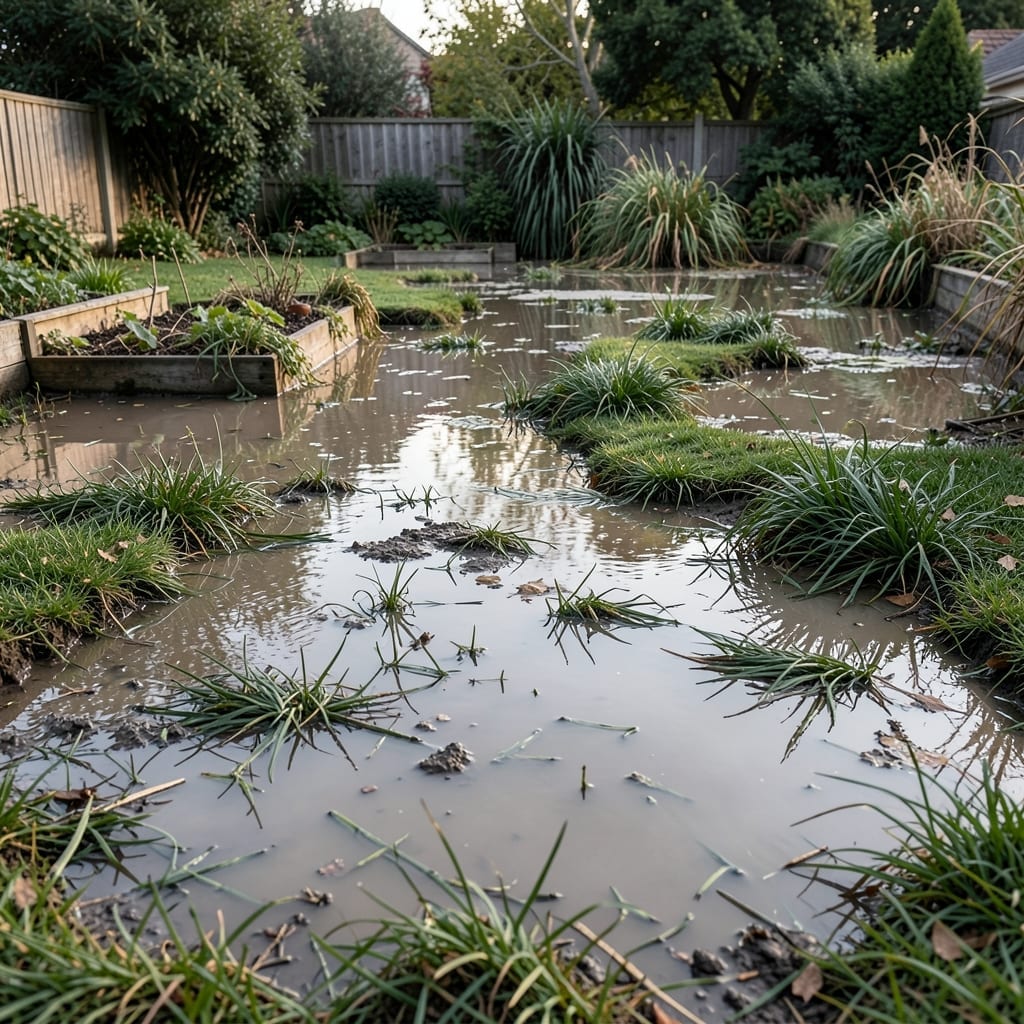
Standing water after every rain isn’t just annoying—it’s a garden killer. I’ve watched soggy soil drown plants and turn backyards into swamps, but there’s always a fix for poor drainage.
The solution starts with understanding your landscape. Low spots collect water, compacted soil repels it, and poor grading sends it the wrong way. A few strategic changes can redirect flow and keep your yard usable.
You’ll end up with dry land that supports healthy plants instead of mosquitoes. The best part? Most fixes use simple tools and weekend projects, not expensive contractors.
Works for clay soil, sloped yards, or flat properties. Here’s how to diagnose the problem and implement lasting solutions.
Understanding why your backyard turns into a swamp starts with recognizing the root causes. Here are the most common culprits behind standing water in your outdoor space:
Clay-heavy or compacted soil drains poorly because its tiny particles leave little room for water to seep through. If your yard has high clay content, water pools on the surface instead of absorbing. Test it: Dig a small hole, fill it with water, and time how long it takes to drain. If it’s still full after 24 hours, your soil is likely the issue.
A yard that slopes toward your home or has flat areas lacks the natural drainage needed to direct water away. Ideal grading slopes at least 6 inches over 10 feet away from foundations. Use a level and string line to check your yard’s slope—low spots are prime flood zones.
Clogged or improperly installed gutters, downspouts, or French drains can’t handle heavy rainfall. If downspouts dump water directly at the base of your home or gutters are sagging, water will collect nearby. Pro tip: Extend downspouts at least 5–10 feet away from your house with splash blocks or underground pipes.
Dense plantings, thick mulch, or paved surfaces (like patios) reduce the soil’s ability to absorb water. Even well-intentioned features like raised garden beds can block natural water flow if not designed with drainage in mind. Strategic placement of permeable materials (gravel, native plants) helps mitigate this.
Underground pipes (sewer, stormwater, or irrigation) can crack or collapse over time, causing water to leak into your yard. Tree roots, debris, or sediment buildup are common offenders. If you notice soggy patches that never dry or foul odors, a plumber can inspect for pipe damage.
Tackling backyard flooding starts with addressing the root causes. Below are targeted solutions for common issues, paired with prevention tips to keep your yard dry long-term.
If water pools due to flat or sunken areas, regrading the yard can redirect flow. Use a shovel and rake to create a gentle slope (1-2% grade) away from your home. Fill low spots with compacted soil and top with sod or grass seed. Prevention tip: 💡 Regularly inspect your yard after heavy rain to catch uneven settling early.
Clogged or short downspouts dump water right at your foundation. Clear debris from gutters, then extend downspouts at least 5 feet away from the house using splash blocks or buried drain pipes. For extra protection, install gutter guards to reduce future buildup.
Hard, compacted soil can’t absorb water. Use a garden fork or core aerator to loosen the top 4-6 inches, then mix in compost or sand to improve drainage. For heavy clay soil, consider a French drain (a gravel-filled trench with a perforated pipe) to channel water away. Prevention tip: ✨ Avoid heavy foot traffic or machinery on lawns to prevent recompaction.
For yards with no natural drainage, a dry well (a underground pit filled with gravel) or a swale (a shallow, grassy trench) can collect and disperse excess water. Position these in low-lying areas where water tends to pool. Pro tip: 🎯 Line swales with permeable landscape fabric to prevent erosion.
Dense shrubs or trees can block airflow and slow evaporation. Prune overgrown plants and thin out thick mulch layers to allow water to evaporate or absorb into the soil. Replace water-hungry plants with native, drought-tolerant species to reduce saturation.
Walk your yard after a heavy rain and mark where water pools. Use a level and string line to check slopes. Areas that hold water for 24+ hours are your problem zones.
Mixed with compost, sand can help loosen clay soil. But avoid using sand alone—it can create a concrete-like layer. Aim for a 50/50 mix with organic matter for best results.
Use a submersible pump to remove standing water, then aerate compacted soil. Extend downspouts away from the house and add temporary gravel-filled trenches to redirect flow.