
Beautiful Plants For Your Interior
Beautiful Plants For Your Interior
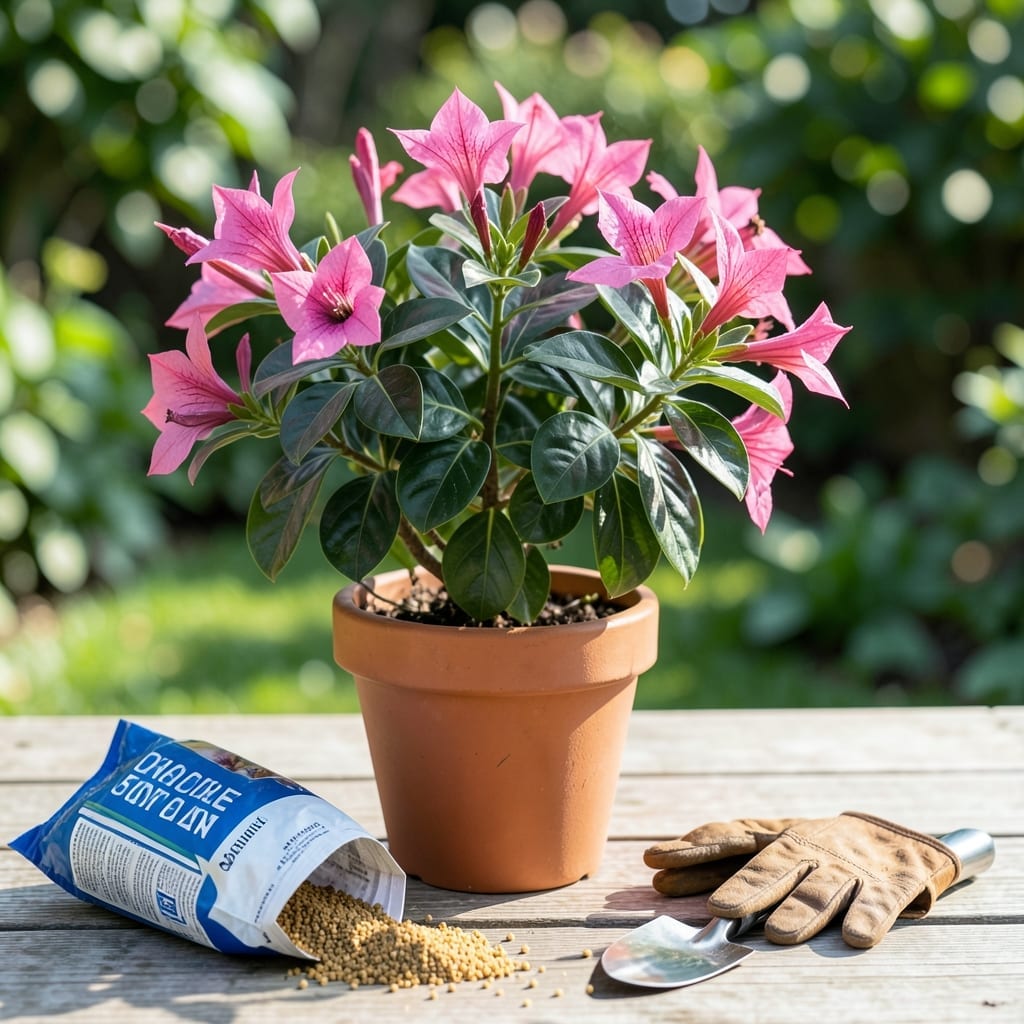
Want your 🌸 Mandevilla to burst with color all season long? The right nutrients make all the difference between mediocre vines and a jaw-dropping floral show.
I’ve tested countless approaches to feeding these tropical beauties, and the results are clear. With the proper balance, you’ll see bigger blooms and healthier growth in no time.
Discover which fertilizers work best, when to apply them, and how to avoid common pitfalls. Your Mandevilla will thank you with vibrant, nonstop flowers.
To get those vibrant blooms and lush vines, I always start with a balanced fertilizer like 10-10-10 or 20-20-20. These provide equal parts nitrogen, phosphorus, and potassium for steady growth.
Mandevillas thrive on water-soluble fertilizers applied every 2-4 weeks during the growing season. This ensures a consistent supply of nutrients without overwhelming the plant. ✂️
| header-cell has-text-align-left”>Best Use | body-cell has-text-align-left”>10-10-10 | body-row”> | body-cell has-text-align-left”>14-14-14 | body-row”> | body-cell has-text-align-left”>7-9-5 | body-row”> | body-cell has-text-align-left”>Varies | Soil health |
|---|
For bigger blooms, I sometimes switch to a bloom-boosting fertilizer with higher phosphorus, like a 7-9-5 ratio. This encourages more flowers and brighter colors.
Slow-release granules are another great option if you prefer a low-maintenance approach. They feed your mandevilla gradually over 2-3 months, reducing the need for frequent applications.
I always check the soil pH before fertilizing. Mandevillas prefer a slightly acidic to neutral pH between 6.0 and 7.0. If your soil is too alkaline, nutrients won’t be as effective.
During the spring and summer, I feed my mandevillas every 2 weeks with a water-soluble fertilizer. This keeps them blooming nonstop until fall.
In early fall, I reduce the frequency to once a month to help the plant prepare for dormancy. Over-fertilizing in fall can lead to weak growth that’s vulnerable to cold.
If you notice yellowing leaves or stunted growth, it might be a sign of nutrient deficiency. A quick soil test can help you determine if you need to adjust your fertilizer.
Remember, more isn’t always better. Over-fertilizing can cause leaf burn or excessive foliage with fewer blooms. Always follow the package instructions.
With the right fertilizer and schedule, your mandevilla will reward you with lush growth and stunning blooms all season long. 🌸
Timing is everything when it comes to feeding your mandevilla plants. I’ve found that a consistent schedule during the growing season yields the best results with vibrant blooms and healthy vines. ☀️
Start fertilizing in early spring when you see new growth emerging. This is when your mandevilla is entering its active growing phase and can best utilize the nutrients.
I prefer using a water-soluble fertilizer because it allows me to control the dosage precisely. Mix 1 tablespoon per gallon of water and apply it to the soil around the base of the plant.
For foliar feeding, I dilute the fertilizer to half strength and spray it directly on the leaves. This method provides a quick nutrient boost but should be used in addition to, not instead of, soil feeding.
Watch for signs of over-fertilization, such as brown leaf edges or salt buildup on the soil surface. If you notice these, flush the soil with water to remove excess salts.
Under-fertilizing can be just as problematic, leading to pale leaves and sparse blooms. If your mandevilla isn’t thriving, consider increasing the frequency or switching to a higher phosphorus formula.
With the right approach, your mandevilla will reward you with abundant blooms and vigorous growth all season long. 🌿