
Beautiful Plants For Your Interior
Beautiful Plants For Your Interior
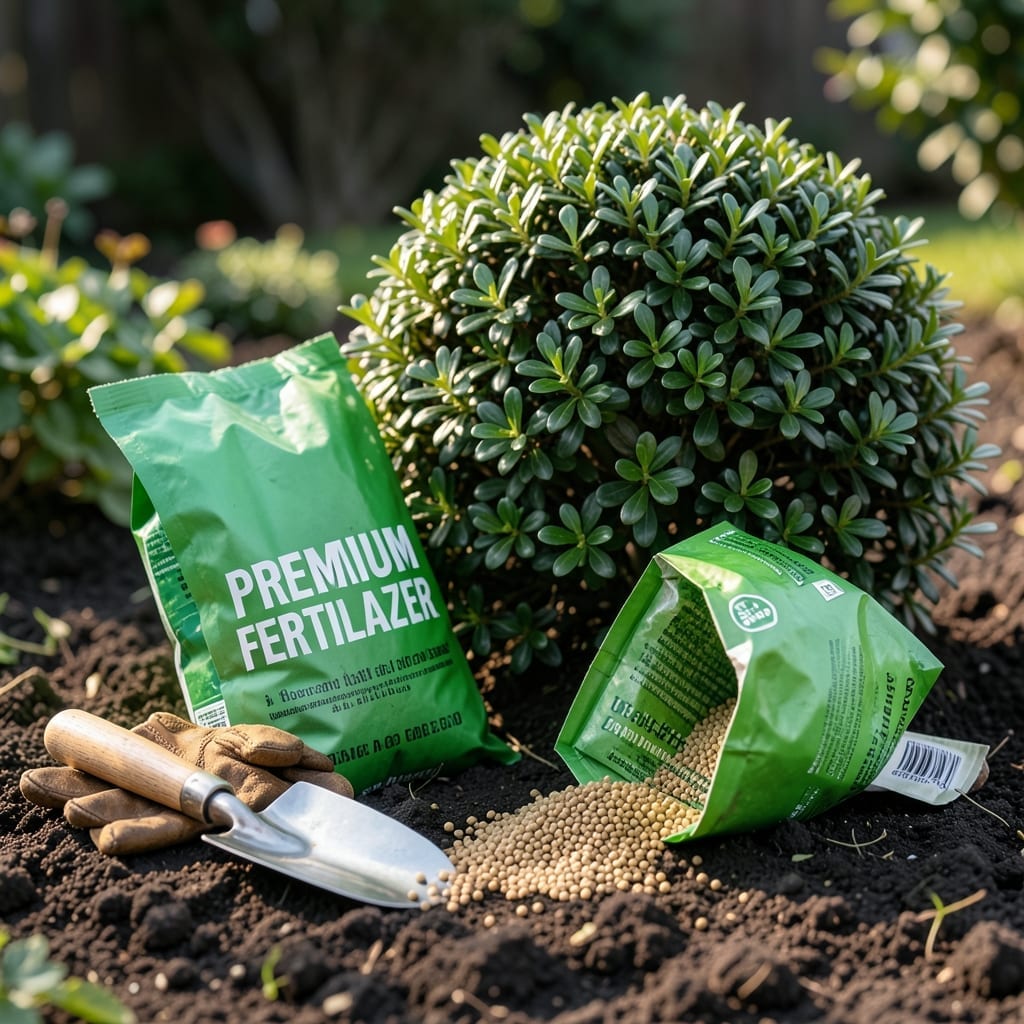
Healthy 🌿 Boxwood shrubs require the right nutrients to maintain their iconic dense foliage and vibrant green color. Choosing the wrong fertilizer can lead to stunted growth or yellowing leaves.
I’ve seen firsthand how the correct feeding approach transforms struggling shrubs into thriving plants. It’s all about understanding what your Boxwood needs and when it needs it most.
Discover how seasonal feeding with the proper balance can make all the difference for your shrubs’ health and appearance. Let me walk you through the essentials.
I always tell gardeners that boxwood shrubs thrive with seasonal feeding. These evergreens need consistent nutrients to maintain their dense green foliage and compact growth habit throughout the year. 🌿
The key is matching your fertilizer type and NPK ratio to the plant’s changing needs. Early spring calls for a different approach than late summer or fall preparation. Getting this right prevents nutrient deficiencies and burned roots while promoting healthy growth.
| Season | Fertilizer Type | NPK Ratio | Application Frequency |
|---|---|---|---|
| Spring | Slow-release granular | 10-10-10 | Every 4-6 weeks |
| Summer | Liquid feed | 12-6-6 | Every 6-8 weeks |
| Fall | Organic compost | 5-5-5 | Once per season |
In early spring, I recommend a balanced slow-release fertilizer with a 10-10-10 NPK ratio. This gives your boxwoods the nitrogen boost they need for new growth while providing phosphorus and potassium for root development. The slow-release formula feeds gradually, preventing nutrient burn. ✂️
As temperatures rise in summer, switch to a liquid fertilizer with a slightly higher nitrogen ratio like 12-6-6. This supports the active growth phase without overwhelming the plant. I apply this every 6-8 weeks during the growing season.
For fall care, I prefer organic options. A 5-5-5 organic fertilizer or well-aged compost helps strengthen roots before winter dormancy. This is the time to focus on root development rather than foliage growth, preparing your shrubs for the cold months ahead.
Remember that soil testing is crucial before any application. I always check my soil’s pH, aiming for 6.0 to 7.0 for boxwoods. This ensures the nutrients are accessible to the plant roots. Testing every 2-3 years keeps your feeding program effective.
Watering plays a vital role in fertilizer effectiveness. I
For established boxwoods, I’ve found that 1 cup of fertilizer per 100 sq ft works well. Newly planted shrubs need about half that amount. Always err on the side of caution – over-fertilizing does more harm than under-feeding in most cases. 🌱
Finally, consider the formulation type. Granular fertilizers are great for long-term feeding, while liquid options provide quick results for visible growth. Organic choices improve soil health over time but may require more frequent application than synthetic options.
Applying fertilizer to boxwoods requires precision to avoid root damage. I always start with a soil test to check pH and nutrient levels, ensuring my shrubs get exactly what they need without waste or harm. 🌱
Proper timing is everything. I apply fertilizer in early morning when temperatures are cool and the soil is moist, which helps prevent fertilizer burn and allows for better nutrient absorption.
I always water my boxwoods deeply the day before fertilizing. This ensures the soil is moist, which helps the roots absorb nutrients gradually and reduces the risk of shock or burn. ✂️
When measuring, I stick to 1 cup of fertilizer per 100 sq ft for established shrubs. For new plantings, I use half that amount. It’s better to under-fertilize than overdo it, as excess can harm the roots.
I spread granular fertilizer evenly around the drip line, keeping it at least 6 inches away from the trunk. This prevents direct contact with the stem, which can cause chemical burns and damage the bark.
After application, I lightly water the area to help the fertilizer settle into the soil. This step activates the nutrients and ensures they reach the root zone where they’re needed most. 🌿
Finally, I avoid fertilizing during extreme heat or drought conditions. Stressful periods can make boxwoods more susceptible to fertilizer damage, so I wait for cooler, more stable weather.