
Beautiful Plants For Your Interior
Beautiful Plants For Your Interior
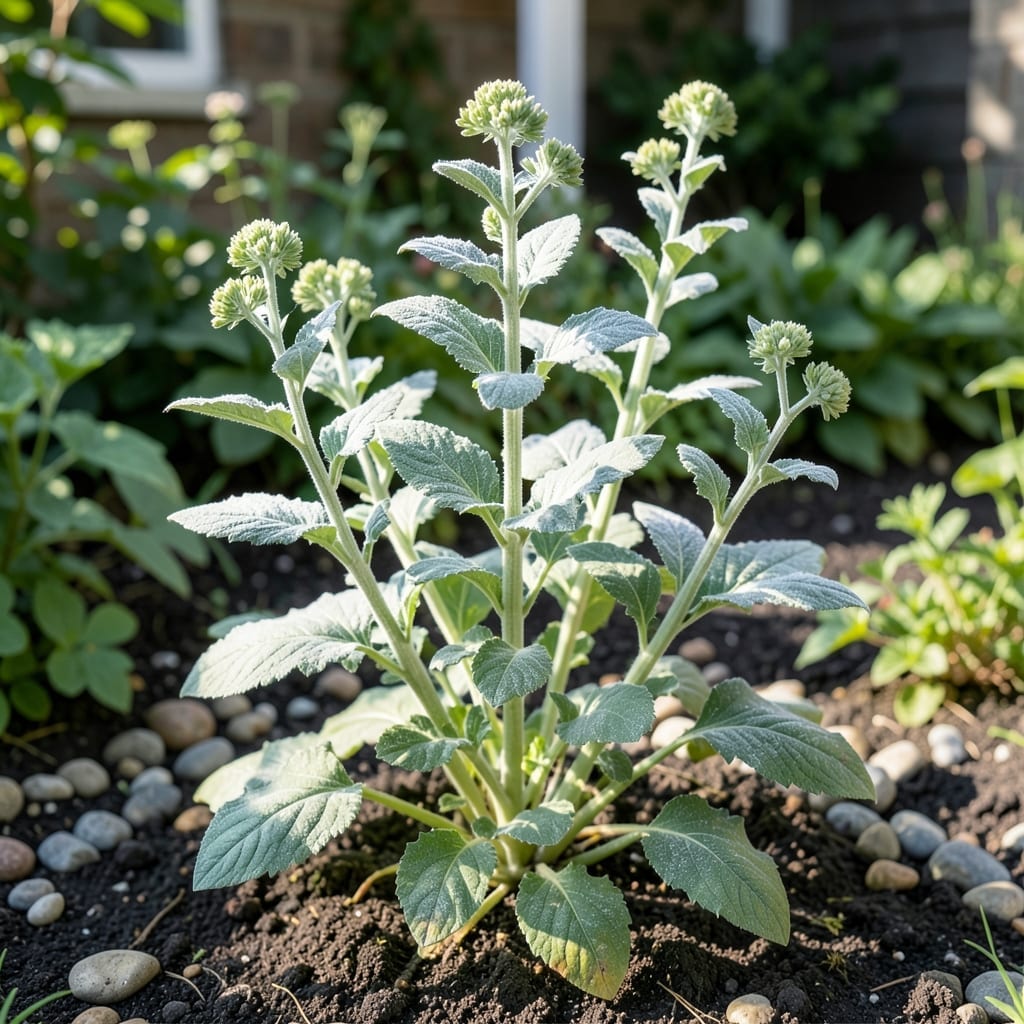
I first spotted fat hen growing wild in my garden last summer. It looked like spinach but grew faster than anything I’d planted, spreading across bare soil with thick, diamond-shaped leaves.
Turns out it’s an edible weed with a mild flavor, perfect for salads or cooked greens. The plant thrives in poor soil with little care, but it can overtake other plants if left unchecked. Here’s how to spot it and decide whether to keep or remove it.
📚 In This Guide
Here’s the straightforward approach I use to spot this common weed and clear it safely.
Fat hen, also called lambsquarters, has distinct diamond-shaped leaves with slightly toothed edges. The leaves are often covered in a fine, mealy white coating, especially on younger plants. This gives them a dusty or frosted appearance that stands out against other garden greens.
I look for plants growing upright with alternate leaves along the stem. The leaves feel slightly powdery when touched. In full sun, the plant can reach 2-4 feet tall, but it often stays smaller in shaded areas. The stem is usually green with purple stripes.
Real talk: it’s often mistaken for young spinach, but fat hen leaves have a more triangular shape and that telltale white coating.
Fat hen thrives in disturbed soil, so I check garden beds, along fence lines, and near compost piles first. It’s particularly common in areas with rich, nitrogen-heavy soil. Look for clusters of the plant, as it often grows in dense patches.
Pay special attention to areas where you’ve recently planted or tilled. The weed germinates quickly after soil disturbance. I’ve found it often pops up near vegetable gardens, where it competes with crops for nutrients and space.
Check both sunny and partially shaded spots—fat hen adapts well to various light conditions.
The most critical time to act is before the plant flowers and sets seed. Fat hen produces thousands of seeds per plant that can remain viable in the soil for years. I pull plants by hand when the soil is moist, which makes root removal easier.
Grasp the plant at its base and pull steadily, trying to get as much of the root system as possible. If the soil is dry or compacted, I use a hand trowel to loosen the ground around the roots first. Do not compost fat hen that has gone to seed—this will spread the problem.
After removal, I monitor the area closely for new sprouts. Fat hen seeds germinate in waves, so you’ll likely see new plants emerging over several weeks. Regular cultivation with a hoe can help disrupt new growth before it establishes.
Mulching garden beds with a 2-3 inch layer of organic mulch helps suppress fat hen and other weeds. The mulch blocks light to seeds and creates a barrier that makes it harder for new plants to emerge.
For persistent problems, I’ve found that a thick layer of newspaper under the mulch provides extra weed suppression without chemicals.
Small details make the difference between temporary relief and lasting control.
Identification Tip: Confession: I used to pull the wrong plants until I learned to look for that distinctive mealy white coating on fat hen leaves. It’s the most reliable visual clue, especially on younger plants, and it feels slightly powdery to the touch. The diamond shape is subtle but becomes obvious once you know what to look for.
Timing Matters: Don’t wait until you see flowers—by then, the plant has already produced thousands of seeds. I make it a habit to check garden beds weekly during growing season, especially after rain or watering when new sprouts are most visible.
Removal Technique: Here’s what nobody tells you—moist soil is your best friend for removal. If the ground is dry, water the area the night before you plan to pull plants. This softens the soil and helps you get the entire root system in one steady motion.
Prevention Strategy: That 2-3 inch layer of mulch mentioned in Step 4 isn’t just a suggestion. I’ve found that straw works particularly well because it’s dense enough to block light but still allows water to penetrate. For vegetable gardens, try black plastic mulch between rows—it heats the soil and suppresses weeds effectively.
Yes, fat hen (Chenopodium album) leaves are edible and often used like spinach. They’re rich in vitamins A and C but should be cooked to reduce oxalates. Always harvest from pesticide-free areas.
Pull young plants by hand or hoe them before seeding. For large patches, mulch or use a natural herbicide like vinegar. Avoid chemical options if you plan to eat the leaves.
Pick leaves when the plant is young (under 12 inches tall) for the best flavor. Early morning is ideal for maximum freshness. Older leaves can turn bitter.
Absolutely! Fat hen leaves have a mild, earthy taste similar to spinach. Sauté, steam, or add to soups. Just blanching helps reduce any bitterness.
Yellowing may signal overwatering, nutrient deficiency, or disease. Check soil drainage and fertility. If pests are present, treat with neem oil or remove affected leaves.