
Beautiful Plants For Your Interior
Beautiful Plants For Your Interior
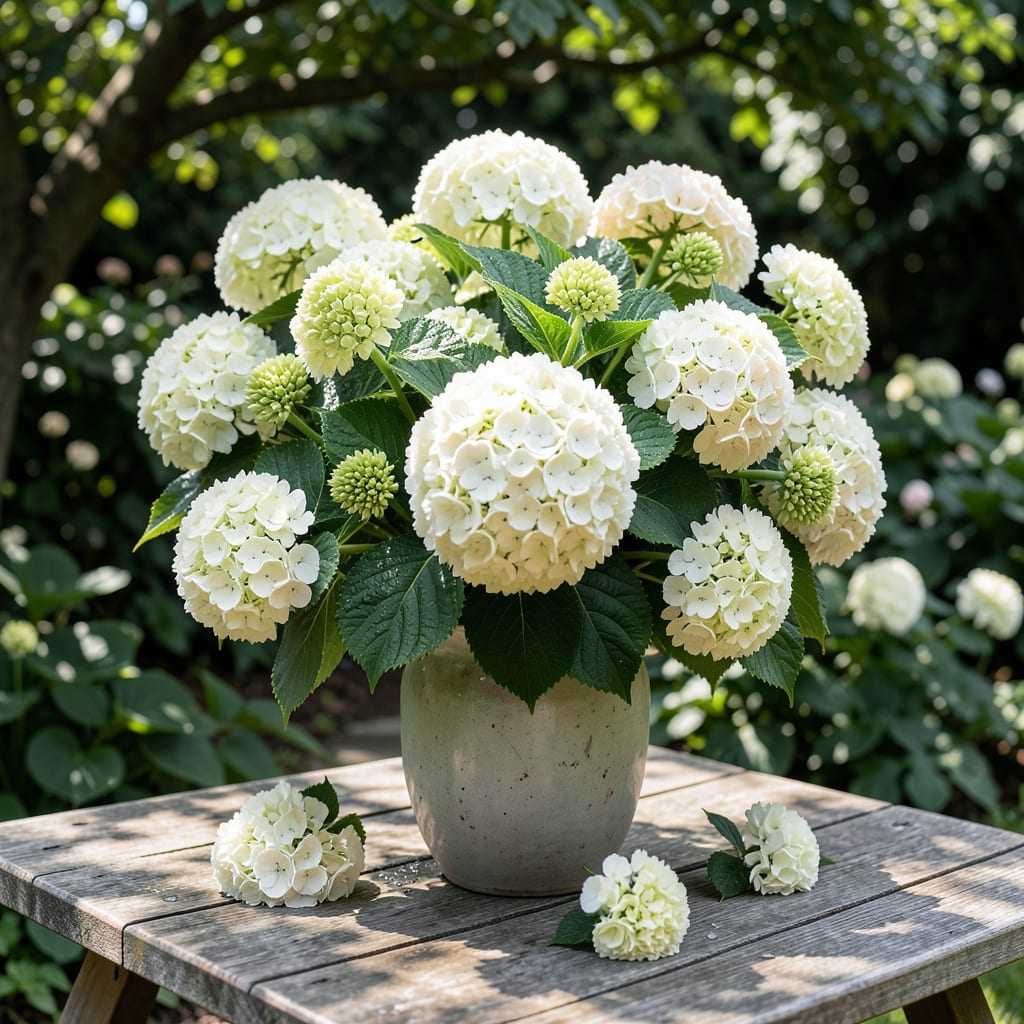
This hydrangea changed my approach to shrubs completely. I planted one in partial shade last spring and watched it push out blooms from June through October without deadheading or complex care.
What makes it special is the reblooming habit—new flowers form on both old and new wood. Even after harsh winters, it bounces back with white mophead blooms that fade to soft green. Simple soil and consistent moisture are all it needs.
📚 In This Guide
Here’s the method I use to keep my hydrangeas blooming from summer through fall.
Select a spot with partial shade—morning sun with afternoon protection works best. Endless Summer hydrangeas thrive in 4-6 hours of sunlight daily, but too much direct afternoon sun can scorch their leaves. I always test the location by observing the light patterns throughout the day.
The soil should be well-draining and rich in organic matter. Avoid low-lying areas where water pools, as hydrangeas despise soggy roots. A slight slope or raised bed can help with drainage if your garden tends to hold moisture.
Dig a hole that’s twice as wide as the root ball but no deeper. This gives the roots room to spread without sinking the plant too low. I loosen the soil at the sides and bottom of the hole to encourage outward root growth.
Amend the native soil with compost or well-rotted manure to improve fertility. Hydrangeas prefer slightly acidic to neutral soil (pH 6.0-7.0). Mix the amendments thoroughly with the existing soil before backfilling around the root ball.
Gently remove the hydrangea from its container and loosen the roots if they’re tightly bound. Place the plant in the hole so the top of the root ball sits 1-2 inches above the surrounding soil level. This prevents settling and ensures proper drainage.
Backfill the hole with the amended soil, pressing lightly to eliminate air pockets. Water deeply immediately after planting to settle the soil and hydrate the roots. I always create a small watering ring around the base to help direct moisture where it’s needed most.
Keep the soil consistently moist but not waterlogged during the first growing season. Water deeply 2-3 times per week, adjusting for rainfall. Hydrangeas are thirsty plants, and consistent moisture is key to healthy growth and abundant blooms.
Once established, Endless Summer hydrangeas are somewhat drought-tolerant but still benefit from regular watering. I check the soil by sticking my finger 1-2 inches deep—if it feels dry, it’s time to water. Mulching with 2-3 inches of organic material helps retain moisture and regulate soil temperature.
Unlike many hydrangeas, Endless Summer blooms on both old and new wood, so pruning is flexible. I prune in late winter or early spring to remove dead or weak stems and shape the plant. Cut back one-third of the oldest stems to the base to encourage new growth and vibrant blooms.
Fertilize lightly in early spring with a balanced, slow-release fertilizer (10-10-10) to promote healthy growth. Avoid high-nitrogen fertilizers, as they can encourage leafy growth at the expense of flowers. A second light application in mid-summer can extend the blooming season even further.
These insights will help you avoid common pitfalls when growing this variety.
The Light Factor: In Step 1, the 4-6 hours of sunlight recommendation is crucial for optimal blooming. Morning sun with afternoon shade prevents leaf scorch while providing enough light for abundant flowers. I learned this the hard way after losing several plants to excessive afternoon exposure.
Soil Preparation: For Step 2, when amending the soil, ensure the compost or manure is thoroughly mixed with native soil to a depth that accommodates the twice-as-wide hole. This creates a consistent environment for root growth rather than pockets of differing soil composition.
Planting Depth: Step 3’s instruction to place the root ball 1-2 inches above soil level is non-negotiable. This accounts for natural settling and prevents the crown from becoming waterlogged. I create a visible mound to track this elevation after watering.
Watering Wisdom: The 2-3 times per week watering schedule in Step 4 works best with deep, thorough watering rather than frequent light sprinkles. This encourages deep root development. Between us, I set phone reminders for this during dry spells.
Water deeply 1-2 times per week, especially in dry spells. Keep soil moist but not soggy—mulching helps retain moisture. Adjust based on rainfall and soil drainage.
Common causes: pruning at the wrong time (avoid late summer/fall), insufficient sunlight (aim for 4-6 hours daily), or nutrient deficiencies. Test soil pH (6.0-7.0 ideal) and fertilize lightly in spring.
Yes! Use a large pot (18″+ diameter) with drainage, and fill with well-draining potting mix. Water frequently, as containers dry out faster, and protect from harsh winter winds.
Plant in early spring or fall for best results. This gives roots time to establish before summer heat or winter cold. Avoid extreme temperatures during planting.
Soil pH affects color: acidic (5.0-5.5) yields blue, alkaline (7.0+) produces pink. Add aluminum sulfate for blue or lime for pink. White blooms stay white but may tint slightly.
