
Beautiful Plants For Your Interior
Beautiful Plants For Your Interior
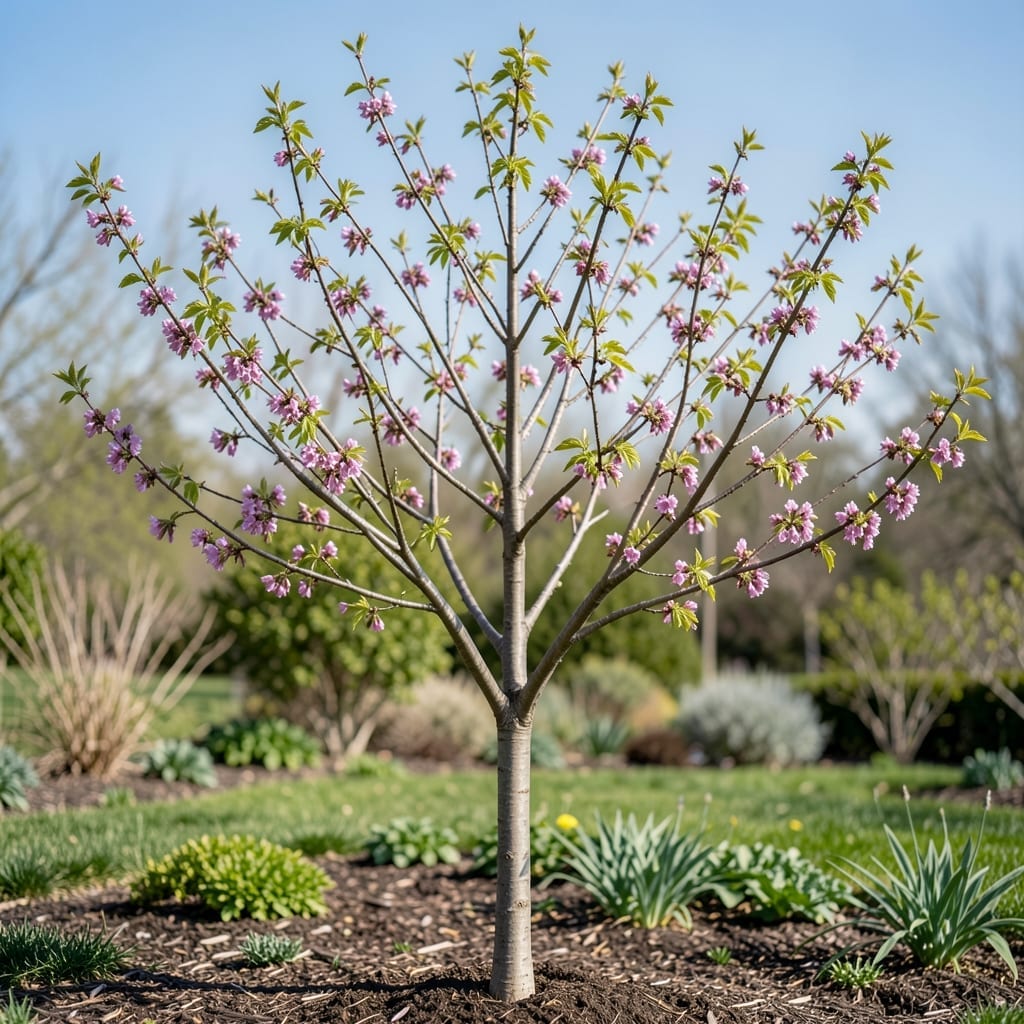
I was amazed to learn how the Eastern Redbud Tree 🌳 can transform a landscape with its stunning spring blooms. Its mature height often catches gardeners by surprise, making proper placement crucial.
Understanding its growth potential helps you plan the perfect spot in your yard. Whether you’re working with a small garden or spacious property, knowing what to expect is the key to success.
Discover how tall this beautiful tree can grow and what factors influence its size. Let me guide you through everything you need to cultivate it effectively.

When I first planted my eastern redbud tree, I was surprised by how quickly it grew. At maturity, you can expect this beauty to reach 20 to 30 feet tall, with a spread of 15 to 25 feet. It’s a medium-sized tree that fits well in many landscapes.
Its annual growth rate is typically 12 to 18 inches per year, though this can vary based on conditions. In ideal settings, it may grow even faster, especially in its early years.
| Characteristic | Specification |
|---|---|
| Mature Height | 20-30 feet |
| Mature Spread | 15-25 feet |
| Growth Rate | 12-18 inches/year |
| USDA Zones | 4-9 |
| Year 1 Height | 3-5 feet |
In the first year, your eastern redbud will likely reach 3 to 5 feet tall. By year three, it can grow to 10 to 15 feet, making it a fast establishers in the landscape.
The spread of the tree is nearly as wide as it is tall, so give it plenty of space. Planting it too close to structures or other trees can lead to crowded conditions and stunted growth.
Climate plays a role in its final size. In warmer zones, like USDA Zone 9, it may reach the upper end of its height range. In cooler areas, like Zone 4, it might stay closer to 20 feet.
Soil quality also impacts growth. Well-draining, fertile soil encourages faster and taller growth. If your soil is poor, consider amending it with compost or organic matter before planting.
Water availability is another key factor. While the eastern redbud is drought-tolerant once established, consistent watering in its early years promotes stronger, taller growth.
I’ve found that pruning in late winter helps maintain its shape and encourages healthy growth. Remove any dead or crossing branches to keep the tree looking its best.
If you’re working with a smaller landscape, don’t worry. There are dwarf varieties available that stay much smaller, but more on that later.
For now, focus on giving your eastern redbud the space it needs to thrive. With the right conditions, it will reward you with stunning spring blooms and a graceful, spreading canopy. 🌳
The height of your eastern redbud tree depends on several key factors. I’ve learned that sunlight exposure is one of the most critical. These trees thrive in full sun to partial shade, needing at least 6 hours of sunlight daily for optimal growth.
Water availability also plays a major role, especially in the first few years. While mature trees are drought-tolerant, consistent watering early on ensures a stronger, taller tree over time.
Soil quality is another game-changer. If your soil is poor or compacted, amending it with organic matter before planting can make a noticeable difference in how tall your tree grows.
I always recommend testing your soil’s drainage and fertility before planting. If it’s too heavy or clay-like, mix in compost or sand to improve conditions.
Pruning practices can influence height too. While pruning won’t make your tree grow taller, it helps maintain a healthy structure. I prune mine in late winter to remove dead or crossing branches.
Finally, regional climate affects growth. In warmer USDA zones, like Zone 9, your eastern redbud may reach the upper end of its 20-30 foot range. In cooler zones, like Zone 4, expect it to stay closer to 20 feet. 🌳