
Beautiful Plants For Your Interior
Beautiful Plants For Your Interior
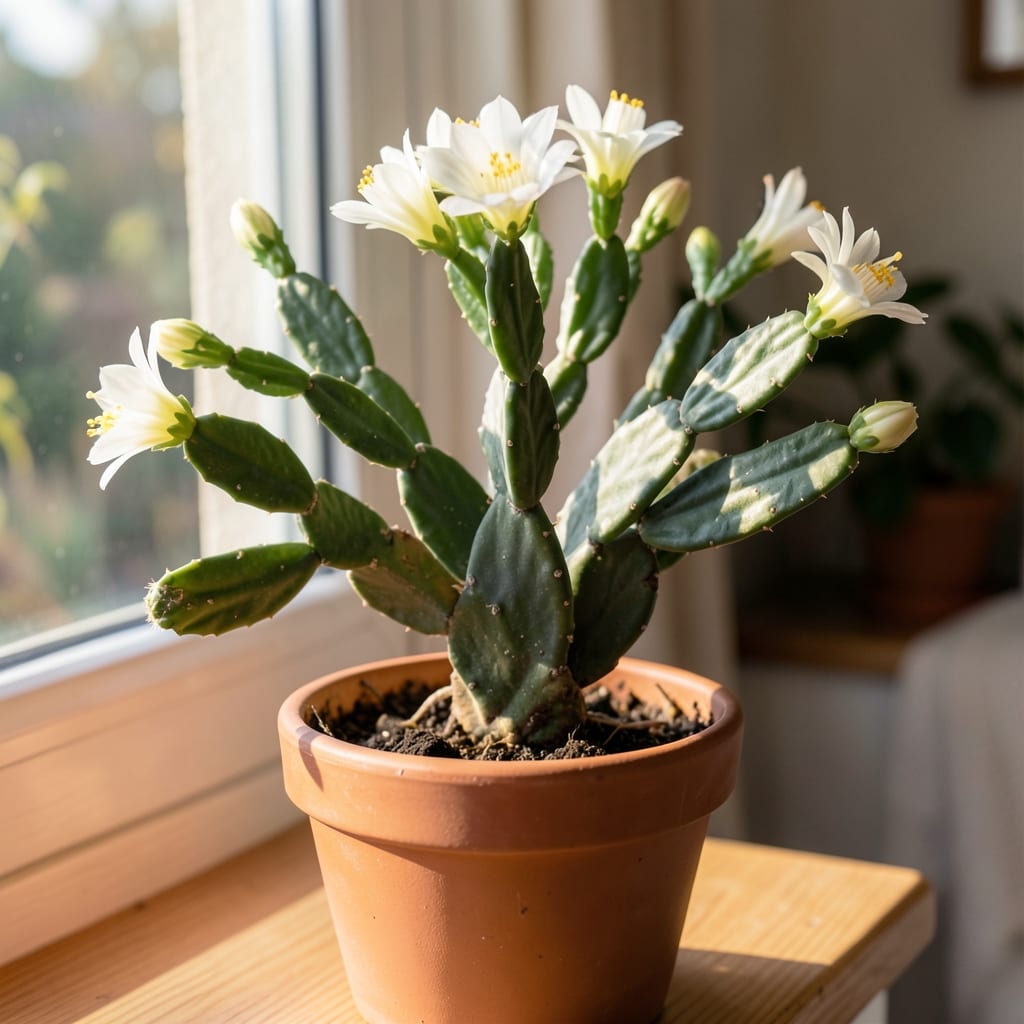
My Easter cactus exploded with white blooms last spring after years of sparse flowers. I finally figured out what this plant actually needs—not what generic care guides suggest.
It thrives on neglect between waterings but demands bright, indirect light and a winter rest period. The payoff is cascades of delicate white flowers that last for weeks, with minimal effort once you crack the code.
📚 In This Guide
Here’s the simple routine I use to keep my plants blooming beautifully every spring.
Place your cactus in bright, indirect light for most of the year. A north or east-facing window is ideal, as direct afternoon sun can scorch the leaves. During winter, I move mine closer to the window to compensate for shorter days.
You’ll know the light is right when the segments look deep green and firm. If they start turning reddish or yellow, the plant is getting too much direct sun. Rotate the pot quarter turn weekly so all sides receive even light exposure.
Water when the top inch of soil feels dry to the touch. Use room temperature water and soak the soil until it drains from the bottom. Empty the saucer after 15-20 minutes to prevent root rot—a common killer of Easter cacti.
I water less in winter, about once every 2-3 weeks, and increase to weekly in spring and summer. The key is consistency: let the soil dry slightly between waterings but never completely. Drooping segments signal it’s time to water again.
Keep your plant in temperatures between 60-75°F during growing season. In fall, expose it to cooler temps (50-60°F) for 6-8 weeks to encourage spring blooming—this mimics its natural cycle.
Easter cacti enjoy moderate humidity. If your air is dry, place the pot on a tray of pebbles with water. The evaporating water boosts humidity without wetting the roots. Avoid misting the plant directly, as this can lead to fungal issues.
After flowering, prune back 1-2 segments from each stem to encourage bushier growth. Use clean scissors and cut at the joint between segments. This also gives you cuttings to propagate new plants.
Feed with a balanced houseplant fertilizer diluted to half strength every 4-6 weeks during spring and summer. I stop fertilizing in fall and winter when growth slows. Always water before fertilizing to prevent root burn.
For spectacular spring flowers, give your plant a rest period in fall. Reduce watering and provide 12-14 hours of darkness daily for 6-8 weeks. A closet or unused room works well for this.
When you see flower buds forming (usually in late winter), return to normal care. Keep the soil evenly moist and avoid moving the plant, as changes can cause bud drop. The reward is clusters of beautiful white flowers that last for weeks.
Here’s what I’ve learned from years of keeping my plants thriving and blooming.
The Light Factor: That quarter turn weekly in Step 1 isn’t just for aesthetics—it prevents your plant from growing lopsided. I noticed my first Easter cactus started leaning dramatically toward the window until I made this a habit. The deep green color is your visual cue that the light conditions are just right.
Watering Wisdom: The 15-20 minute drain time in Step 2 is non-negotiable. After ruining two plants to root rot, I now set a timer. Also, when segments start to droop slightly, that’s your plant’s way of saying it’s thirsty—don’t wait until they’re completely wilted.
Temperature Strategy: Those 6-8 weeks at 50-60°F in Step 3 might seem extreme, but it’s the key to spring blooms. I use my basement during fall since it naturally stays in this range. If your home doesn’t have a cool spot, a garage can work as long as it doesn’t freeze.
Blooming Boost: The 12-14 hours of darkness daily in Step 5 needs to be consistent. I cover mine with a box each evening rather than moving it to a dark room. Any light interruption during this period can delay or prevent blooming entirely.
Yellowing often signals overwatering or poor drainage. Ensure the soil dries slightly between waterings and use a well-draining mix. Too much direct sunlight can also cause stress, so provide bright, indirect light.
This variety typically blooms in spring, around Easter, hence its name. To encourage flowers, provide cooler temperatures (50–60°F) and longer nights in winter, then resume regular care as spring approaches.
Absolutely! It thrives indoors with bright, indirect light. Place it near an east or west-facing window. Keep humidity moderate and avoid drafts or sudden temperature changes for best results.
Drooping usually means underwatering or root rot. Check the soil: if dry, water thoroughly; if soggy, repot in fresh, dry mix. Ensure the pot has drainage holes to prevent waterlogging.