
Beautiful Plants For Your Interior
Beautiful Plants For Your Interior
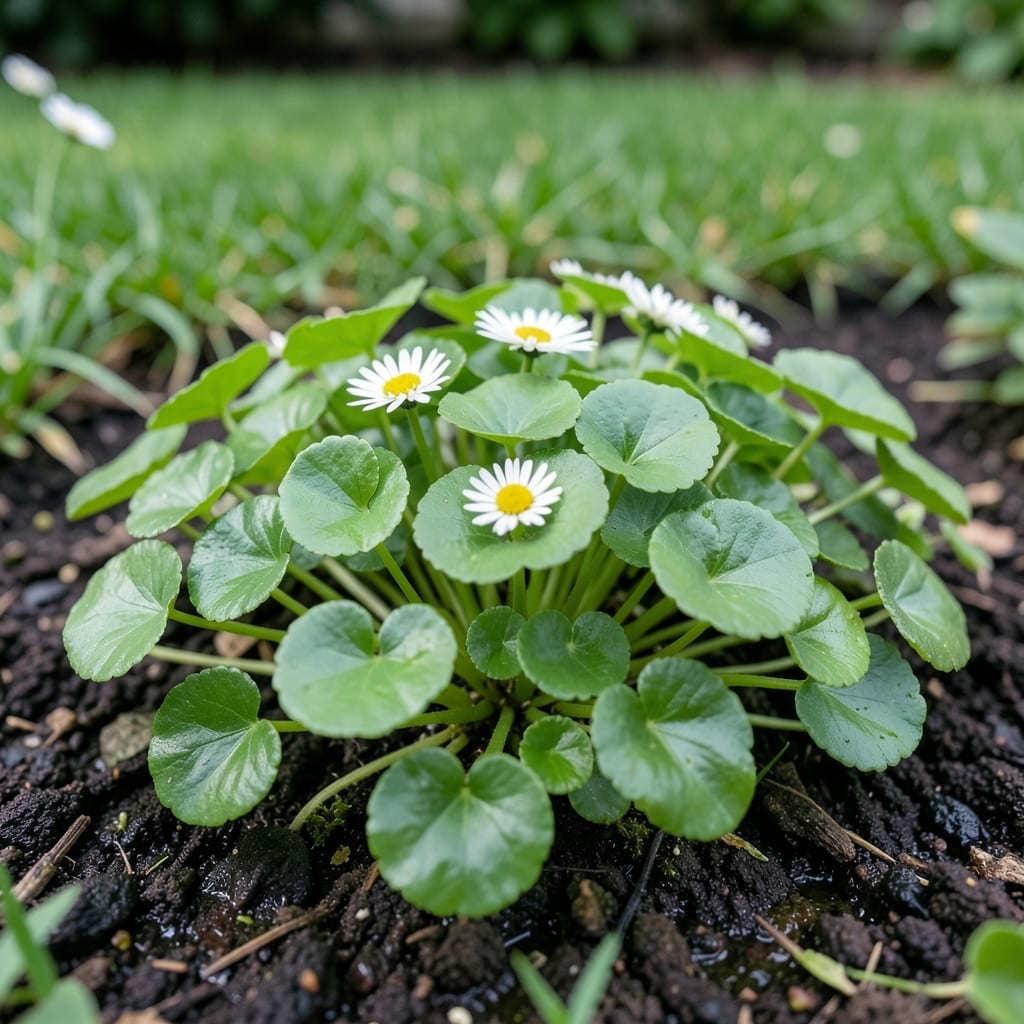
That little green coin-shaped plant in your lawn isn’t a lucky charm. 🌱 I’ve spent years battling dollar weed, and the first step to winning is knowing exactly what you’re dealing with—those round leaves and tiny white flowers are dead giveaways.
It thrives in wet, compacted soil where grass struggles. Most people mistake it for clover or dichondra, but dollar weed has that distinctive quarter-sized leaf and creeping habit that spreads faster than you’d expect.
You’ll spot it first in low spots or near sprinkler heads. The good news? It’s shallow-rooted, which makes removal easier than you’d think—once you catch it early.
Works in any lawn, from Florida to the Pacific Northwest. Here’s how to identify and stop it for good.
Dollar weed thrives in specific conditions, and understanding these triggers can help you tackle the problem at its root. Below are the primary causes behind its appearance in lawns and gardens.
Dollar weed (Hydrocotyle umbellata) flourishes in waterlogged or poorly drained soils. Overwatering, heavy rainfall, or compacted soil that traps moisture creates the perfect environment for this invasive plant. Its shallow roots absorb surface water efficiently, outcompeting grass in soggy areas.
Compacted soil restricts airflow and water penetration, leading to weak grass growth. Dollar weed capitalizes on these thin or bare spots, as its creeping stems spread rapidly across compacted areas. Aerating your lawn can improve drainage and reduce its foothold.
A lawn deficient in nitrogen—a key nutrient for grass health—becomes vulnerable to dollar weed. This weed tolerates low-fertility soils and often invades when grass struggles due to nutrient imbalances. Regular soil testing and targeted fertilization can restore grass dominance.
Dollar weed adapts well to both sunny and partially shaded areas, unlike some grasses that falter in less-than-ideal light. If your lawn has inconsistent sunlight, this weed may fill the gaps where grass thins out.
Addressing these conditions—improving drainage, aerating soil, balancing nutrients, and optimizing sunlight—can significantly reduce dollar weed’s ability to take over.
Dollar weed thrives in moist, compacted soil and poorly drained areas, but you can reclaim your lawn with these targeted fixes. Below are practical solutions mapped to the root causes, along with prevention tips to keep it from coming back.
If your lawn stays soggy, dollar weed will take over. Fix it by aerating compacted soil with a core aerator to let water drain properly. For low-lying spots, fill them with a mix of sand and topsoil to level the area. Prevention tip: Water deeply but less frequently—early morning is best—to encourage deep root growth in grass while discouraging shallow weeds.
Dollar weed moves into sparse lawns where grass can’t compete. Fix it by overseeding with a high-quality grass seed that matches your climate. Rake the area lightly to ensure seed-to-soil contact, then water consistently until new grass establishes. Prevention tip: Mow high (3–4 inches) to shade the soil and block weed germination.
Weak, undernourished grass invites dollar weed. Fix it by applying a balanced, slow-release fertilizer in early spring and fall. Test your soil first to address any pH imbalances—dollar weed prefers acidic conditions. Prevention tip: Leave grass clippings after mowing to return nutrients to the soil naturally.
For small infestations, hand-pull dollar weed (roots and all) when the soil is damp. For larger areas, use a post-emergent herbicide labeled for dollar weed—apply on a calm day to avoid drift. Prevention tip: Inspect your lawn weekly in early summer, when dollar weed is most active, and act fast at the first sign.
💡 Pro tip: Combine these methods for best results—improving drainage and lawn density will make chemical treatments unnecessary over time!
It has round, shiny leaves about the size of a silver dollar, with scalloped edges. Small white flowers often appear in summer, growing from the center of the leaf clusters.
If you don’t remove the entire root system, it regrows quickly. The creeping stems can also root at nodes, so pull gently and check for remaining pieces in the soil.
Household vinegar may burn the leaves but rarely kills the roots. For better results, use horticultural vinegar (20% acetic acid) or a targeted herbicide labeled for broadleaf weeds.
Improve drainage, mow high, and overseed thin areas. Corn gluten meal applied in early spring can also act as a natural pre-emergent to stop new growth.