
Beautiful Plants For Your Interior
Beautiful Plants For Your Interior
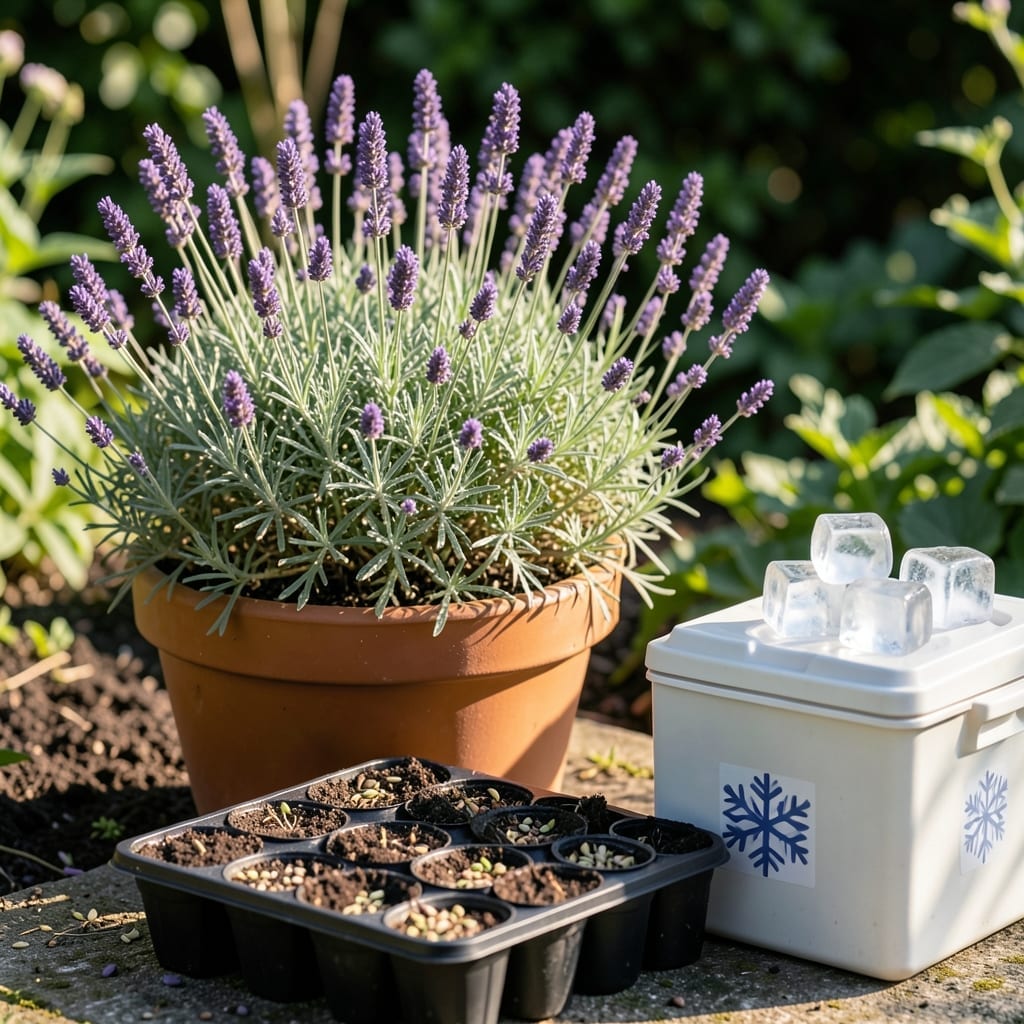
If you’ve ever struggled to germinate 🟣 Lavender seeds, you’re not alone. Many gardeners hit this exact snag, wondering if they’re missing a crucial step in the process.
That missing piece might just be cold stratification. This simple pre-treatment can dramatically improve your success rate by mimicking natural winter conditions.
I’ll walk you through exactly how it works and why it could be the game-changer your lavender seeds need to thrive. Let’s get started.
If you’re new to growing lavender from seed, you might be surprised to learn that these tiny powerhouses often need a cold wake-up call. Cold stratification is nature’s way of telling seeds that winter has passed.
For lavender seeds, this process breaks down the hard seed coat and triggers internal changes that prepare them for germination. Without it, many seeds remain stubbornly dormant, refusing to sprout even in ideal conditions.
| Requirement | Specification |
|---|---|
| Cold Stratification | Recommended for most varieties |
| Duration | 2-4 weeks at 35-40°F |
| Natural Process | Mimics winter conditions |
| Alternative | Not required for all varieties |
I’ve found that English lavender and Spanish lavender respond particularly well to cold stratification. The process essentially tricks the seeds into thinking they’ve experienced winter, which is crucial for breaking their dormancy.
In the wild, lavender seeds naturally undergo this process as they lie in the cold ground during winter. When spring arrives, the seeds are primed and ready to grow. By replicating this in our gardens, we can significantly boost germination rates.
Without cold stratification, you might see poor germination rates or inconsistent sprouting. I’ve seen cases where untreated seeds took weeks longer to germinate—or didn’t sprout at all. The extra effort upfront saves a lot of frustration later.
It’s worth noting that not all lavender varieties require this treatment. Some hybrid or cultivated types may germinate without it, but for the best results, I always recommend cold stratification for heirloom or wild-type seeds.
The science behind it is fascinating: cold temperatures soften the seed coat and activate enzymes that kickstart the growth process. This is why gardeners in colder climates often have better luck with direct sowing in fall.
If you’re starting seeds indoors, you can easily simulate this by refrigerating damp seeds in a sealed bag. It’s a small step that makes a big difference in your lavender gardening success. ☀️
For those in warmer climates, this step is even more critical since natural winter conditions may not be cold enough to break dormancy. Don’t skip it if you want strong, healthy lavender plants.
Remember, patience is key. Even with stratification, lavender seeds can take 14-28 days to germinate. But the wait is worth it when you see those first tiny green shoots emerge. 🌱
I’ve tested several methods for cold stratifying lavender seeds, and the refrigerator method is my go-to. It’s simple, controlled, and gives consistent results for breaking that stubborn seed dormancy we discussed earlier.
Start by mixing your lavender seeds with slightly damp sand or paper towel. The moisture is crucial – it signals to the seed that it’s time to prepare for growth, while the cold does the actual stratification work.
The ideal temperature range is between 35-40°F. This mimics natural winter conditions without freezing the seeds. I use the crisper drawer of my fridge – it maintains the perfect consistent temperature.
For those who prefer a more hands-off approach, outdoor stratification works too. Simply sow your seeds in fall and let nature do the work. The cold winter months will naturally stratify them for spring germination.
If you’re using the paper towel method, make sure it stays damp but not soggy. Too much moisture can lead to mold, while too little won’t properly stratify the seeds. I check mine every week to maintain the right moisture level.
After stratification, plant your seeds in well-draining soil and keep them at 70°F for optimal germination. You should see sprouts in 14-28 days, though some varieties may take longer. 🌱