
Beautiful Plants For Your Interior
Beautiful Plants For Your Interior
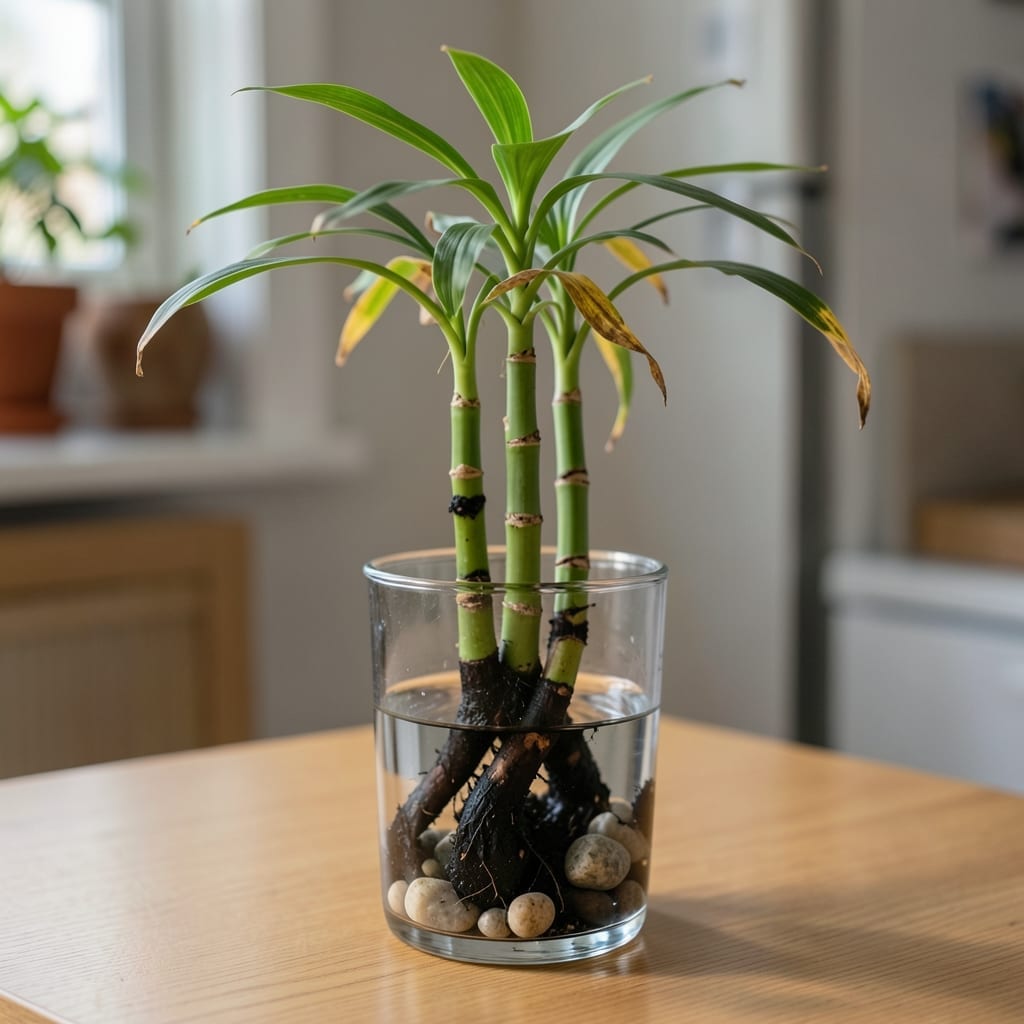
Bamboo can rot when exposed to prolonged moisture, poor drainage, or fungal infections, but it naturally resists decay better than most woods due to its high silica content and dense fibers.
I’ve seen bamboo last decades in ideal conditions, but it’s not invincible. The silica acts like a natural shield, while the dense fibers slow water absorption. Yet, standing water or persistent humidity can still break it down over time. 🔥
Proper care is key—good drainage and airflow make all the difference in preventing decay.
💡 In This Article
Bamboo’s decay resistance starts with its unique cellular structure. The plant contains 5-8% silica by dry weight, which forms a hard, glass-like layer in its cell walls. This silica armor makes it far tougher for moisture and fungi to penetrate compared to softwoods like pine, which contain less than 1% silica.
The fibers are also packed extremely densely, leaving little space for water to seep in and create rot-promoting conditions. 🔥
For comparison, oak—a wood known for durability—has about 0.5-1% silica, while bamboo can have up to 8 times that amount. This natural fortification is why bamboo poles can last 15-20 years outdoors with minimal treatment, whereas untreated pine might only last 5-10 years in similar conditions.
The silica also deters insects, adding another layer of protection against biological breakdown.
Water absorption tests reveal bamboo’s advantage: it absorbs only 10-15% of its weight in water, while many hardwoods absorb 25-35%. This lower absorption rate means bamboo stays drier internally, reducing the likelihood of fungal growth. The plant’s natural waxes and resins further enhance this water resistance, creating a multi-layered defense system against decay. ✨
The growth pattern matters too. Bamboo matures in just 3-5 years, developing its protective properties quickly. In contrast, trees like teak (another rot-resistant wood) take 20-25 years to reach harvestable maturity. This rapid development allows bamboo to build its defenses faster while maintaining flexibility—unlike older woods that may become brittle with age.
Even the surface plays a role. Bamboo’s smooth, non-porous outer skin sheds water more effectively than the rough bark of many trees. This physical barrier, combined with the internal silica, creates a formidable obstacle for decay organisms. When properly maintained, this combination can make bamboo nearly as durable as treated lumber in many applications. 💫
Untreated bamboo exposed to constant moisture may show rot signs in 6-12 months. With proper care and drainage, it can resist decay for 15-20 years outdoors. The timeline depends on environmental conditions and maintenance.
Watch for yellowing leaves, soft black spots on stems, or a musty smell. Early detection is key—remove affected canes immediately to prevent spread. Regular inspections help catch issues before they worsen.
If caught early, prune affected areas and improve drainage. For advanced rot, removal is often necessary to protect surrounding plants. Prevention through proper care is far more effective than treatment.
Yes, without proper drainage, container-grown bamboo is more susceptible. Use pots with multiple drainage holes and elevate them to prevent water pooling. Terracotta works well as it allows roots to breathe.