
Beautiful Plants For Your Interior
Beautiful Plants For Your Interior
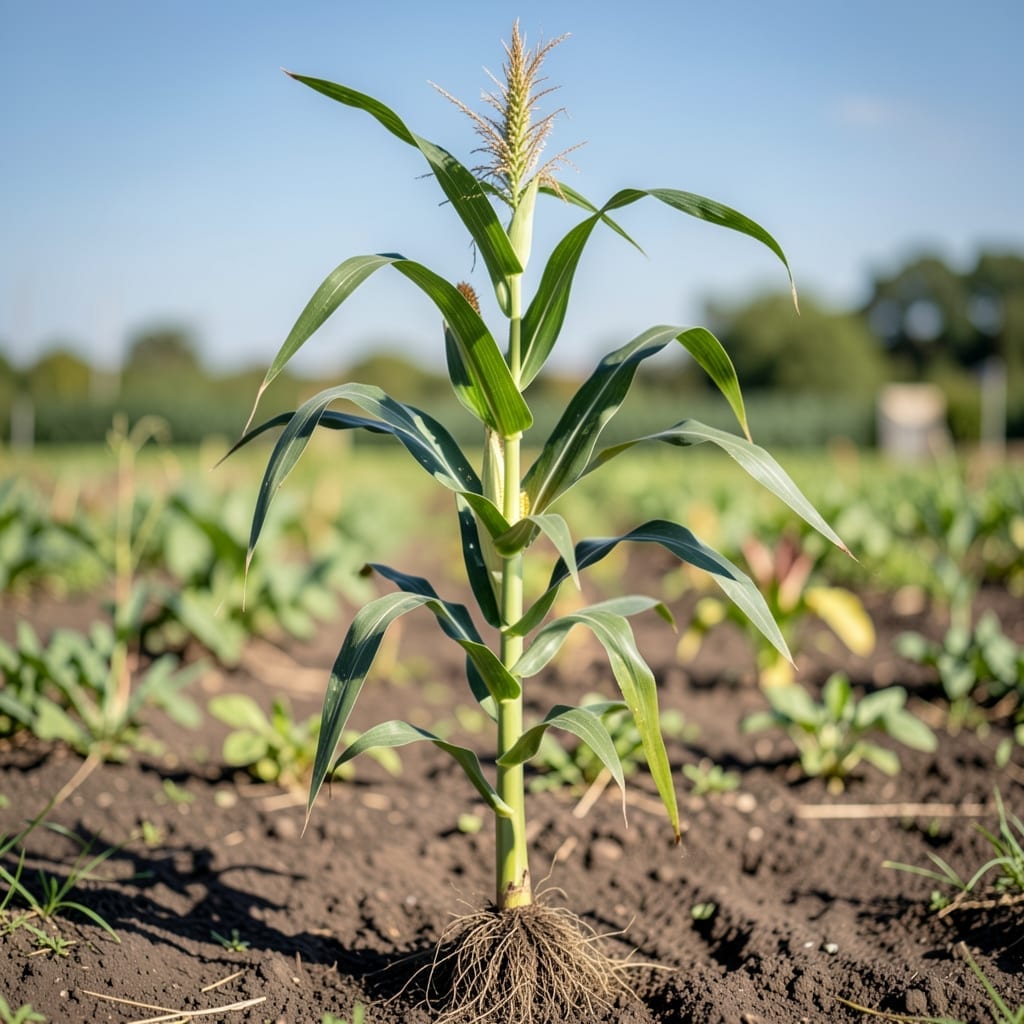
Yes, corn plants develop an extensive root system including primary roots, seminal roots, and nodal roots that anchor the plant and absorb water and nutrients from the soil.
This system begins forming as soon as the seed germinates, with the primary root emerging first to establish initial stability. 🌱 I’ve noticed that the nodal roots are particularly fascinating—they grow from the lower stem nodes and spread outward, creating a dense network that helps the plant withstand wind and drought. What’s more, these roots can adapt to soil conditions, growing deeper in loose soil or branching widely in compacted ground.
💡 In This Article
Corn roots emerge in a fascinating sequence that begins with the radicle, the embryonic root that first pushes downward during germination. Within 48-72 hours of planting, this primary root establishes the seedling’s initial anchor and water source. It’s the foundation that allows the young plant to start absorbing moisture and dissolved nutrients from the soil.
🔥
The next phase brings seminal roots, which branch out horizontally from the seed’s scutellum. These typically appear when the shoot reaches 1-2 inches above ground. Unlike the primary root, seminal roots spread wider, creating a shallow network that captures surface nutrients.
They’re particularly effective at gathering phosphorus and potassium, which are crucial for early growth stages.
As the plant matures, nodal roots emerge from the lower stem nodes, usually starting around V3-V4 growth stage (about 2-3 weeks after emergence). These become the workhorses of the system, growing both downward and outward.
A single mature corn plant can develop 50-100 nodal roots, with some extending up to 6 feet deep and 3 feet wide. This extensive network allows the plant to access water and nutrients from a large soil volume. ✨
What’s remarkable is how these roots adapt to conditions. In dry soil, nodal roots grow deeper seeking moisture, while in compacted soil they may spread more horizontally. The root tips also form symbiotic relationships with mycorrhizal fungi, which can increase nutrient absorption efficiency by up to 300%.
This adaptability explains why corn can thrive in diverse environments from Iowa’s rich loam to the sandy soils of Florida. 💫
The root system’s efficiency is evident in its rapid growth. During peak development, corn roots can extend at rates of 1-2 inches per day under ideal conditions. This growth spurt coincides with the plant’s most demanding nutritional period, just before tasseling begins.
The roots’ ability to proliferate quickly ensures the plant can support its massive above-ground biomass, which may reach heights of 8-12 feet in modern hybrids.
Mature corn roots can extend 6 feet deep, with most concentrated in the top 2 feet of soil. The depth depends on soil type and moisture availability, with deeper growth in loose, well-drained soils.
The radicle is the first root to appear, pushing downward within 48-72 hours of planting. It establishes the seedling’s initial anchor and water source.
Yes! In dry soil, nodal roots grow deeper to seek moisture. They can also form symbiotic relationships with fungi to boost nutrient absorption by up to 300%.
Plant seeds 1-2 inches deep in warm soil and maintain consistent moisture for the first 2 weeks. Avoid compacting soil and use mulch to retain moisture.