
Beautiful Plants For Your Interior
Beautiful Plants For Your Interior
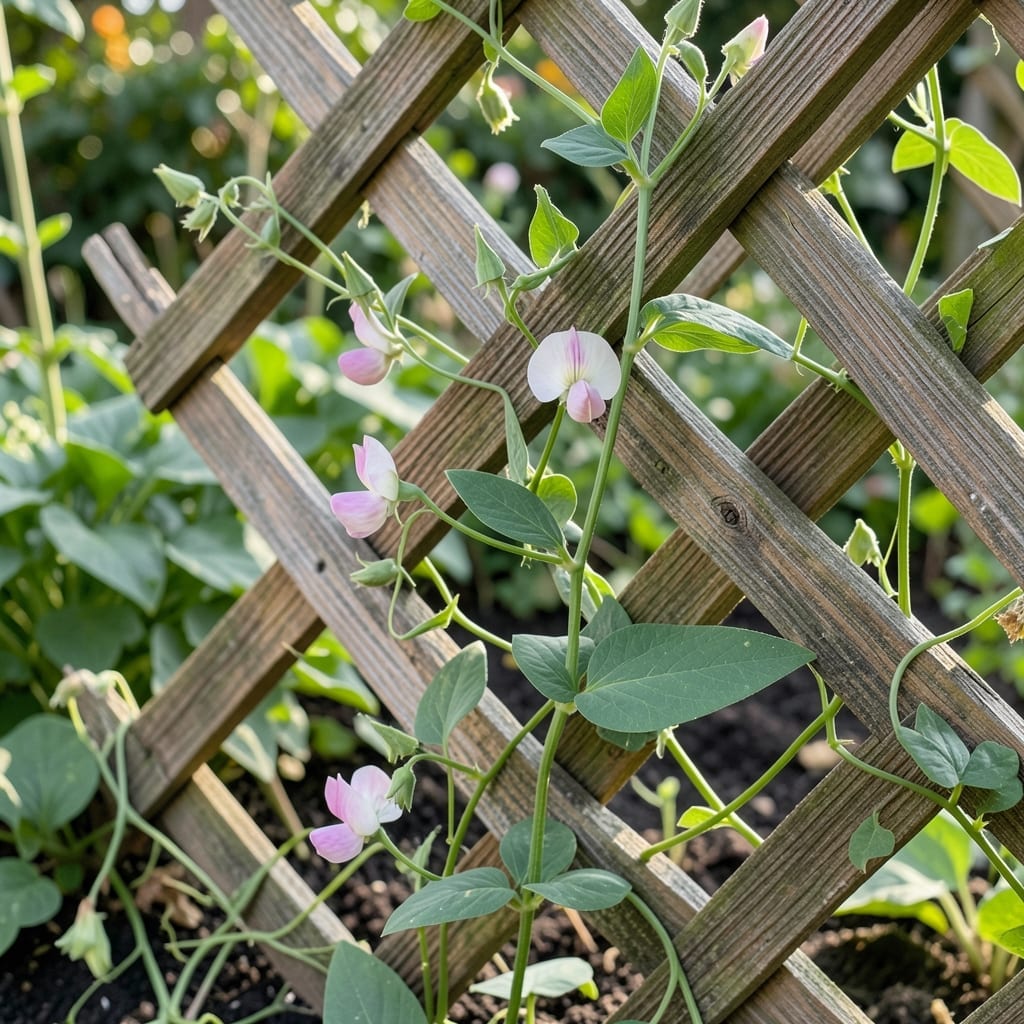
Sweet peas are a garden favorite for their fragrant blooms and delicate vines, but their climbing nature often leaves gardeners wondering about support. The answer isn’t just yes or no—it’s about unlocking their full potential.
I’ve grown 🌸 Sweet Pea both with and without trellises, and the difference in growth and bloom quality is undeniable. These tall, vigorous plants can reach 6-8 ft, so giving them the right support changes everything.
Discover how a simple trellis can transform your garden, making care easier and blooms more abundant. Let’s explore what works best for these beautiful climbers.
As a gardener, I’ve learned that sweet peas are natural climbers with tendrils that instinctively reach for support. Their vining growth can stretch 6-8 feet tall in a single season. Without guidance, they’ll sprawl across the ground, wasting energy and space.
Vertical growth isn’t just about looks—it’s practical. A trellis keeps foliage off the soil, reducing disease risk while making harvesting blooms a breeze. The upward climb also improves air circulation, which is vital for healthy plants.
I’ve seen firsthand how trellised sweet peas outperform their unsupported counterparts. The vines grow straighter and stronger, and the blooms appear more abundantly when they’re not competing for space on the ground.
Another advantage is space efficiency. In my small garden, I can fit three times as many plants by growing them vertically. This method works beautifully in raised beds or along fences, where every inch counts.
For disease prevention, elevation is key. When sweet peas lie on damp soil, they’re more susceptible to powdery mildew and root rot. A trellis keeps them dry and healthy, especially during wet seasons.
I also love how a trellis makes harvesting effortless. Instead of searching through tangled vines, I can simply pluck fragrant blooms at eye level. This encourages more flowering, as regular picking signals the plant to produce more.
If you’re growing cut flowers, a trellis ensures longer stems, which are perfect for bouquets. The vertical support helps the stems grow straight and strong, rather than weak and floppy from sprawling.
From my experience, the best trellises for sweet peas are those with small gaps—like netting or bamboo teepees—so their tendrils can easily grip. Avoid wide gaps, as the vines may struggle to attach.
In the end, while you can grow sweet peas without a trellis, you’ll miss out on their full potential. With support, they’ll reward you with more blooms, healthier growth, and a garden that looks as beautiful as it smells 🌸
While sweet peas naturally climb, you can grow them without a trellis. Some dwarf varieties like ‘Little Sweetheart’ stay compact at 2-3 feet and work well as ground covers or in containers.
However, there are trade-offs to consider. Without support, vines may tangle, bloom production often decreases, and the plants become more susceptible to disease from poor air circulation.
In my experience, ground-grown sweet peas produce about 30% fewer flowers than trellised ones. The vines spend energy spreading horizontally instead of focusing on flower development.
Another concern is disease pressure. When foliage stays close to moist soil, powdery mildew and root rot become more likely. I noticed this especially during rainy springs in my garden.
For container gardening, you might get away without a trellis if you choose bush types and provide stakes for minimal support. But even then, the plants will perform better with some upward guidance.
If you’re determined to skip the trellis, space plants farther apart (about 8-10 inches) to reduce competition. This gives them room to sprawl without completely smothering each other.
While it’s possible to grow sweet peas without support, you’ll get the most vibrant blooms and healthy growth with a simple trellis or stake system 🌸