
Beautiful Plants For Your Interior
Beautiful Plants For Your Interior
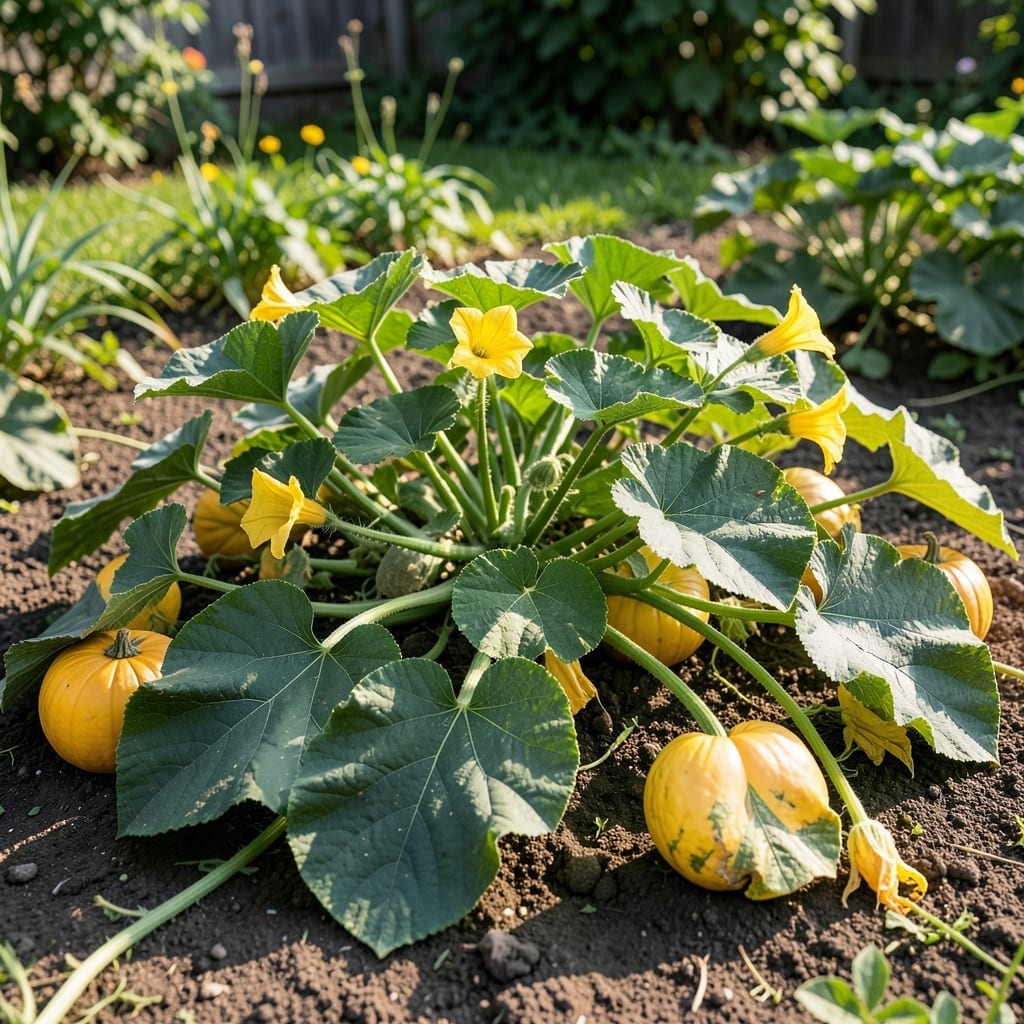
Pumpkins typically start as small, pale yellow or green fruits that gradually deepen to orange as they mature and chlorophyll breaks down.
This transformation happens because the green pigment fades as the fruit ripens, revealing the vibrant orange carotenoids underneath. 🔥 I’ve noticed the shift begins at the blossom end first, creating a beautiful gradient as the pumpkin grows. The process can take 45-55 days from pollination to full color, depending on the variety and growing conditions.
💡 In This Article
The color shift begins at the cellular level. As pumpkins grow, chlorophyll—the green pigment responsible for photosynthesis—dominates their skin. This gives young pumpkins their initial pale yellow or green hue. Chlorophyll masks the underlying carotenoids, which are always present but invisible until the green pigment breaks down. 🔥
Carotenoids, like beta-carotene, are what give mature pumpkins their iconic orange color. As the fruit ripens, the plant reduces chlorophyll production, allowing these orange and yellow pigments to shine through. This process is triggered by genetic signals and environmental factors like temperature and sunlight, which accelerate or slow the transition.
Sunlight plays a critical role in this transformation. Pumpkins exposed to 6-8 hours of direct sunlight daily develop deeper, more uniform orange hues. In contrast, those in shaded areas may retain green patches longer.
The color change typically starts at the blossom end, where the fruit was last connected to the vine, and spreads toward the stem. ✨
Temperature also influences the speed of this process. Cooler nights (below 50°F) can slow chlorophyll breakdown, while warmer conditions (70-85°F) speed it up. This is why pumpkins grown in regions with warm days and cool nights often exhibit the most vibrant, consistent coloration. The entire transition can take 45-60 days from pollination to full maturity.
What’s fascinating is that the green-to-orange shift isn’t just cosmetic. It signals the pumpkin’s ripening, as the fruit’s sugars concentrate and the rind hardens. This is nature’s way of indicating that the pumpkin is ready for harvest, with its peak flavor and storage potential. 💫
Varieties like ‘Jarrahdale’ or ‘Kabocha’ naturally retain green hues even when ripe. Additionally, shaded growing conditions or cooler temperatures (below 50°F) can slow chlorophyll breakdown, delaying the orange color development.
Yes, but only if they’ve begun changing color while attached. Harvested green pumpkins won’t ripen further. For best results, leave them on the vine until the stem dries and the skin hardens, which usually takes 45-60 days after pollination.
Uneven sunlight exposure is the most common cause. The side facing the sun typically turns orange first, while shaded areas may stay green or yellow longer. Rotating the pumpkin gently can help even out the color.
Check the rind hardness and stem condition. A ripe pumpkin will have a hard skin that resists puncturing with a fingernail and a dry, woody stem. The color should be uniform with no green patches.