
Beautiful Plants For Your Interior
Beautiful Plants For Your Interior
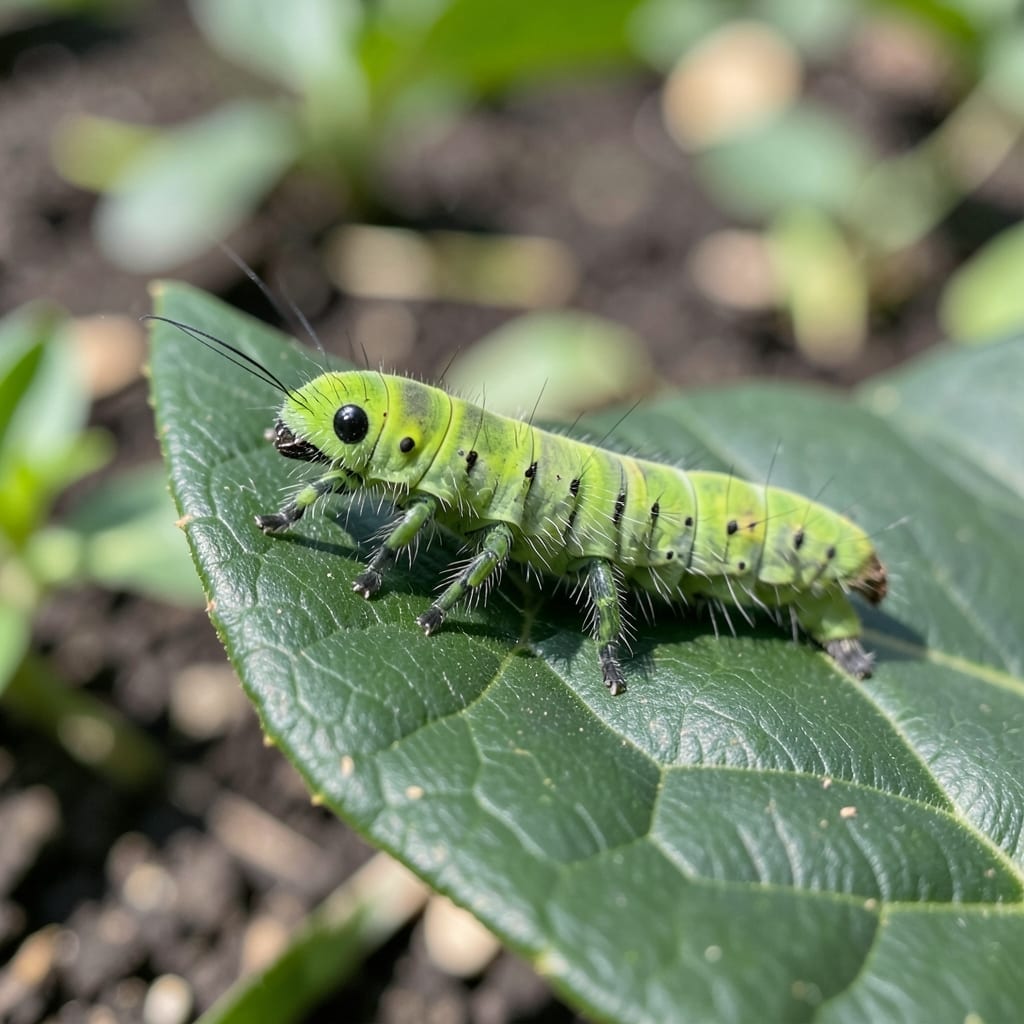
Most adult moths do not eat leaves, as they primarily consume nectar or don’t eat at all. However, their caterpillars often feed voraciously on leaves and other plant parts.
I’ve noticed this difference firsthand—their adult form focuses on energy sources like nectar, while caterpillars need leaf proteins to fuel their growth. This shift happens because their mouthparts change during metamorphosis, making leaves inaccessible to adults. 💫
For gardeners, this means caterpillars are the real culprits behind damaged foliage, not the fluttering adults you see at night.
💡 In This Article
The transformation from caterpillar to adult moth triggers a dramatic shift in feeding behavior. As larvae, moths have strong mandibles designed to chew through tough leaf tissue, consuming up to their body weight in foliage daily to fuel rapid growth. This voracious appetite allows them to store energy reserves for their upcoming metamorphosis.
During pupation, their mouthparts completely restructure. Adult moths emerge with a coiled proboscis—a straw-like feeding tube perfect for sipping nectar but incapable of chewing leaves. This adaptation prioritizes energy efficiency, as nectar provides quick sugars for flight without the digestive demands of processing leaf material.
Nutritional needs change dramatically between stages. Caterpillars require protein and nitrogen from leaves to build muscle and exoskeleton, while adults focus on carbohydrates from nectar or tree sap to power their short adult lives. Some species, like the Luna moth, don’t eat at all as adults, living only 1-2 weeks solely to reproduce.
The Luna moth’s adult stage exemplifies this extreme adaptation. Its mouthparts are completely vestigial, meaning it cannot consume any food. Instead, it relies entirely on energy stored during its caterpillar phase, which can last 6-8 weeks of constant feeding. This trade-off allows maximum energy allocation to reproduction rather than digestion.
Other moths, like the Hummingbird moth, have evolved specialized relationships with flowers. Their long proboscis can reach nectar in deep tubular flowers that other pollinators can’t access. This co-evolution benefits both the moth, which gets an exclusive food source, and the plant, which ensures precise pollination.
This feeding specialization explains why you’ll never see adult moths munching on your garden leaves, while their caterpillar offspring might be responsible for those jagged edges on your plants. The change is so complete that their digestive systems literally cannot process solid food anymore.
Adult moths have a straw-like proboscis for sipping nectar, unlike caterpillars with chewing mandibles. Their digestive systems change during metamorphosis, making solid food like leaves impossible to process.
Look for jagged leaf edges, holes, or silky webbing on foliage. Check undersides of leaves where caterpillars often hide during the day. Early morning inspections reveal them most easily.
Bacillus thuringiensis (Bt) is a natural bacteria that targets only caterpillars. Apply it in the evening when they’re most active. It’s safe for humans, pets, and beneficial insects.
Yes! Strong-scented herbs like rosemary, mint, or thyme confuse adult moths. Interplant these with vulnerable vegetables to create a natural barrier against egg-laying.