
Beautiful Plants For Your Interior
Beautiful Plants For Your Interior
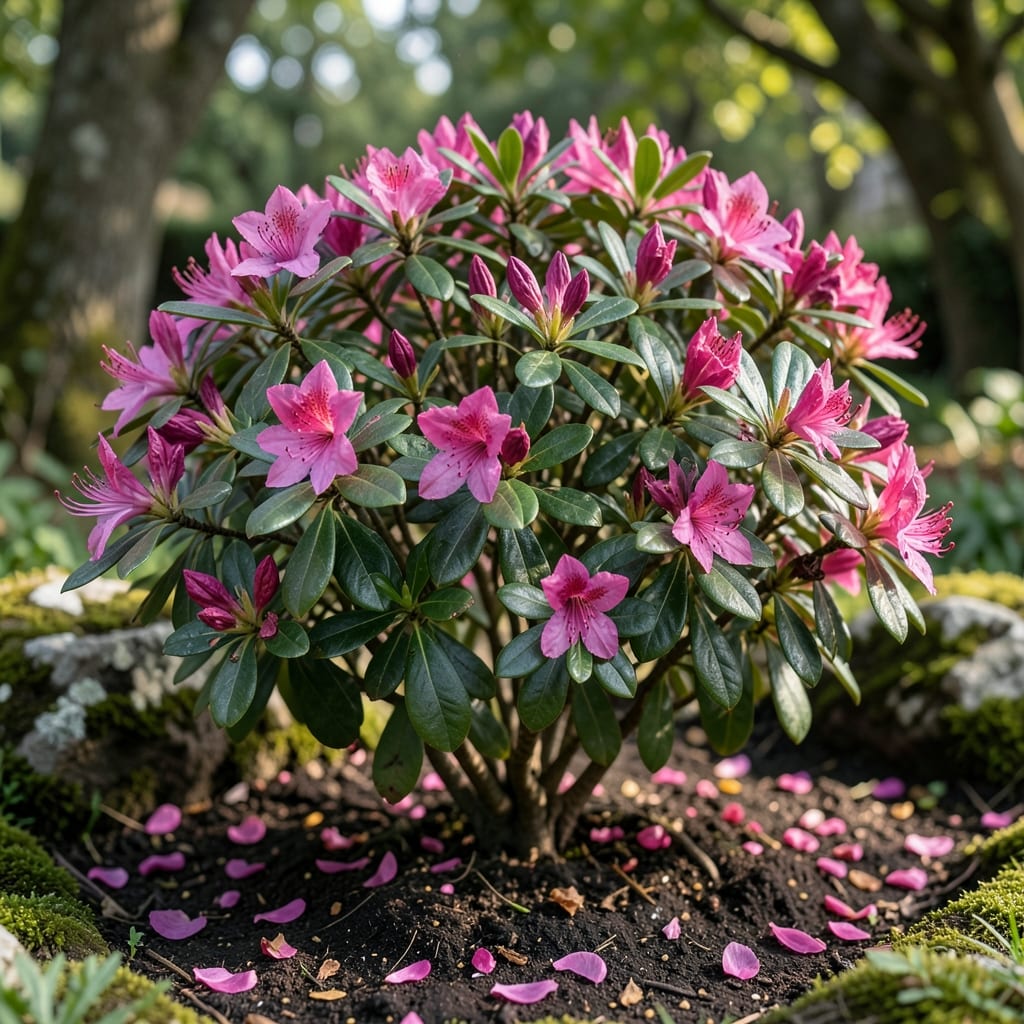
Evergreen azaleas retain most leaves year-round, while deciduous varieties shed all foliage in winter. Leaf drop can also signal stress, disease, or cold damage in evergreen types.
I see this difference play out in my own garden every year. The deciduous azaleas go completely bare by December, while my evergreens keep their glossy foliage through the coldest months. That said, even evergreens will drop leaves if they face extreme cold, drought, or poor soil conditions. 🌟
What’s fascinating is how each type has adapted to survive winter in its own way. 💫
💡 In This Article
The key difference lies in their biological survival strategies. Deciduous azaleas, like the Rhododendron canescens, shed leaves to conserve water and energy during cold months. This dormancy protects their root systems from freezing temperatures. Evergreen varieties maintain foliage year-round due to thicker, waxy leaves that resist moisture loss.
Evergreen azaleas have adapted with specialized leaf structures. Their leaves contain more cutin—a waxy coating that reduces water loss by up to 50% compared to deciduous types. This adaptation allows them to photosynthesize during mild winter days when temperatures reach 40-50°F. Their dark green color also helps absorb more sunlight for warmth. 🌟
Deciduous azaleas, on the other hand, have a different survival mechanism. They store energy in their roots during summer, then go completely dormant in winter. This strategy is common in colder climates where temperatures drop below 20°F. The leaf drop typically begins in late fall and completes by early winter.
What’s interesting is that even evergreen azaleas may drop some leaves in extreme conditions. When temperatures plummet below 10°F, or during prolonged drought, they’ll shed foliage to survive. This is the plant’s way of reducing its metabolic demands when resources are scarce. ⚡
You can identify the type by examining the leaves. Deciduous azaleas have larger, thinner leaves that turn vibrant colors before dropping. Evergreens have smaller, leathery leaves that stay green. This visual difference makes them easy to distinguish even in summer.
These adaptations explain why deciduous azaleas thrive in northern climates, while evergreens prefer more temperate zones. Understanding these patterns helps gardeners choose the right variety for their location and provide appropriate winter care. 💫
Check the leaves: evergreens have small, thick, leathery foliage that stays green year-round. Deciduous types have larger, thinner leaves that turn colorful before dropping in fall.
This usually signals cold damage or drought stress. Brown, crispy edges appear first, often from freezing winds or insufficient water. A 2-3 inch mulch layer helps prevent this.
Evergreens in cold climates benefit from windbreaks and mulch. Deciduous types generally don’t need protection since they’re dormant. Potted plants always require shelter below 15°F.
New foliage typically emerges in early spring as temperatures rise above 40°F. You’ll see small buds swelling on branches before the leaves unfurl.
No—wait until spring after flowering. Pruning in winter can stimulate new growth that will be damaged by cold. Late summer is the absolute deadline for trimming.